
Pinched Nerve Recovery: How Long Can a Pinched Nerve Last?
Pinched nerve recovery takes 4 to 6 weeks in most cases. Conservative treatments such as rest, activity changes, and anti-inflammatory medications support that timeline. However, nerve root compression in the spine can run 12 weeks or longer. Warning signs of this deeper compression include muscle weakness and numbness.
If your pain is unchanged after six weeks, it is time to have the nerve examined. At Total Orthopedics & Sports Medicine, our spine specialists pinpoint the cause. Then we build a personalized treatment plan to relieve pressure and prevent permanent nerve damage. Contact us today at 855-321-6784 to schedule your visit.

What Is the Recovery Time for a Pinched Nerve?
A pinched nerve can last from a few days to 12 weeks. Complete recovery timelines vary based on the injury location and severity. Here is the typical pinched nerve recovery timeline by body area:
| Where the Nerve Is Pinched | Typical Recovery | Treatment Point & Warning Signs |
|---|---|---|
| Neck (cervical spine) | 4 to 6 weeks | Needs treatment if: pain or arm tingling lasts beyond 4 weeks.Warning signs: numbness or weakness spreading into the arm or hand. |
| Lower back (lumbar spine) | 6 to 12 weeks | Needs treatment if: leg pain limits standing or walking after 2 weeks.Warning signs: leg weakness, foot drop, or any change in bladder or bowel control. |
| Shoulder and arm | 4 to 8 weeks | Needs treatment if: pain limits reaching or lifting after 4 weeks.Warning signs: a weak grip or numbness spreading below the elbow. |
| Wrist (carpal tunnel) | A few weeks with splinting; months if untreated | Needs treatment if: night tingling keeps returning.Warning signs: constant numbness or thumb weakness. |
These timelines start with the same problem: a pinched nerve occurs when surrounding tissues place pressure on it. Common causes include herniated discs, bone spurs, and poor posture. Symptoms of a pinched nerve include tingling, numbness, burning pain, and sharp pain. Repetitive motions, such as typing or assembly line work, can lead to carpal tunnel syndrome.
Most pinched nerves recover within 4 to 6 weeks, but some can last several months if the compression is severe. If the compression involves a nerve root in your spine, symptoms may persist for 12 weeks or longer. Healing time depends on the cause of the compression, overall health, and how soon you start treatment.
Research in the Pain Physician Journal offers a useful benchmark if you are weighing injections. In that study, patients with lumbar radiculopathy often felt relief within 6 to 12 weeks after epidural steroid injections. This suggests that some people may need interventional treatments if conservative methods do not work.
How Long Do Pinched Nerves Take to Move Through Recovery?
Healing from a pinched nerve is a progressive process with three distinct phases. The acute phase lasts from a few days to two weeks and focuses on inflammation reduction and pain management. The subacute phase generally lasts for two to six weeks, as strength and movement return.
For severe cases, the chronic phase may extend from several months to a year. Nerves that branch from the spinal cord regenerate at roughly one millimeter per day. Lighter pressure on nerves resolves more quickly, while a nerve under pressure for longer takes longer to heal.
Does the Location of the Pinched Nerve Affect Its Duration?
Yes, the location of the pinched nerve can affect how long it lasts. Nerves in different areas, such as the lumbar spine, cervical spine, or wrist, respond differently to pressure and treatment. Additionally, some areas are more easily irritated by repetitive movements, poor posture, or ongoing muscle strain. This can slow healing and raise the risk of developing chronic pain.
Each nerve controls different bodily functions, so your symptoms and recovery time will vary. A pinched nerve in your lower back may impact your ability to walk or stand for long periods. On the other hand, a pinched nerve in your neck often leads to pain, numbness, or weakness in your arms.
A pinched nerve in the neck can also refer pain into the shoulder. Shoulder pain from a pinched nerve usually affects one shoulder only. Doctors refer to this as cervical radiculopathy. Nerve root compression at any level is simply called radiculopathy.
According to the National Library of Medicine, chronic compressions, such as carpal tunnel syndrome, can persist without proper treatment. If left untreated, this condition may progress to muscle weakness and even muscle wasting over time.
Therefore, early diagnosis is essential. A healthcare professional can locate the affected area and build a targeted treatment plan to alleviate pressure. At Total Orthopedics & Sports Medicine, we specialize in treating conditions like radiculopathy. Our specialists treat the source of the problem, whether your pinched nerve occurs from a sports injury or overuse. Contact us today at 855-321-6784 to schedule an appointment.
How Long Does a Pinched Nerve in the Lower Back Last?
A pinched nerve in the lower back usually lasts 6 to 12 weeks. Pressure on a lumbar nerve root often causes sciatica, with pain running from the lower back into the leg. Sitting, driving, and standing in one place tend to make it worse.
Recovery is slower here than in the neck because the lumbar spine carries your body weight. Each step loads the same nerve root, so irritation settles gradually. If leg pain, numbness, or weakness continues past six weeks, have the nerve root examined before the compression deepens.
Can Prolonged Sitting Affect Nerve Compression?
Yes, prolonged sitting can worsen nerve compression, especially in your lower back and legs. Staying in one position for too long places continuous pressure on the nerve roots and surrounding tissues. This leads to pain, numbness, or tingling in the affected area.
In addition, poor posture while sitting increases this strain. Over time, it can lead to disc herniation, nerve impingement, or even chronic pain. Research indexed in PubMed Central shows why breaks matter. Sitting for hours without a break can reduce lumbar disc height, especially at the L4-L5 level.
Less disc height often means more lower back pain and less mobility. If your routine involves extended periods of sitting, take regular breaks to move around. Stretching a few times a day can also ease tension. Proper back support helps relieve pressure on the spinal column and protects your long-term health.
How Can Spinal Deformities Delay the Healing of Compressed Nerves?
Spinal deformities, such as scoliosis or spinal stenosis, can delay the healing of compressed nerves by applying pressure on them. This ongoing pressure can slow nerve regeneration, potentially leading to nerve damage and incomplete recovery. Additionally, spinal misalignment can restrict blood flow, making it difficult for the body to deliver vital nutrients needed for healing.
As pressure on the nerves continues, it can also damage the myelin sheath, which is important for proper nerve function. MedlinePlus explains what this means for you: demyelination is the loss of that protective sheath. It slows nerve signals and makes a pinched nerve harder to heal.
At Total Orthopedics & Sports Medicine, we specialize in diagnosing and treating spinal deformities and nerve compression. Contact us today at 855-321-6784 to book a consultation.
Can a Pinched Nerve Lead to Permanent Disability?
Yes, a pinched nerve can lead to permanent disability if left untreated. The risk rises when nerve compression continues for too long. Many pinched nerves improve with proper treatment within weeks. However, chronic pain or nerve damage can occur if the pressure is not relieved in time.
Prolonged compression can cause muscle weakness, numbness, and limited mobility. In severe cases, nerve root compression in the lower spine can develop into cauda equina syndrome. Without prompt treatment, it can lead to permanent disability, paralysis, and loss of bowel or bladder control.
Therefore, early treatment, such as injections or surgical options, is essential. Addressing the issue early can prevent permanent damage and significantly improve recovery outcomes.
What Are the Non-Surgical Treatments for a Pinched Nerve?
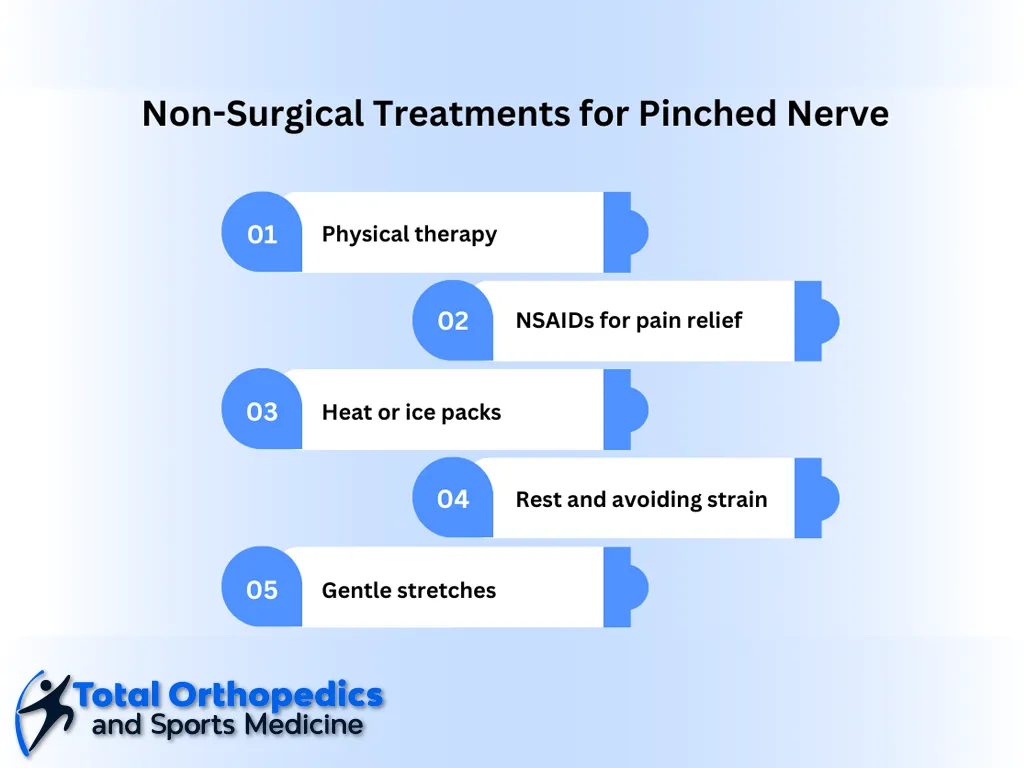
Non-surgical treatments for a pinched nerve usually combine pain relief with simple lifestyle changes. These methods focus on reducing pressure on the nerve and promoting healing. Adding regular stretches to your routine can also improve flexibility and prevent the recurrence of nerve compression.
Over-the-counter pain relievers can alleviate pinched nerve pain. Resting from aggravating activities can shorten recovery time. Physical therapy can also aid in recovery. A physical therapist can build a stretching program that fits your routine.
In addition to medications, ergonomic adjustments can help reduce strain on the affected nerve. For example, using a lumbar support cushion or adjusting your chair height can provide relief during daily activities. Furthermore, low-impact movement such as yoga can relieve pain by easing strain on your back. Overall, these approaches support steady healing and a faster recovery.
When Should You Consider Surgery for Nerve Compression?
Consider surgery for nerve compression if non-surgical treatments have not brought relief after several weeks. It is also an option for intense pain, weakness, or loss of function. Surgery is typically recommended when there is a risk of permanent damage or when symptoms significantly affect daily life.
When that happens, the procedure removes the source of compression and helps prevent further damage. Additionally, surgery may provide more immediate relief if ongoing numbness or loss of mobility affects your ability to function. Our spine specialists will help you decide whether surgery is the right option for your condition.
How Can You Prevent Permanent Nerve Damage?
To prevent permanent nerve damage, seek early treatment for nerve compression. Also, avoid prolonged pressure on the affected area. This can be done through proper posture and ergonomic changes in your daily routine. Additionally, staying active can help maintain flexibility and reduce the risk of further nerve irritation.
In addition to early treatment, healthy habits are essential for protecting nerve health. Here are some key habits to support nerve recovery and prevent further damage:
- Maintain proper hydration and a well-balanced diet rich in anti-inflammatory foods.
- Stretch regularly to improve flexibility, reduce pressure on the spine, and promote recovery.
- Avoid repetitive movements and positions that place excess pressure on the affected area.
- Keep a healthy weight to lower strain on the spine and reduce the risk of compressing nerves.
- Get proper rest to allow the body to heal and repair nerves effectively.
- Working with your doctor to lose weight safely also reduces the daily load on your spine.
Which Pinched Nerve Symptoms Need Same-Day Care?
Three symptoms need same-day care rather than a six-week wait. New or worsening muscle weakness means the nerve is losing function. Numbness spreading down your arm or leg means the compression is growing. Any change in bladder or bowel control can signal severe compression at the base of your spine.
For weakness or spreading numbness, visit our walk-in orthopedic urgent care on Long Island. No appointment is needed. Our specialists complete imaging the same day and review the results during your visit.
If weeks of injections and medication have not helped, the next question is when a pinched nerve needs surgery. For any loss of bladder or bowel control, go to the ER immediately.
Start Your Pinched Nerve Recovery at Total Orthopedics & Sports Medicine Today
Your pinched nerve recovery starts with finding the cause. Every week of untreated compression can add time to your healing. Early care keeps a weeks-long problem from becoming a months-long one.
At Total Orthopedics & Sports Medicine, our spine specialists treat spinal conditions like nerve compression at the source. Your personalized plan may include medication, guided exercises, injections, or minimally invasive surgery. Most patients start with conservative care and recover within weeks. Call 855-321-6784 today to schedule a visit at any of our locations across New York City and New Jersey.
FAQs
Is It Normal for Most Pinched Nerves to Last for Months?
No, most pinched nerves settle within a few weeks, not months. Gentle stretching and medical treatment usually ease minor pain at that time. Recovery stretches into months only when the compression is severe or left untreated. If your symptoms pass the six-week mark, book an evaluation. How long a pinched nerve lasts depends on how quickly you treat it.
What Are the Signs a Pinched Nerve Is Healing?
A healing pinched nerve causes less sharp pain, numbness, and tingling each week. Improved mobility and returning strength are also good signs of recovery. Discomfort during daily activities fades as pressure on the nerve eases. If symptoms plateau or worsen instead, the nerve needs a closer look. Tingling or numbness may linger even after pain subsides.
Can Pregnancy Cause Nerve Root Compression?
Yes, pregnancy can compress nerve roots, especially in the lumbar spine. Extra weight shifts your posture and loads the lower back. Hormonal changes also loosen supporting ligaments, which lets joints press on nearby nerves. The result is often sharp pain or numbness in the lower back or legs. Many describe a pins and needles feeling in the legs.
Does Age Affect the Healing of a Pinched Nerve?
Yes, age affects how long a pinched nerve takes to heal. Spinal degeneration and bone spurs become more common over time, narrowing the space around nerves. Younger individuals typically experience faster nerve recovery compared to older adults.
How Do Chronic Conditions Cause Nerve Compression?
Yes, chronic conditions like diabetes, obesity, and arthritis contribute to nerve compression. Diabetes damages nerves directly and slows their repair. Excess weight and arthritis narrow the spinal canal and put too much pressure on nerves. Over time, these and other risk factors keep steady pressure on the nerve, causing ongoing pinched nerve pain.
Can Sleeping Positions Worsen a Pinched Nerve?
Yes, a poor sleeping position can worsen a pinched nerve. Pain from a pinched nerve often worsens when lying down with the neck bent or spine twisted. A supportive pillow, a neutral position, or a short-term cervical collar eases that strain. If pain still wakes you, our specialists can guide your positioning and treatment.
Can a Pinched Nerve Lead to Bowel Control Issues?
Yes, severe compression at the base of the spine can affect bowel control. This condition, called cauda equina syndrome, involves the nerve roots that control the bladder and bowel. It is rare but serious. Go to the ER immediately, because delayed treatment risks permanent nerve damage.


