

Torn ACL First Aid: What Should You Do?
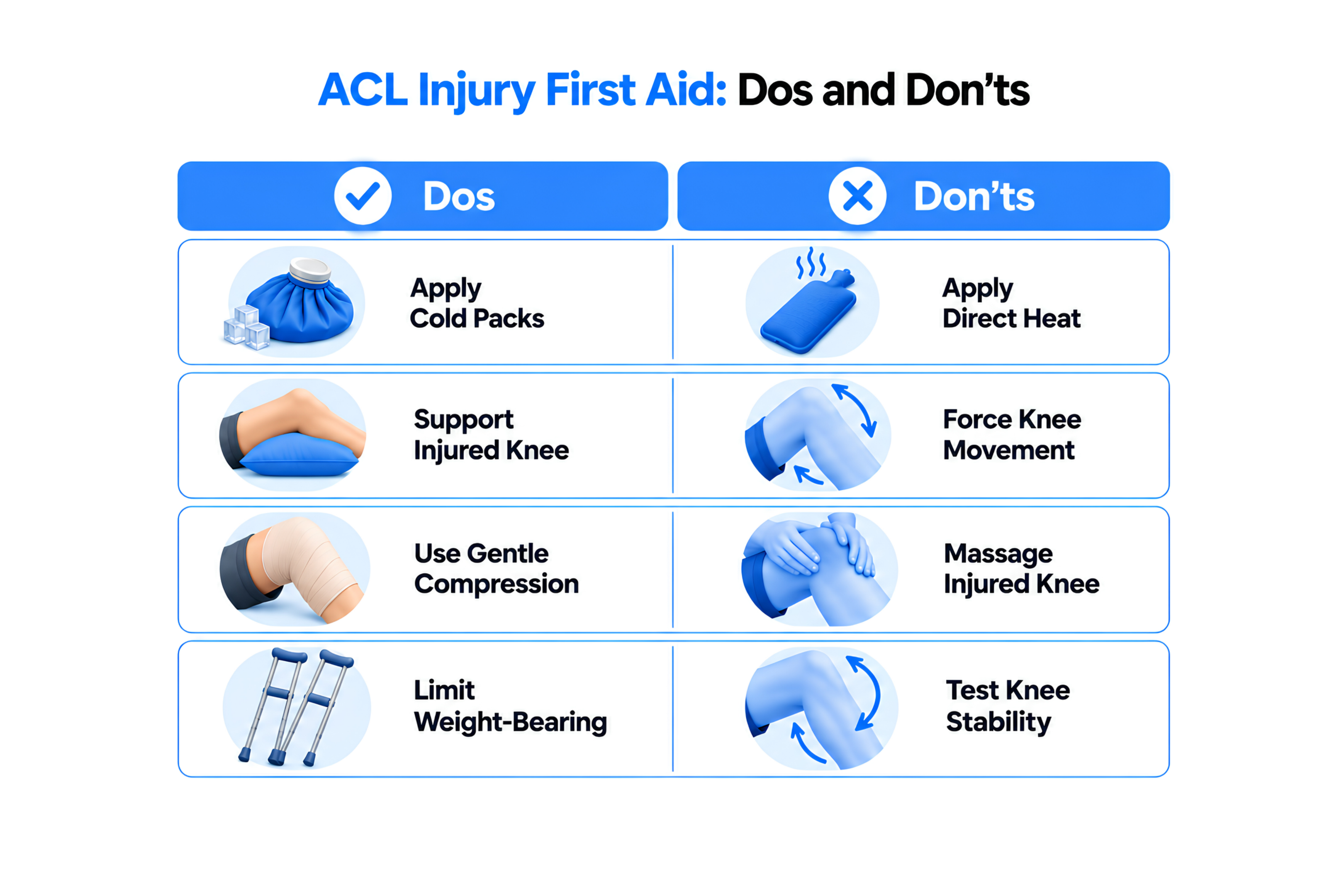
If you suspect a torn ACL, stop all activity immediately, rest your injured knee, and apply ice to reduce swelling. Then, use a compression wrap and elevate your leg to control pain. Avoid unnecessary weight-bearing and seek medical attention to assess the injury and prevent further knee damage.
At Total Ortho Express, our urgent care team examines your knee stability and checks for associated meniscus or ligament injuries after a suspected ACL tear. We use targeted clinical tests and order MRI scans when necessary to confirm the extent of damage. Based on the findings, we recommend appropriate knee support and weight-bearing restrictions to prevent complications. Visit us for a same-day evaluation without an appointment.
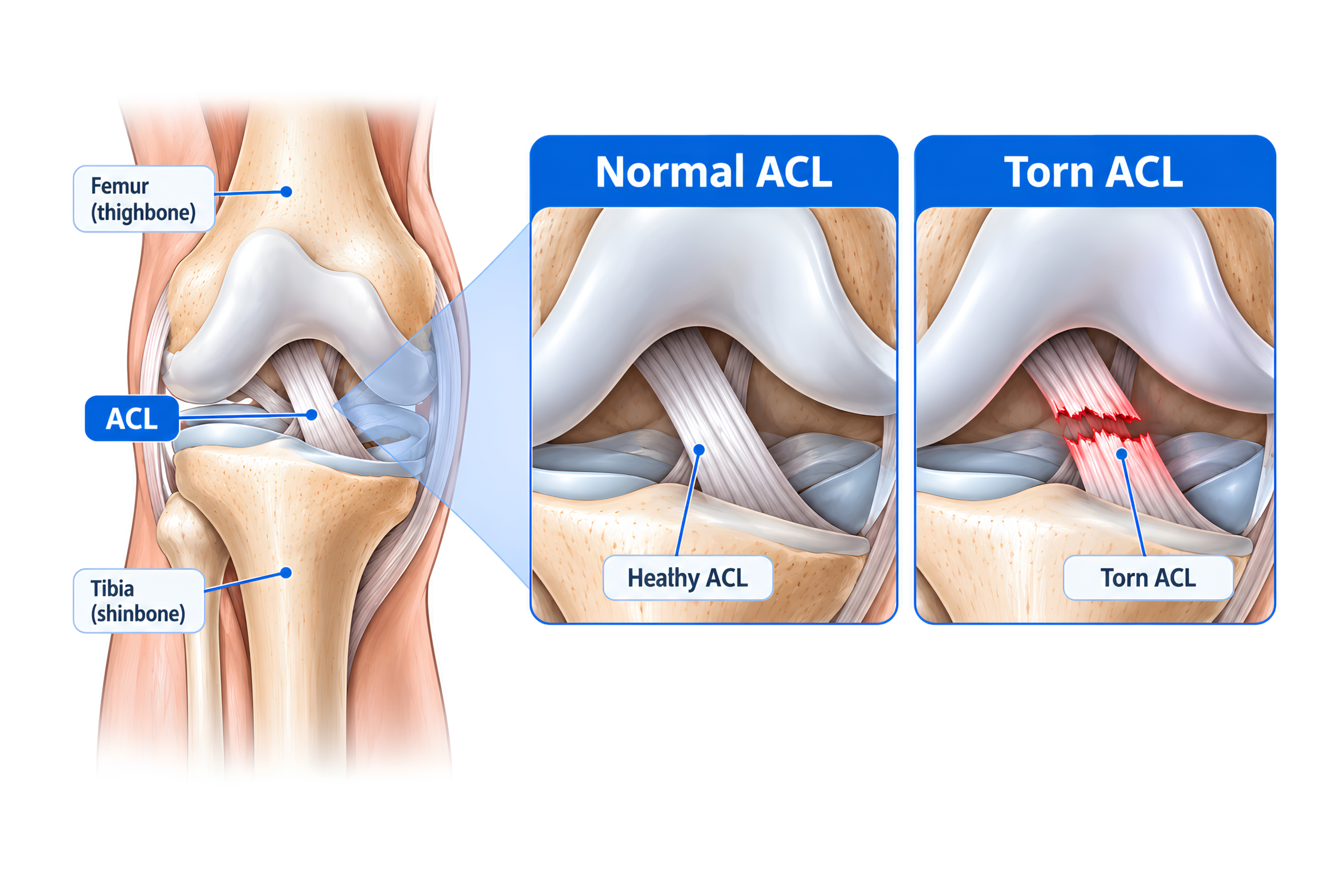
What Is the Right First Aid for a Torn ACL?
After an ACL injury, you should follow the RICE method (Rest, Ice, Compression, and Elevation) to protect your knee joint and manage early symptoms. You should also keep the injured knee in a comfortable position and avoid twisting or testing its stability. If your knee buckles, locks, or cannot support your weight, seek prompt medical help to identify associated injuries and prevent further damage.
Here is how you can use the RICE method safely during the first few days after your injury.
1. Rest
Stop physical activity immediately and avoid movements that involve pivoting, jumping, or sudden changes in direction. During the first 24–48 hours, limit walking if it causes knee pain or instability. Use crutches if you cannot safely bear weight on your affected leg. However, rest does not mean complete bed rest. You can gently move your ankle and toes while resting to maintain blood flow.
2. Ice
Apply a cold pack to your knee for 15–20 minutes every 2–3 hours during the first 48 hours to help manage swelling. Before applying it, place a thin towel between the pack and your skin to prevent cold injury. Avoid applying ice directly to the skin or falling asleep with the pack in place. Although icing may temporarily reduce pain after soft-tissue injuries, it does not repair a torn ligament, as reported in the British Journal of Sports Medicine.
3. Compression
Wrap an elastic bandage around your knee with gentle pressure to help control swelling. Start below your knee and wrap upward, overlapping each layer to maintain consistent compression. Make sure the bandage is not too tight, and your toes remain warm with normal sensation. If you notice numbness, tingling, or increased pain, loosen it immediately. You should also remove the bandage before sleeping unless your clinician advises it.
4. Elevation
Raise your leg above heart level whenever you rest, especially during the first 48 hours. Lie on your back and place pillows beneath your calf and ankle to support the weight of your leg. Moreover, avoid placing a thick pillow directly behind your knee for prolonged periods, as this may increase stiffness in a bent position. Elevation helps excess fluid drain away from the injured area and may reduce discomfort. A 2024 review reports that rest, compression, and elevation are commonly used during the initial management of soft tissue injuries.
How Long Should You Rest Your Injured Knee?
You should rest your injured knee for the first 24–48 hours after an ACL tear, especially if you experience pain or swelling. During this period, limit weight-bearing activities that may cause further injury. As your symptoms improve, you can gradually introduce gentle movements within a comfortable range of motion, following your doctor’s advice.
The duration of rest also depends on the severity of your knee injury and how your symptoms change over the next days. If swelling or instability persists, you may need to limit certain activities for longer. Increased swelling, limping, or knee buckling after movement may indicate excessive stress on your knee. In such cases, reduce your activity and seek further evaluation.
What Should You Track in the First 48 Hours After Injury?
You should monitor pain, changes in knee swelling after an ACL tear, and your ability to walk or bear weight during the first 48 hours after an injury. Also, watch for new knee buckling, locking, or difficulty bending and straightening your leg. Here’s how you can track your knee symptoms during the first 48 hours after an ACL injury:
- Pain Level: Rate your pain from 0 to 10 and note where you feel it.
- Swelling: Compare your injured knee with your other knee and note any visible changes.
- Walking Ability: Record whether you can take a few steps without limping or needing support.
- Knee Movement: Note how far you can comfortably bend or straighten your knee without forcing it.
- Instability Episodes: Track when your knee gives way, locks, or feels unstable during movement.
Note: Bring your symptom log to your medical appointment to help your doctor understand how your symptoms have changed since the injury.
Can You Walk Immediately After Tearing Your ACL?
Yes, you can walk immediately after tearing your anterior cruciate ligament (ACL) if your knee can support your weight without buckling. Some people can even walk with a complete tear because their supporting muscles temporarily compensate for reduced stability. Therefore, walking ability after an ACL tear does not always show the severity of ligament damage or the risk of further injury.
While walking with a torn ACL, you should take the following precautions to limit unnecessary stress on your knee:
- Walk on even surfaces: Avoid walking on uneven ground or slippery floors, and limit stair use to reduce your risk of falling.
- Take short, controlled steps: Walk slowly and avoid sudden turns or changes in direction that may cause your knee to give way.
- Avoid twisting your knee: Turn your entire body instead of pivoting on your injured leg to reduce stress on the damaged ligament.
- Stop if your knee buckles: Stop walking if you experience knee buckling, locking, or worsening pain. Seek medical evaluation before resuming unsupported walking.
When Should You Use Crutches After an ACL Tear?
You should use crutches after an ACL tear if you cannot walk without limping, experience knee buckling, or feel sharp pain when putting weight on the injured leg. Crutches help you avoid putting weight on your injured leg when necessary.
A 2025 study of 71 young patients found that those who used crutches before delayed ACL reconstruction had fewer medial meniscus tears than those who did not (0% vs. 37%).
What Should You Do If Your Knee Buckles After Injury?
If your knee buckles after an injury, stop walking immediately and sit down to prevent a fall or further knee damage. Avoid trying to straighten or test your knee forcefully.
Once you are safely seated, arrange a medical evaluation, as repeated buckling may indicate significant ligament instability. Until your knee is evaluated, use crutches or ask someone to help you move safely if you cannot bear weight without buckling.
Should You Wear a Knee Brace for a Torn ACL?
No, you do not always need a knee brace after a torn ACL. The doctor may recommend a hinged brace if your knee repeatedly gives way or you have an associated medial collateral ligament injury. Bracing can provide temporary knee support after an ACL injury, but it does not guarantee stability or prevent additional injuries.
A 2025 study found that selected patients with acute ACL injuries could regain knee stability through a supervised bracing and movement program without surgery. However, this approach may not be suitable for every ACL tear, as its effectiveness depends on several factors, including injury severity and proper medical supervision.
Can You Use an Elastic Bandage After an ACL Tear?
Yes, you can use an elastic bandage after an ACL tear to provide gentle compression and help control rapid swelling around your knee. But the bandage should fit securely without restricting blood circulation. If you notice numbness, tingling, or increased pain, loosen it immediately, as excessive pressure may worsen your symptoms.
Here’s how you can check whether your elastic bandage is too tight:
- Toe Color: Check if your toes appear pale, blue, or darker than usual.
- Skin Temperature: Compare the temperature of your toes on both feet to identify unusual coldness.
- Blood Circulation: Press a toenail until it turns pale, then release it. The color should return within about 2 seconds.
- Numbness or Tingling: Notice any unusual tingling or loss of sensation in your foot.
- Increased Pain: Watch for throbbing, discomfort, or swelling below the bandage.
What Medicine Helps With ACL Pain and Swelling?
Nonsteroidal anti-inflammatory drugs (NSAIDs), such as ibuprofen or naproxen, can help relieve pain and swelling after an ACL tear. But these medications may not be suitable if you have stomach ulcers, kidney problems, or take blood thinners. Therefore, consult your doctor before taking these medications to manage your pain and swelling.
What Patients Often Get Wrong About ACL First Aid
One common misconception about ACL first aid is that reducing pain and swelling means the knee is healing. However, managing symptoms and healing a torn ligament are two different things.
Rest, ice, medications, and compression can help relieve discomfort and reduce swelling, but they cannot repair a torn ACL or restore lost knee stability. If you are unsure whether your knee can safely handle daily activities, consult our knee specialists for a stability assessment and treatment recommendations.
How Can You Protect Your Knee While Sitting?
While sitting, support your injured leg and keep your knee straight to avoid unnecessary discomfort. Place a pillow beneath your calf and ankle rather than directly behind your knee. You should also avoid crossing your legs or twisting your knee when changing positions, as these movements may increase pain or discomfort.
In addition, you should elevate your injured leg while sitting to help reduce fluid buildup around your knee. According to Alberta Health, elevating your injured knee above heart level while sitting or lying down can help reduce swelling after an acute ACL injury. You can also use additional pillows to support your leg at a comfortable height without putting extra pressure on your knee.
How Should You Sleep With a Torn ACL?
You should sleep on your back with pillows beneath your calf and ankle to support your injured leg. This position may help reduce swelling and keep your knee in a comfortable position throughout the night. If you prefer to sleep on your side, place a pillow between your knees to avoid unnecessary pressure or twisting.
Here are some additional precautions you should follow while sleeping with a torn ACL:
- Avoid Sleeping on Your Stomach: This position may put pressure on your injured knee or cause discomfort.
- Do Not Place Pillows Behind Your Knee: Avoid keeping your knee bent throughout the night, as this may increase stiffness.
- Avoid Tight Bandages: Remove your compression wrap before sleeping unless your doctor advises it.
- Follow Brace Instructions: Confirm with your doctor if you should remove your knee brace before sleeping.
- Change Positions Carefully: Move your shoulders and hips together when turning in bed to avoid twisting your injured knee or stressing other ligaments.
- Keep Essentials Nearby: Place your phone, water, and crutches within reach to avoid unnecessary movement when getting out of bed.
Which Activities Can Worsen an ACL Injury?
Running, jumping, sudden stops, and twisting movements can worsen an ACL injury by placing additional stress on your unstable knee. These movement patterns are common in sports such as basketball, football, and soccer, where sudden changes in direction can cause further damage to the ligaments or meniscus. Therefore, avoid high-impact activities and playing sports until your knee stability is assessed.
Along with sports and high-impact activities, you should avoid the following movements during the first few days after an ACL injury:
- Quick Turns: Avoid turning suddenly on your injured leg, especially in narrow spaces.
- Frequent Stair Climbing: Limit unnecessary trips up and down stairs, particularly if your knee feels unstable.
- Deep Squatting: Avoid squatting to pick up objects from the floor, as this may increase knee pain.
- Heavy Lifting: Avoid carrying heavy groceries, laundry baskets, or furniture that make it difficult to maintain your balance.
- Kneeling: Avoid putting direct pressure on your injured knee while cleaning or doing household chores.
- Uneven Surfaces: Avoid walking on loose gravel, wet floors, or uneven ground where your knee could twist or give way.
When a simple movement causes your knee to give way, avoiding certain activities is only a temporary solution. At our urgent care center, we evaluate how your knee responds to walking, turning, and weight-bearing to determine which movements cause instability.
Then, we provide guidance on specific activity modification guidelines and arrange follow-up assessments with our specialists to help you return to daily activities safely. If your knee continues to give way during daily activities, walk into Total Ortho Express for a same-day assessment.
What If Your Knee Locks After an ACL Injury?
If your knee locks after an ACL injury, stop walking, sit down, and avoid forcing your knee to straighten. This may happen when a torn piece of the meniscus gets trapped between your thigh bone and shin bone, preventing normal movement. If you cannot straighten your knee, seek immediate medical attention to identify the cause.
When Should You Seek Urgent Care for a Torn ACL?
Seek urgent medical care if you experience knee locking, difficulty bearing weight, or increasing pain and swelling within 2–4 hours after tearing your ACL. These symptoms may indicate a serious injury involving the meniscus or other knee structures. An urgent evaluation can help identify associated knee injuries and determine whether additional imaging or treatment is needed.
The following symptoms may also require urgent medical attention after an ACL injury:
- A loud popping sensation followed by knee discomfort.
- Bruising around the knee joint.
- Tenderness along the inner or outer knee.
- Difficulty maintaining balance while standing.
- Knee stiffness that limits daily activities.
- Pain when attempting to change direction.
If you experience any of these symptoms, you don’t have to delay a knee evaluation while waiting for an available appointment. Visit our urgent care center for a same-day evaluation without an appointment. Our team evaluates your knee injury to identify associated damage and determine whether additional testing or specialist follow-up is needed.
If your injury requires specialized care, we can refer you to Total Orthopedics & Sports Medicine for further evaluation and a treatment plan tailored to your injury.
Note: Visit an emergency care if you notice foot discoloration, numbness, or severe knee deformity.
How Do Doctors Diagnose and Treat a Torn ACL?
Doctors perform a detailed physical examination to assess knee stability, check ligament function, and identify signs of associated injuries. If the examination suggests an ACL tear, they may order magnetic resonance imaging to support an accurate diagnosis. Based on these findings, treatment may include bracing, activity modification, and a structured rehabilitation program tailored to your knee function, activity level, and injury severity.
Mild Grade 1 ACL sprains often improve with conservative treatment, while more severe tears may require additional care. In such cases, doctors may consider surgical reconstruction if conservative management fails to restore enough stability for everyday activities or pivoting sports. The orthopedic surgeon will determine the most appropriate approach based on your knee stability, associated injuries, and the activities you want to resume.
Visit Total Ortho Express if You Cannot Walk Comfortably After an ACL Injury!
If walking causes pain and swelling after an ACL injury, you may unconsciously change your normal walking pattern or shift more weight on your uninjured leg. These changes can gradually affect your balance, increase stress on surrounding joints, and interfere with daily activities. Instead of avoiding routine tasks, adjust your daily movements to reduce unnecessary strain on your knee.
At Total Ortho Express, our urgent care team addresses immediate pain and swelling and provides specific instructions to prevent additional strain on your injured knee. We also explain how to manage symptoms at home and identify warning signs that need medical attention. Moreover, we provide guidance on maintaining gentle knee movement to prevent unnecessary stiffness. Visit us in Syosset, Massapequa, East Meadow, or Deer Park to get same-day treatment.
FAQs
Should You Straighten Your Knee Immediately After an ACL Injury?
No, you should not force your knee into a straight position after an ACL injury. Keep your leg in a comfortable position and avoid movements that increase pain or resistance. Gentle knee extension may help maintain mobility, but stop if you feel sharp pain or your knee resists movement.
Can Applying Too Much Ice Damage the Skin Around an Injured Knee?
Yes, prolonged ice application can damage the skin and underlying tissues around your injured knee. Apply a cold pack for 15–20 minutes at a time, with a thin towel between the pack and your skin. Moreover, if you notice burning, unusual discoloration, or excessive numbness, remove the pack immediately.
Should You Use a Knee Immobilizer Before an ACL Tear Is Confirmed?
No, you do not always need a knee immobilizer before an ACL tear is confirmed. A doctor may recommend it if your knee feels unstable or an associated injury requires protection. Follow their guidance, as unnecessary immobilization can increase stiffness and limit your knee’s range of motion.
Can You Apply Ice Directly Over a Compression Bandage?
Yes, you can apply a cold pack over a compression bandage after an ACL injury only if the bandage allows effective cooling and does not restrict circulation. Keep the cold pack on for 15–20 minutes and check your toes for normal color, warmth, and sensation. If the wrap becomes too tight or your toes feel cold or numb, loosen it immediately.
How Long Does It Take to Recover From a Torn ACL?
Recovery from a torn ACL depends on the severity of the tear and your treatment approach. With nonsurgical treatment, recovery may take around 3–6 months. In contarst, recovery after ACL surgery often takes 6–12 months. In addition, returning to sports may take 9–12 months or longer, depending on strength, knee stability, and functional testing.
Does First Aid Differ for Partial and Complete ACL Tears?
No, the initial first aid is generally the same for partial tears and complete ACL tears. You should stop activity, apply ice, use gentle compression, and avoid movements that cause pain or instability. However, a complete tear may require greater protection if your knee cannot support your weight safely.

