
Can A Grade Two Supraspinatus Tear Heal Without Surgery?
Yes, a grade two supraspinatus tear can often heal without surgery, especially when it involves partial tears and stable rotator cuff tendons. In such cases, your doctor may recommend rest, activity modification, and physical rehabilitation to relieve pain and improve mobility. However, if conservative care fails to improve symptoms, they may consider surgical repair to restore the tendon’s attachment.
At Total Orthopedics and Sports Medicine, we utilize advanced diagnostic imaging and focused physical examinations, such as external rotation resistance testing, to determine the most suitable treatment approach for supraspinatus tears. We also guide you through targeted injury prevention strategies, posture correction, and strengthening exercises, which help lower the risk of future tears. Call 855-321-6784 to book your appointment.

What Are the Best Non-Surgical Treatments for a Grade Two Supraspinatus Tear?
To manage a grade two supraspinatus tear, doctors focus on improving symptoms through short-term rest, activity modification, anti-inflammatory pain management, and physical rehabilitation exercises. If tissue damage is severe, they may also include corticosteroid injections and regenerative therapies, such as PRP, in your treatment plan to support healing.
Here is how these supraspinatus tendon tear treatments improve symptoms of partial degenerative tears:
Rest and Activity Modification
Initially, doctors will advise you to rest the shoulder and stop performing activities that strain the supraspinatus tendon. This includes overhead lifting, heavy pushing or pulling, and sudden arm movements. They also recommend practical activity modifications, such as ergonomic adjustments at work, safer sleeping positions, and posture correction strategies, to reduce ongoing strain. In some cases, doctors may also prescribe short-term bracing or the use of a sling to limit motion. However, it is limited to 3-6 weeks, as prolonged immobilization can cause stiffness.
Anti-Inflammatory Pain Management
To provide pain relief and reduce inflammation, orthopedists often include medications such as NSAIDs in conservative treatment plans. Furthermore, if you are experiencing an acute tear, they may also advise heat and ice therapy. Ice therapy helps reduce inflammation and swelling during the initial 24 to 48 hours of the injury. Meanwhile, heat therapy relaxes tight shoulder muscles and improves blood flow during the later stages of recovery.
Corticosteroid and Biologic Injections
Corticosteroid injections and biologic treatments, such as platelet-rich plasma (PRP) therapy, are also used to decrease pain and support tissue healing in supraspinatus tears. According to a study published in PubMed Central, both treatments showed significant improvements in VAS scores (pain levels) and OSS scores (shoulder function and daily activity use) at the one-month follow-up in 32 patients.
Physical Rehabilitation
To prevent tear progression, doctors develop structured rehabilitation plans that gradually transition from gentle range-of-motion exercises to active and assisted strengthening. These exercises focus on restoring pain-free mobility, strengthening the rotator cuff and scapular muscles, and improving overall shoulder stability. For structured and step-by-step guidance on these exercises, review our Rotator Cuff and Shoulder Conditioning Program guide. In this guide, our board-certified surgeons have outlined safe, progressive protocols for each stage of rehabilitation.
Manual Therapy (Hands-On)
In many cases, doctors also recommend manual therapy as part of rehabilitation. These rotator cuff tear treatments reduce pain by relieving muscle tightness and shoulder joint restrictions. As movement improves, you can perform rehabilitation exercises more comfortably and effectively. Some common manual therapy techniques include:
- Soft tissue mobilization
- Shoulder joint mobilization
- Myofascial release
- Trigger point therapy
How Severe Is a Grade Two Supraspinatus Tear?
A grade two supraspinatus tear is a moderate partial-thickness injury that typically involves about 25 to 50 percent of the tendon. It is more severe than a grade one tear, but the tendon is not completely detached from the bone, as observed in grade three injuries. Here are some common symptoms of a grade two torn tendon:
- Significant shoulder pain that worsens with overhead lifting
- Nighttime discomfort when lying on the affected shoulder
- Weakness while lifting the arm away from the body
In addition, a grade two torn rotator cuff can also cause difficulty moving the arm. For example, a case study published on ResearchGate described a 53-year-old woman who developed a limited range of motion with painful arc syndrome despite no history of shoulder overuse. Upon conducting magnetic resonance imaging (MRI), doctors identified partial tears along the articular surface of the woman’s anterior supraspinatus tendon.
How Long Does It Take for a Partial Supraspinatus Tear to Heal With Non-Surgical Treatment?
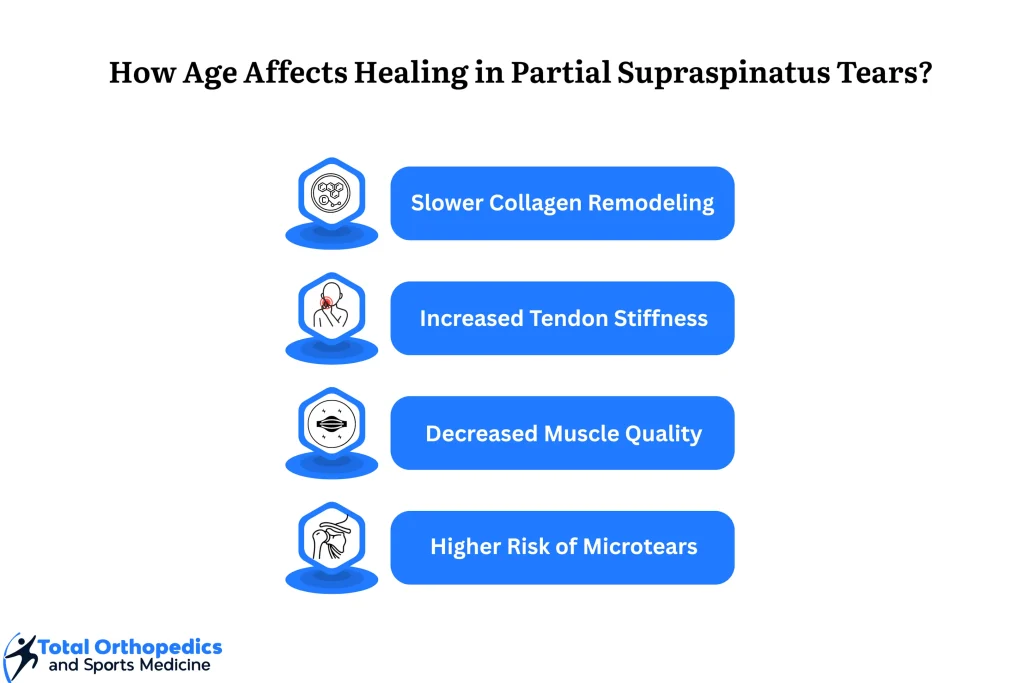
You may notice early improvement in partial supraspinatus tear symptoms within 6 to 12 weeks of nonsurgical treatment. However, full recovery with strength restoration often takes 6 to 12 months or even longer, depending on patient age, activity level, and lifestyle factors like smoking or poor posture. Here are some other factors that can affect the healing timeline:
- Pre-existing degenerative changes or other rotator cuff injuries
- Consistency with physical rehabilitation and strengthening exercises
- Strength of surrounding shoulder muscles and scapular stability
- Structural factors, such as bone spurs, that increase tendon irritation
- Underlying issues like chronic impingement or shoulder instability
Quick Tip: To improve non-surgical treatment outcomes, maintain adequate protein and micronutrient intake, as it supports tissue repair.
What Is the Prognosis for a Grade Two Supraspinatus Tear?
Grade two supraspinatus tears generally respond well to structured conservative treatment, with many patients experiencing pain relief and functional improvement within the first few months. In fact, ISAKOS reports that even patients initially scheduled for a surgical procedure may achieve significant pain relief within six months of conservative care, allowing them to avoid surgery.
Furthermore, most partial supraspinatus tears do not rapidly worsen over time. According to the Orthopaedic Journal of Sports Medicine, only 14% of partial tears progress to a full-thickness tear within 24 months. Even when progression occurs, doctors still prefer conservative care over surgical intervention. In such cases, delaying surgery does not negatively affect postoperative outcomes.
Can Early Orthopedic Assessment Improve Non-Surgical Outcomes?
Yes, early orthopedic assessment can significantly improve non-surgical outcomes. During this assessment, doctors perform focused physical exams and order MRI scans or ultrasound imaging to identify the exact tear size, extent, and location. These advanced diagnostics also help them differentiate rotator cuff tears from other conditions, such as bursitis or impingement.
Based on these findings, doctors can develop targeted treatment plans that directly address the underlying source of pain. Moreover, early assessment supports structured rehabilitation planning, which improves functional outcomes and helps prevent the worsening of structural damage. Similarly, orthopedists also perform biomechanical assessments to identify postural issues or movement imbalances that strain the injured tendon. Then, they recommend posture correction, activity modification, and movement retraining to reduce tendon overload.
When Does a Grade Two Supraspinatus Tear Require Surgery?
A grade two tear may require surgery if it involves more than 50 percent of the tendon thickness and fails to improve after three months of non-operative treatment. Doctors may also recommend surgical care if you experience persistent pain, significant shoulder weakness, or progressive loss of function. Additionally, if the tear results from an acute injury, early surgical repair is often recommended to restore function.
Visit Total Orthopedics & Sports Medicine For A Personalized Non-Surgical Treatment Plan For Shoulder Pain!
Although a grade two supraspinatus tear is less severe than a grade three injury, it can still limit daily activities, disrupt sleep, and restrict arm movement. To relieve these symptoms, you should consult an orthopedist promptly, who can design an appropriate conservative treatment plan. Without timely care, the tear may enlarge and progress into a full-thickness rupture that often requires surgery.
At Total Orthopedics and Sports Medicine, we offer comprehensive orthopedic care under one roof, including advanced diagnostics, conservative treatment, minimally invasive surgical options, and coordinated follow-up. Moreover, our doctors can also review your prior diagnostic results and treatment records to offer a clear second opinion. Contact us or visit Westchester Ave, #100, Bronx for expert orthopedic care.
FAQs
What Is a Grade 2 Rotator Cuff Tear in the Shoulder?
A grade 2 rotator cuff tear is a partial-thickness tear in which some tendon fibers are damaged, but the tendon remains attached to the bone. It typically involves 25 to 50 percent of the tendon thickness, with a tear depth of about 3 to 6 mm, and usually responds well to conservative care.
Can a Tear Shrink Naturally Over Time?
No, a supraspinatus tear cannot shrink, heal, or reattach to the bone on its own. This is because the supraspinatus tendon has a poor blood supply and remains under constant load during daily arm movements. These factors can prevent natural tendon reattachment and may prolong recovery without proper non-surgical treatment.
Does Obesity Affect Supraspinatus Healing After a Rotator Cuff Injury?
Yes, obesity can negatively affect supraspinatus healing after a rotator cuff injury. It contributes to chronic inflammation and reduced blood flow to tendons, which slows tissue repair. Increased body mass also places increased mechanical strain on the shoulder and interferes with muscle activation, which can limit rehabilitation progress and delay functional recovery.
What Size Supraspinatus Tear Needs Surgery?
A supraspinatus tear usually requires surgery when it measures more than 3 cm in size. At this stage, the tendon has typically detached completely from the bone, which leads to loss of shoulder function. To address this complete tear, doctors perform arthroscopic rotator cuff repair. This surgery utilizes tiny instruments and a small camera to minimize tissue trauma.
What Happens if You Don’t Repair a Torn Supraspinatus Tendon?
If a torn supraspinatus tendon is not repaired, the tear may enlarge over time, leading to chronic shoulder pain, progressive weakness, and a reduced range of motion. Ongoing damage can also lead to muscle atrophy, fatty degeneration, and frozen shoulder. These changes may reduce the chances of a successful surgical repair.
Which Symptoms Indicate a Grade Two Supraspinatus Tear?
Common symptoms of a grade two supraspinatus tear include consistent, dull ache, noticeable weakness, and a reduced range of motion. These symptoms often worsen during overhead lifting or backward arm movements. You may also experience nighttime discomfort that disrupts sleep and increased pain when you move your arm between 70 and 120 degrees of abduction.
Can a Grade Two Supraspinatus Tear Get Worse Without Surgery?
Yes, a grade two supraspinatus tear can worsen without surgery in limited cases. Generally, partial tears respond well to conservative treatment when managed early. However, continued loading of the supraspinatus muscles and tendons without proper care can gradually worsen the tear. Over time, this may lead to muscle atrophy and fatty infiltration, which reduces the effectiveness of future treatment.


