

How Do You Fix Spinal Stenosis Without Surgery?
You can fix spinal stenosis through conservative treatments to relieve nerve pressure and reduce pain. Doctors typically prescribe anti-inflammatory drugs to ease swelling and spinal stenosis pain. For more targeted relief, you can receive epidural steroid injections. These injections lower swelling around spinal nerves and help reduce lower back pain. To support your recovery, you can also make lifestyle changes that reduce stress on your spine.
Living with chronic discomfort, limited movement, or nerve compression can disrupt your daily life. At Total Orthopedics & Sports Medicine, we offer personalized non-surgical treatment plans tailored to relieve spinal stenosis symptoms. Our doctors can help you regain comfort, mobility, and control without surgery. Contact us at 855-321-6784 to schedule your consultation today and start your path toward lasting relief.

What Are the Non-Surgical Treatments for Spinal Stenosis?
Non-surgical treatments for spinal stenosis include oral medications, epidural steroid injections, nerve blocks, acupuncture, and lifestyle modifications. These options help you relieve pain and improve function without surgery. For example, oral medications like nonsteroidal anti-inflammatory drugs reduce inflammation and spinal stenosis pain effectively. Meanwhile, epidural steroid injections target swelling around affected spinal nerves, providing significant relief. Acupuncture also plays a key role by stimulating your nervous system to ease nerve compression and promote healing.
In addition to these treatments, lifestyle modifications can help manage your symptoms well. Keeping a healthy weight lowers pressure on your spine. Avoiding activities that cause nerve pain helps prevent flare-ups. According to research published in the National Library of Medicine, lifestyle modifications combined with epidural steroid injections improved pain and function of most patients with lumbar spinal stenosis after 6 months. However, these non-surgical methods do not fix the narrowing of the spinal canal itself. They reduce pain caused by bone spurs, herniated discs, or spinal tumors. By working with our orthopedic surgeon, you can create a personalized treatment plan focused on easing pain without spine surgery.
Can Heat and Cold Therapy Provide Relief from a Compressed Spine?
Yes, heat and cold therapy can relieve a compressed spine by easing pain and reducing inflammation. Heat therapy increases blood flow and relaxes tense muscles, which helps improve flexibility and promote healing. On the other hand, cold therapy numbs sharp pain and reduces swelling by slowing nerve activity and blood circulation.
Also, when you use both treatments properly, they can support your recovery without surgery. Although these treatments don’t treat spinal compression, they ease discomfort from conditions like spinal stenosis or herniated discs. By alternating heat and cold, you can manage symptoms more effectively and maintain mobility in daily life.
At Total Orthopedics & Sports Medicine, we offer personalized, non-surgical treatments, including advanced heat and cold therapy, to ease your pain and restore your movement. With our expert guidance, you can manage your symptoms effectively. Contact us at 855-321-6784 to schedule your appointment today.
What Is the Role of Bracing in Spinal Stenosis Treatment?
Bracing plays a key role in spinal stenosis treatment by reducing pressure on the lower spine. It limits micro-movements that cause nerve root irritation and pain. A brace can shift weight toward your abdomen by supporting your posture to reduce strain on the lumbar spine. This reduces discomfort and prevents further injury during daily activities.
Moreover, wearing a brace can improve your spinal stability, allowing you to move with less pain. According to the National Institute of Arthritis and Musculoskeletal and Skin Diseases (NIAMS), braces effectively manage symptoms of spinal stenosis. They also enhance spinal alignment in some patients. When combined with anti-inflammatory medication, bracing supports your overall treatment plan and improves your quality of life.
Can Acupuncture Help Reduce Spinal Pressure?
Yes, acupuncture can help reduce spinal pressure by easing nerve irritation and improving circulation in your spinal column. It works by stimulating targeted points on your body to release tension, especially around the lumbar spine. This reduces inflammation and helps relieve pain caused by spinal stenosis or degenerative disc disease.
As a non-surgical treatment option, acupuncture relaxes tight muscles, improves mobility, and supports blood flow to affected vertebrae. It doesn’t reverse spinal canal narrowing. However, it can significantly reduce symptoms linked to nerve compression and spinal cord pressure. Many people with lumbar stenosis or cervical spinal stenosis experience significant pain relief through regular acupuncture sessions. In fact, according to a study, patients receiving acupuncture experienced a 50% improvement in chronic back pain symptoms compared to those who didn’t.
At Total Orthopedics & Sports Medicine, our specialists offer safe and effective acupuncture treatment to relieve pressure and reduce spinal stenosis pain. If you’re seeking long-lasting pain relief without surgery, contact us at 855-321-6784 and take the first step toward spinal comfort.
How Do Postural Adjustments Affect Spinal Compression?
Postural adjustments play a key role in managing spinal compression and reducing pain. Poor posture increases pressure on your spinal discs and nerve roots, which may worsen spinal stenosis symptoms or cause nerve compression. Over time, this added strain can lead to pain, numbness, or weakness in your arms.
In contrast, maintaining a good posture helps realign your spinal column and evenly distribute weight across your spine. This reduces stress on your lumbar spine and cervical spine, helping relieve pressure on spinal nerves. As a result, you may experience less nerve pain, better mobility, and fewer flare-ups of spinal stenosis.
Also, strengthening your core muscles and maintaining proper posture supports your spine’s natural curves. They also ease strain on nearby spinal structures. Over time, these changes can relieve spinal stenosis symptoms and prevent the need for surgical intervention.
How Can Lifestyle Modifications Improve Your Spinal Health?
By adopting a healthier lifestyle, you can reduce spinal canal narrowing and relieve pressure on affected nerves. For example, maintaining a healthy weight decreases strain on the lumbar spine and reduces nerve compression. Additionally, regular low-impact exercise also improves flexibility in the lumbar spine and promotes blood flow, which aids healing.
According to Spine Health, incorporating regular movement and avoiding long periods of inactivity supports spinal wellness and can help prevent spine-related problems over time. When lifestyle changes aren’t enough, medications like anti-seizure drugs or pain relievers may also help manage nerve pain or discomfort caused by spinal narrowing.
When Is Surgery Necessary for Lumbar Stenosis?
Surgery for lumbar stenosis is usually recommended when conservative treatments fail to ease your pain or restore daily function. If you continue to suffer from intense leg pain, numbness, or weakness despite medications or injections, it may be time to consider surgery. Additionally, signs like difficulty walking or losing bladder or bowel control require urgent surgery.
As symptoms progress, untreated spinal compression may lead to permanent nerve damage. Early surgical intervention can prevent this and help restore your mobility. At Total Orthopedics & Sports Medicine, we carefully assess your condition and use magnetic resonance imaging to guide your treatment. If surgery is necessary, our specialists offer minimally invasive spinal fusion designed to relieve nerve pressure, reduce pain, and speed up your recovery.
What Are the Risks of Delaying Spine Surgery?
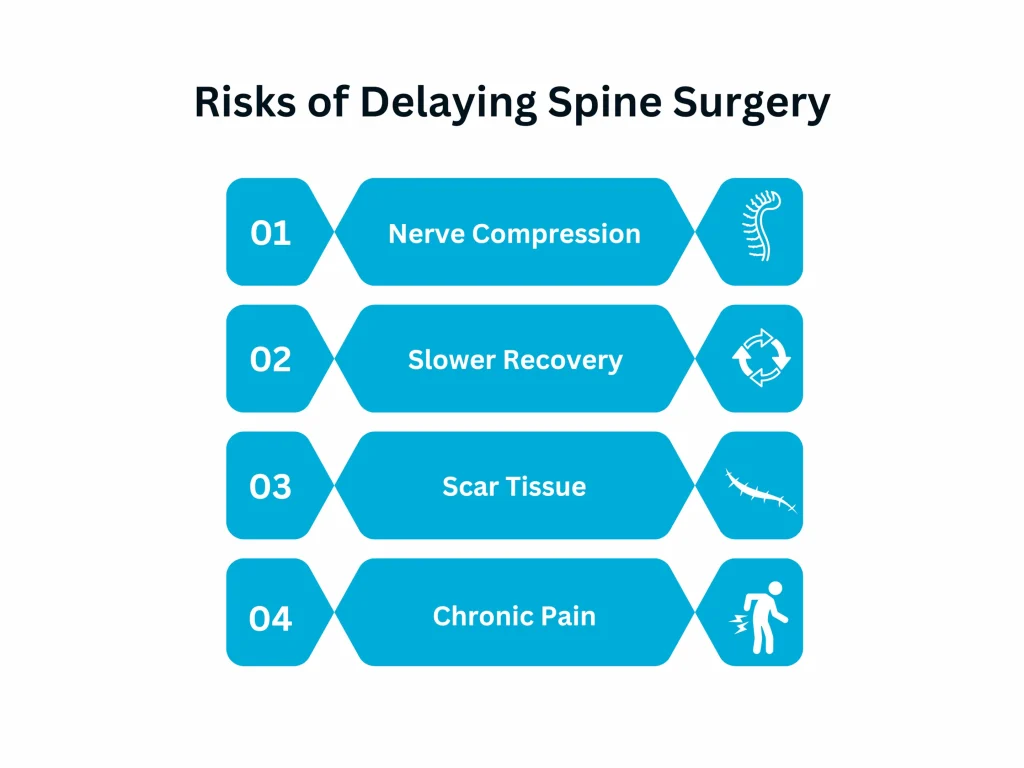
Delaying spine surgery can worsen your spinal stenosis symptoms and increase the narrowing of the spinal canal. As nerve compression worsens, you may experience too much pain, numbness, or limb weakness. Over time, these symptoms can cause permanent nerve damage or even loss of bowel and bladder control.
Additionally, postponing surgery allows spinal bone changes and scar tissue to develop around spinal structures. This makes surgery more complex and recovery slower. Chronic pain may also become difficult to manage without timely treatment.
Total Orthopedics & Sports Medicine Offers Proven Non-Surgical Treatments for Spinal Stenosis — Book Your Visit Now!
Living with constant spinal stenosis pain can significantly impact your daily life, making routine activities challenging and limiting your mobility. The pressure on your spinal nerves and narrowing of the spinal canal often lead to persistent discomfort and significant symptoms. This ongoing pain can affect your work, sleep, and overall health, leaving you feeling frustrated and stuck. However, effective treatment options are available to help you manage your pain.
At Total Orthopedics & Sports Medicine, we offer personalized, non-surgical treatments that target your specific condition. Our expert team focuses on relieving pain, enhancing spinal function, and improving your quality of life through proven therapies and lifestyle adjustments. Contact us today at 855-321-6784 or visit our Bayside office at 207-12 Northern Blvd, 3rd Floor, NY 11361 to start your journey to better spine health.
FAQs
Can Chiropractic Care Improve Spinal Compression?
Yes, chiropractic care can help relieve spinal compression by realigning your spinal column and easing pressure on nerve roots. It can also reduce spinal stenosis pain and improve mobility. Chiropractic treatment works best alongside other spinal stenosis treatments. Therefore, always speak with your orthopedic specialist before starting chiropractic care, especially if you have severe spinal stenosis or spine osteoarthritis.
Are Epidural Steroid Injections Suitable for Stenosis?
Yes, epidural steroid injections are a suitable treatment for spinal stenosis. They reduce inflammation and ease nerve pain by relieving pressure on the affected spinal nerves. These injections can provide significant pain relief, especially for arm or leg pain. However, they don’t cure the narrowed spinal canal. Your doctor will suggest them based on your symptoms and the severity of your spinal compression.
Is It Possible to Relieve Spinal Pain Naturally?
Yes, you can relieve spinal stenosis pain naturally by strengthening your core muscles and improving spinal alignment. Low-impact exercises, massage therapy, and proper posture reduce nerve compression and alleviate symptoms of spinal stenosis. While natural treatments relieve mild symptoms, combining them with pain management often provides better relief from spinal canal narrowing.
What Is the Best Way to Sleep With Spinal Stenosis?
The best way to sleep with spinal stenosis is to support your lumbar spine’s natural curve. For example, try lying on your back with a cushion beneath your knees or on your side with a pillow between your legs. Avoid stomach sleeping, as it increases pressure on spinal nerves and worsens spinal stenosis pain.
Can a Decompression Procedure Reduce Spinal Pressure?
Yes, a decompression procedure can reduce spinal pressure by relieving nerve compression and widening the narrow spinal canal. It helps ease spinal stenosis pain, improves mobility, and restores function in your arms or legs. Doctors typically recommend this surgical procedure when a non-surgical procedure fails to treat spinal stenosis.
Are There Home Remedies for Spinal Narrowing?
Yes, there are home remedies that can ease pain caused by spinal narrowing. Using heat or ice packs helps reduce inflammation and nerve compression. Gentle stretching and strengthening your core muscles also support your spine and improve mobility. Additionally, maintaining good posture throughout the day helps relieve spinal stenosis pain. Still, if symptoms worsen or become severe, consult your orthopedic surgeon for a personalized treatment plan.
How Does Spinal Stenosis Affect Nerve Function?
Spinal stenosis narrows your spinal canal, compressing spinal nerves and causing neck pain and numbness. This nerve compression disrupts signals to your arms or legs, leading to weakness and chronic pain. If untreated, spinal stenosis can cause severe nerve damage, affecting bowel and bladder control. Early treatment helps protect spinal nerves and relieve symptoms.


