

Does Scoliosis Get Worse with Age?
Yes, scoliosis can worsen with age, as spinal degeneration and muscle weakness may increase curve progression, causing pain and nerve compression. In older adults, this can result in spinal stenosis, which affects mobility. However, strengthening core muscles can help reduce pain, improve posture, and slow progression.
If you have severe scoliosis symptoms, like pain, nerve pressure, or limited movement, it’s essential to get help early. At Total Orthopedics & Sports Medicine, we offer advanced treatments that fit your needs. Our team specializes in managing juvenile scoliosis, helping you reduce pain and slow the progression. Contact us today at 855-321-6784 to start your path toward better spinal health.

What Are the Signs That Scoliosis is Getting Worse?
Signs of scoliosis worsening include increased back pain, visible changes in posture, uneven shoulders, or rib cage protrusion. You may also experience leg pain or discomfort during movements. In more severe cases, the spine can press vital organs, causing breathing problems.
As the condition progresses, it may impact balance, raising the risk of falls or injury. According to the AANS, a study found that about 40% of adult scoliosis patients experience curve progression. However, about 10% of individuals experience a significant worsening of the spinal curve. This shows the importance of regular physical exams and imaging tests, such as X-rays, to track any changes in the spine over time.
How Does a Doctor Diagnose Adult Scoliosis?
A doctor diagnoses adult scoliosis through a physical exam and tests like X-rays or MRI scans. The doctor checks for signs like uneven shoulders, rib cage protrusion, or an abnormal spinal curve during the exam. Imaging tests show how much the curve has changed and can also find problems like spinal narrowing or nerve issues.
Based on these findings, your doctor will examine the severity of the condition and create a customized care plan. According to a study published in Acta Scientific Orthopaedics, adults with scoliosis curves greater than 50 degrees have a nearly 100% risk of progression over time. As a result, your doctor may recommend conservative treatment like bracing or, in more severe cases, scoliosis surgery. At Total Orthopedics & Sports Medicine, we specialize in providing a thorough scoliosis diagnosis. Our team helps you in choosing the most effective treatment plan. Contact us today at 855-321-6784 to schedule your consultation.
What Are the Risks of Scoliosis Surgery in Older Adults?
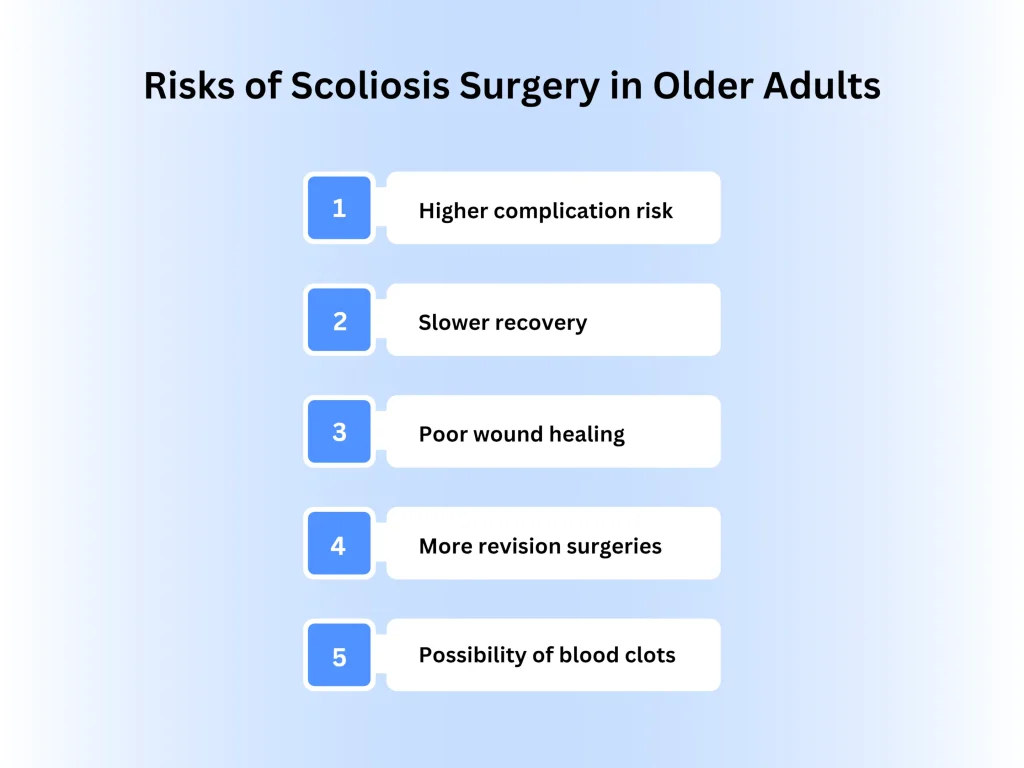
Scoliosis surgery in older adults carries risks such as nerve damage, excessive blood loss, infection, and reactions to surgical hardware. Long-term complications may include chronic pain, hardware failure, and reduced spinal flexibility. Additionally, health problems that come with age and slower bone healing can raise the risk of complications.
According to a study published in PubMed, scoliosis surgery in adults carries a 39% overall complication rate. 26% of those patients eventually needed reoperation due to hardware failure or nerve-related problems. Because of these risks, many individuals explore non-invasive treatments like bracing as alternatives. These options can often provide relief from symptoms and improve quality of life without the need for surgery.
How Can Lifestyle Changes Slow the Progression of Scoliosis?
Lifestyle changes involving a balanced diet and good posture can help slow the progression of scoliosis. A healthy diet rich in calcium, vitamin D, and omega-3 fatty acids supports bone strength and reduces inflammation. Additionally, regular exercise, especially to strengthen your core, helps support your spine better.
According to the National Institutes of Health (NIH), scoliosis-specific exercises can help slow the progression of a visibly curved spine in adults. These exercises improve spine stability and help maintain proper alignment. Additionally, maintaining good posture reduces strain on your spine, promoting balanced muscle development. Staying active also improves spinal flexibility and lowers the risk of nerve compression.
Are There Alternative Therapies to Manage Scoliosis?
Yes, there are alternative therapies to manage scoliosis. These include the Schroth method, yoga, Pilates, and chiropractic care. These therapies help strengthen the muscles around your spine, improve posture, and reduce pain. Additionally, they can increase spinal flexibility in mild cases, which may help prevent further strain on the spine.
These therapies may not reverse the progression of smaller curves in all cases. However, they can still provide significant benefits. These include reducing discomfort and improving mobility. According to a study published in MDPI, chiropractic techniques, including spinal manipulation, can effectively reduce the Cobb angle in the short term. Additionally, working with your healthcare provider to decide which therapy is best suited for your condition is essential. At Total Orthopedics & Sports Medicine, we offer personalized care to help manage scoliosis. Contact us today at 855-321-6784 to schedule your consultation and find the best treatment for your condition.
Can Walking Improve Symptoms of Degenerative Scoliosis?
Yes, walking can help with degenerative scoliosis symptoms. It strengthens muscles, improves posture, and increases spinal movement. Regular walking reduces pain and prevents stiffness in the spine. It also helps keep the spine in the right position and may slow down the condition by balancing the muscles.
In addition, walking helps build core strength and improves blood flow, which reduces pressure on the spine. Walking regularly can help you keep a healthy weight and reduce spine stress. Over time, this simple exercise can help keep your spine stable and flexible, leading to a more active and comfortable lifestyle.
Is Your Scoliosis Getting Worse with Age? Get the Care You Need at Total Orthopedics & Sports Medicine — Book Your Visit Now!
As you age, childhood scoliosis can worsen, causing lower back pain, changes in posture, and reduced mobility. These problems can make it difficult to carry out everyday activities, impacting your overall quality of life. If scoliosis is not treated, it can cause serious problems, such as nerve pressure and ongoing pain, affecting your ability to move comfortably.
At Total Orthopedics & Sports Medicine, we provide expert care and personalized treatment plans for degenerative scoliosis. Our team is here to help you manage symptoms, improve mobility, and restore your overall well-being. Contact us today at 855-321-6784 to schedule your visit and take the first step toward a pain-free, more active future.
FAQs
Does Scoliosis Progress in Older Adults?
Yes, scoliosis can worsen with age, especially if you had mild scoliosis as a child or teenager. Changes in the spine and weak muscles can cause the curve to get bigger as you age. In some cases, severe scoliosis may require spinal surgery. Gentle activities can also help relieve pain and manage symptoms effectively.
Does Scoliosis Affect Sleep Quality?
Yes, scoliosis can make sleeping difficult due to back pain caused by the abnormal spinal curvature. If the curve affects the upper back, it may also cause breathing problems or pressure on nerves, which disrupts sleep. Using a back brace can help reduce discomfort and improve sleep quality.
Can Scoliosis Lead to Disability in Advanced Age?
Yes, scoliosis can lead to disability if not appropriately managed. Over time, the spinal curve may cause nerve compression, long-term pain, and limited movement. Walking or standing for long periods may become difficult. In more serious cases, the curve can press on nerves or organs. Some people may eventually need help with daily tasks or use a cane or walker for support.
Does Scoliosis Progression Differ by Spinal Region?
Yes, scoliosis progression can vary across different parts of the spine. The thoracic spine (upper back) is more likely to develop a bigger curve, especially in adolescent scoliosis. X-rays or other imaging tests can show how much the curve has changed. This helps doctors decide on the best scoliosis treatment.
What Are the Risk Factors for Idiopathic Scoliosis?
Risk factors for idiopathic scoliosis include family history, female gender, and rapid growth during childhood. The condition is more likely to worsen before reaching skeletal maturity. Therefore, regular check-ups during growth periods are essential because rapid curve progression can happen in the early teen years.
Can Scoliosis Cause Nerve Compression Over Time?
Yes, scoliosis can lead to nerve compression if the spine curves more over time. Pinched nerves may cause pain, numbness, or weakness in the legs or arms. In many cases, targeted rehabilitation can manage symptoms of scoliosis and relieve pressure on nerves. At Total Orthopedics & Sports Medicine, our team can create a personalized treatment plan to address your symptoms effectively.
Are Women More Likely to Experience Scoliosis?
Yes, women are more likely to develop scoliosis. This is especially true for idiopathic scoliosis, which usually appears during adolescence. Girls often experience rapid curve progression during periods of growth. As a result, they are more likely to need to treat scoliosis, which may require surgery to prevent further complications.


