

Is Your SI Joint Pain Coming From Your Disc?
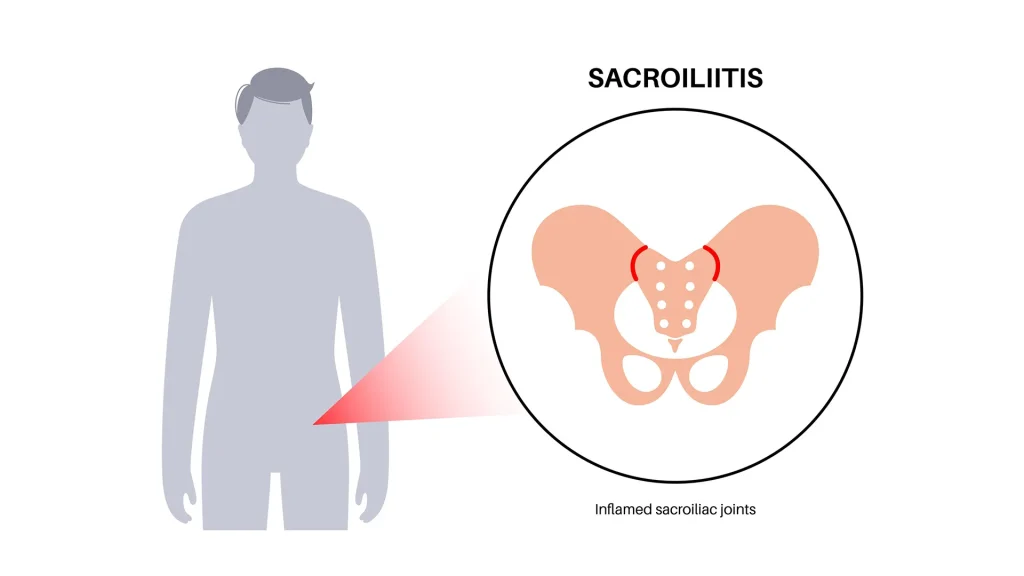
Yes, your SI joint pain can originate from a lumbar disc when a damaged lumbar disc irritates nearby nerves that supply the sacroiliac joint. This irritation sends overlapping pain signals into your buttocks and lower spine. You may also experience symptoms in one leg due to nerve involvement. As a result, this shared neural pathway can closely replicate sacroiliac joint pain patterns.
At Total Orthopedics and Sports Medicine, our back surgeons will perform a detailed physical exam to identify the exact source of your pain. They assess your movement, apply targeted stress tests, and assess nerve responses to differentiate disc and SI joint involvement. This hands-on approach ensures an accurate diagnosis and guides the right treatment. Call 855-321-6784 to schedule your appointment.
How Does Lumbar Disc Damage Mimic Sacroiliac Joint Pain?
Lumbar spine disc damage mimics sacroiliac joint pain when internal disc disruption increases pressure on nearby nerves and alters load transfer across the pelvis. This pressure disrupts normal weight distribution through your spine at the sacrum and iliac bones. In this condition, you feel pain in areas commonly linked to the sacroiliac joint, even when the disc is the primary source of pain.
Additionally, lumbar disc damage can affect surrounding structures in the following ways:
- Compensatory Movements: A herniated disc often causes localized back pain or leg pain (sciatica). To avoid this pain, you may subconsciously change your posture or gait, which places uneven mechanical stress on the SI joints.
- Post-Surgical Stress: Patients who have undergone lumbar fusion surgery (especially at levels L4–L5 or L5–S1) are at a much higher risk for SI joint pain. The fusion forces the SI joints to absorb more shock and movement to compensate for the rigid segments of the spine.
- Muscle Imbalance and Guarding: Disc-related pain can lead to tight muscles around the lower spine, which can protect the injured area. This constant muscle guarding increases strain on the sacroiliac joint, leading to additional joint pain.
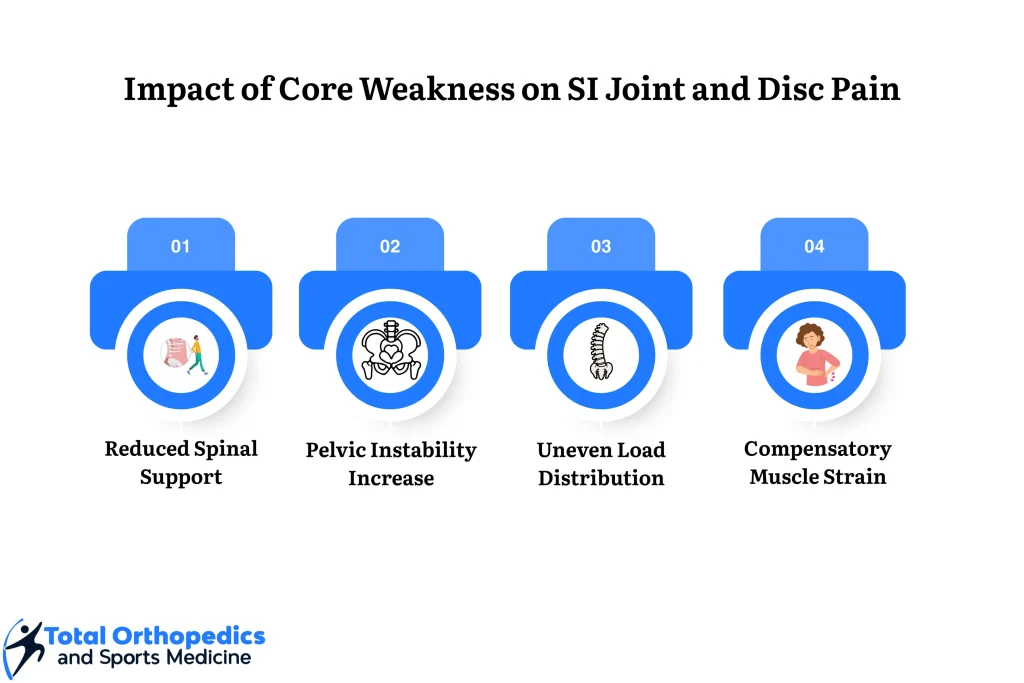
- Altered Pelvic Stability: Disc damage can reduce stability in your lumbar spine and disrupt normal movement patterns. This instability shifts uneven forces across your pelvis and places excess stress on the SI joints.
- Inflammatory Spillover: A damaged disc can trigger inflammation that spreads to nearby joints and soft tissues. This inflammatory response can irritate the sacroiliac joint and contribute to overlapping pain symptoms.
How Can You Tell If Pain Is From the SI Joint or the Disc?
SI joint pain usually stays in your buttocks and worsens with standing or shifting weight, while disc pain often spreads into one leg and increases with sitting. Besides that, SI joint dysfunction often causes localized tenderness and pain during transitional movements such as standing up, climbing stairs, or shifting weight onto one leg. However, disc-related symptoms include numbness, tingling, or weakness due to nerve irritation.
Similarly, disc pain increases with sitting, bending forward, or prolonged posture. To identify the exact source of pain, a doctor performs a detailed physical examination, which provides the most reliable distinction between these conditions. They will assess movement, apply targeted stress tests, and evaluate nerve-related symptoms. This structured approach ensures an accurate diagnosis and guides the right treatment plan.
Which Tests Help Confirm The Source Of SI Joint Pain?
Doctors use the FABER test and Thrust test to confirm the source of SI joint pain, as reported by the PubMed study on sacroiliitis. In the FABER test, your doctor places your leg in a figure-four position to stress the sacroiliac joint. This position helps identify SI joint pain when it reproduces discomfort in your buttocks or posterior pelvis. In the Thigh Thrust test, pressure through your femur loads the joint and confirms the pain origin. Here are the other tests that can confirm the source of SI joint pain:
- Gaenslen Test: Your doctor stretches both sides of your pelvis by extending one leg while the other leg remains bent. This movement increases stress on the SI joint and reproduces pain in the affected joint.
- Compression Test: Your doctor applies downward pressure on your pelvis while you lie on your side. This pressure compresses the sacroiliac joint and helps identify inflammation or joint dysfunction.
- Distraction Test: Your doctor applies outward pressure to your pelvic bones while you lie on your back. This maneuver stresses the front of the sacroiliac joint and confirms irritation when it reproduces your pain.
Other than that, the Single-Leg Stance Test and diagnostic SI joint injection also confirm the source of your pain with precision. During the Single-Leg Stance Test, you stand on one leg while your doctor assesses pelvic stability and pain response. Pain during this movement suggests sacroiliac joint dysfunction or instability. In contrast, a diagnostic SI joint injection uses a local anesthetic under imaging guidance, and temporary pain relief confirms the SI joint as the primary source of pain.
When Buttock Pain Is Not SI Joint Related?
If you experience buttock pain that spreads into your leg or follows a nerve pattern, it is not related to the SI joint. In such cases, the pain typically originates from a herniated disc and radiates downward, often worsening with sitting or bending. This type of pain often indicates nerve irritation in the lumbar spine. In contrast, SI joint pain usually stays localized in the buttock area.
Moreover, buttock pain may not be SI joint related when it remains isolated in the lower spine without clear joint tenderness. You may also notice pain that increases with coughing, sneezing, or prolonged sitting, which suggests disc involvement. In some cases, muscle strain or piriformis syndrome can also cause buttock pain without SI joint dysfunction.
Can SI Joint Pain Occur Without Back Pain?
Yes, SI joint pain can occur without chronic lower back pain when irritation remains localized in the sacroiliac joint and surrounding structures. You may feel pain mainly in the buttock, groin, or upper thigh without lower back discomfort. This pattern often overlaps with other pelvic or hip conditions, such as hip joint arthritis, muscle strain, or piriformis syndrome, because these conditions also cause pain in the groin or buttock area.
In fact, a clinical study published in Science Direct found that 46.5% of patients with sacroiliac joint dysfunction reported groin pain without typical lumbar symptoms. In contrast, only 8.1% of patients with disc herniation or spinal stenosis reported similar pain patterns. To identify the exact source of pain, doctors perform physical exams, such as SI joint tenderness and shear tests, which help distinguish SI joint pain from lumbar spine conditions.
How Do Position Changes Affect Disc vs SI Pain?
Position changes can affect disc and SI joint pain by altering pressure in your spine and shifting load across your pelvis. For example, disc pain often triggers when you sit, bend forward, or remain in one position for an extended period. This pain occurs because sitting increases pressure inside the lumbar discs and irritates nearby nerves.
However, standing up, climbing stairs, or placing weight on one leg often triggers sacroiliac joint pain. These movements stress the sacroiliac joint because it stabilizes your pelvis during load transfer. You may also experience pain during transitional movements, such as getting out of a chair.
To relieve sacroiliac pain, reduce stress on the joint by avoiding prolonged standing and uneven weight distribution. You can also improve symptoms by maintaining proper posture and keeping your pelvis stable during daily activities. In addition, gentle strengthening exercises help support the surrounding muscles and improve joint stability. You should also use ice or heat therapy to manage inflammation and reduce discomfort effectively.
How Does Movement Reduce Disc Pressure Gradually?
Movements such as walking, posture correction, and repeated extension exercises reduce disc pressure by improving spinal alignment. These movements shift the load from compressed discs and reduce irritation on nearby nerves. You may also notice pain radiating from your leg into your lower back, indicating pressure relief.
In addition, at Total Orthopedics and Sports Medicine, our doctors, Dr. Georgiy Brusovanik, MD, guide you through safe, structured movements to reduce disc pressure effectively:
- Guided Therapeutic Exercises: He will guide you about controlled exercises that support proper spinal alignment and reduce stress on affected nerves. These exercises are carefully selected to match your current physical capacity.
- Ongoing Progress Monitoring: Regular follow-ups allow our doctor to assess your body’s response to movement and adjust your plan when needed. This approach helps prevent worsening symptoms and ensures steady improvement.
- Posture and Body Mechanics Training: Dr. Georgiy Brusovanik, MD, also teaches proper posture techniques to minimize pressure on the lumbar discs during daily activities.
If these methods do not relieve pain, our lumbar spine surgeon will recommend other nonsurgical treatments, such as epidural steroid injections, nerve blocks, or radiofrequency ablation to reduce pressure. In cases where all conservative treatments are unsuccessful, Dr. Georgiy Brusovanik may also evaluate your condition for advanced surgical options such as artificial disc replacement, which can help preserve spinal motion while relieving pain. Moreover, if you’re seeking a second opinion, our doctor can review your medical history, prior imaging, and records to recommend effective treatment and minimally invasive procedures. Contact us today to schedule a consultation.
Which Nerve Roots Extend Pain Into The Buttocks?
The L4, L5, and S1 nerve roots extend pain into your buttocks because they form part of the sciatic pathway. These nerve roots exit your lower spine and travel through the pelvis. When the sciatic nerve is compressed, pain spreads along its path. As a result, you may feel deep, aching discomfort in the affected side.
In some cases, higher nerve roots, such as L2 and L3, can also contribute to buttock pain. These nerves primarily supply the front of the thigh and the groin. However, when irritation occurs, pain may spread to the lateral hip or upper buttock. This pain usually does not feel sharp like sciatic pain.
What Neurological Signs Indicate Disc Involvement?
Numbness and muscle weakness are the most common neurological signs that indicate disc involvement. These symptoms occur when a herniated or bulging disc compresses nearby nerve roots. As a result, you may feel numbness in areas such as the buttocks, thighs, calves, or feet. You may also experience nerve irritation, which can trigger a calf cramp, which often feels tight and painful at rest or during movement. Other than that, you may notice reduced sensation in specific areas or difficulty performing simple movements.
Here are the other signs that can indicate disc involvement:
- Radiating pain: Pain travels from your lower back into your buttock or leg along a nerve path.
- Tingling sensations: You may feel pins and needles in the leg or foot due to nerve irritation.
- Reduced reflexes: Knee or ankle reflexes may weaken when specific nerve roots are affected.
- Muscle atrophy: Long-term nerve compression can cause visible muscle shrinkage.
- Loss of coordination: You may struggle with balance or controlled movements.
Additionally, you may experience burning pain, electrical current-like sensations, and increased discomfort with certain movements. You may also feel weakness when lifting your foot or standing on your toes. In severe cases, nerve compression can affect bowel or bladder control. These symptoms require immediate medical evaluation to prevent permanent nerve damage and guide proper treatment.
Why Structural Imaging Alone Cannot Identify Pain Source?
Structural imaging tests cannot pinpoint the exact pain source because they only visualize the body’s anatomy and physical structure, while pain is a physiological and functional experience. However, many pain sources are mechanical and occur during everyday movements such as bending, twisting, or standing. These dynamic issues may not appear on imaging, which cannot identify the actual source of pain.
The following factors also explain the limitations of imaging in identifying the actual source of your pain:
Invisible Drivers of Pain
Pain can develop from subtle inflammation, nerve irritation without clear compression, or muscle imbalances that imaging cannot detect. This is because pain can affect the body’s function rather than its structure, making it difficult to detect on standard scans. In such cases, you may feel significant discomfort even when imaging appears normal.
Asymptomatic Structural Findings
Structural abnormalities are extremely common in people, but they do not experience any symptoms. For example, a 2-minute Medicine study on asymptomatic structural findings reports that 52% of individuals have disc bulges, 27% have protrusions, and only 1% have extrusions on MRI scans. However, these findings often reflect normal aging instead of injury. Therefore, standard imaging does not always explain your symptoms or identify the actual source of pain.
Central Sensitization
Chronic pain can develop when your nervous system becomes overly sensitive. In this state, your brain continuously sends pain signals even after the original injury has healed. This process does not involve visible structural damage. In such conditions, imaging cannot detect any abnormality and requires clinical assessment.
Visit Total Orthopedics and Sports Medicine for an Accurate Diagnosis of SI Joint vs Disc Pain!
Diagnosing SI joint pain versus disc pain can be difficult because the symptoms often overlap. In such conditions, you may experience persistent discomfort that does not respond to rest or basic treatment. Without an accurate diagnosis, your condition may continue to progress and affect your mobility.
With recognition from CNN and PBS for his expertise, Dr. Georgiy Brusovanik, MD, our minimally invasive spine surgeon at Total Orthopedics and Sports Medicine, performs the FABER test, Gaenslen’s test, and straight leg raise to assess your condition. We also use dynamic X-rays to assess spinal movement and diagnostic injections to confirm the exact pain source. Call 855-321-6784 or visit 1111 Park Ave, #1, NY 10128 for a correct diagnosis.
FAQs
Why Does My Pain Keep Shifting?
Your pain keeps shifting because irritated nerves send signals along different pathways over time. These pathways change based on movement, posture, and inflammation levels. As a result, pain may travel between your back, buttocks, and legs. Moreover, muscle compensation can alter pain patterns.
Can SI Joint Pain Mimic Sciatica?
Yes, SI joint pain can mimic sciatica because both conditions cause pain that radiates into the leg. However, SI joint pain usually remains above the knee, while actual sciatica often extends below it. You may also notice that SI pain worsens with movement, while sciatica follows a nerve pattern.
Can Poor Posture Trigger Disc Pain?
Yes, poor posture can trigger disc pain by placing uneven pressure on your spinal discs. You may experience discomfort in your lower back, neck, or shoulders due to this strain. Moreover, prolonged sitting or slouching can weaken supporting muscles and increase disc stress.
What Signs Suggest the Disc Is Causing Pain?
If you experience sharp or radiating discomfort that follows a nerve pathway, you may have disc-related pain. You may feel pain traveling from your lower back into your leg or from your neck into your arm. Additionally, numbness or muscle weakness can develop as the disc presses on nearby nerves.
How Does SI Joint Pain Usually Start?
SI joint pain usually starts with mild discomfort in your lower back or buttocks that gradually worsens with movement or prolonged standing. You may also notice stiffness when getting up from a seated position or when climbing stairs. Similarly, repetitive stress, poor posture, or minor injuries can trigger joint inflammation.


