
Why Can’t I Bend After a Spinal Fusion?
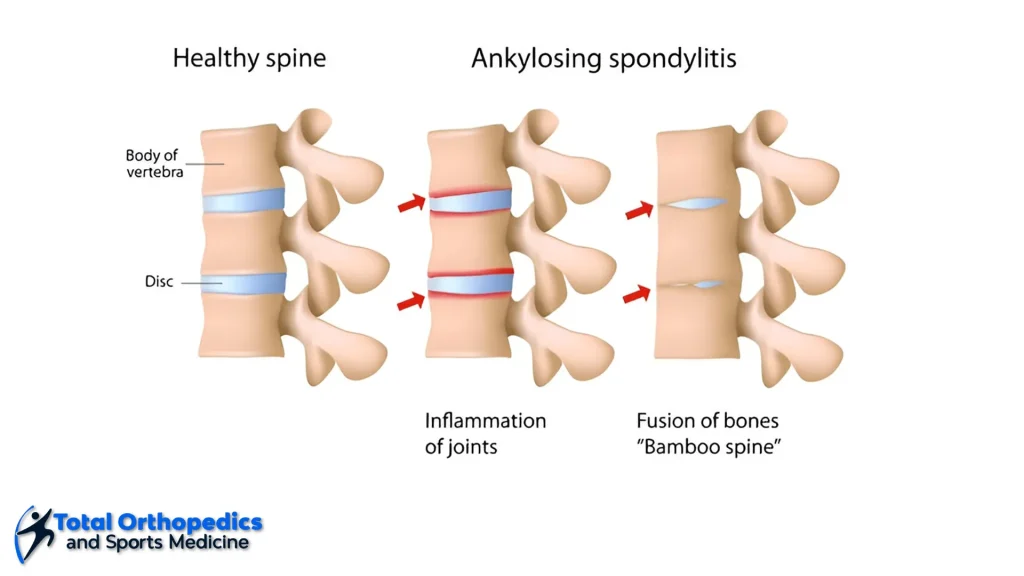
You can’t bend after a lumbar spinal fusion because the procedure permanently joins two or more vertebrae, eliminating movement between them. This loss of motion helps stabilize your spine and reduce pain in the affected area. However, bending after spine surgery may stress the lumbar fusion site, increase discomfort, and delay the healing process.
At Total Orthopedics and Sports Medicine, we fully understand the challenges you may face after spinal fusion surgery, especially the inability to bend or move freely. That’s why our skilled spine specialists provide personalized advice, post-surgical care, and customized rehabilitation plans. With our expert support, you can regain strength, restore spinal flexibility, and return to your normal activities with greater confidence. Call 855-321-6784 now and let your recovery start with expert hands!
Why Is Bending Difficult After a Spinal Fusion?
Bending becomes difficult after a spinal fusion because the surgical procedure joins two or more spinal segments. Due to loss of muscle tone and strength, these fused segments eliminate the spinal cord’s natural movement and range of motion, making it difficult to bend, twist, or flex.
However, the extent of motion loss depends on how many vertebrae are fused—more fusion leads to greater spinal bone stiffness. Limited motions stabilize the spine and relieve pain in the fused area. Moreover, a structured rehabilitation plan plays a key role in guiding safe, gentle movement and restoring normal activities.
A study published in the Journal of Neurosurgery Spine shows that patients who undergo two-level anterior cervical discectomy and fusion (ACDF) experience a 13.68% decrease in overall sagittal range of motion compared to those with single-level fusion. Moreover, motion increases by 31.3% above and 33.88% below the fused vertebrae, indicating compensatory stress in adjacent spinal segments.
These findings show the key role of postoperative rehabilitation. Working closely with a specialist at Total Orthopedics and Sports Medicine helps support your spinal fusion recovery and prevent issues like adjacent segment disease. So, contact us now and let us create targeted strategies to promote the overall health of your spine.
How Does Spinal Surgery Affect the Surrounding Muscles?
Spinal surgery affects the surrounding muscles by causing inflammation, disrupting normal movement, and leading to muscle weakness. Surgeons often cut through back muscles to access the spine, which causes discomfort, nerve damage, and chronic pain during the first few weeks of recovery.
Furthermore, limited physical activity after surgery can result in muscle atrophy, especially around fused segments of the spinal structure. This makes it difficult for you to return to an active life. Over time, scar tissue may form near the surgical site, which reduces flexibility and may lead to spinal instability.
In fact, a study on lumbar spine fusion patients showed a 26% increase in trunk extension strength and a 23% increase in flexion strength after 12 months. However, these values remained significantly lower compared to healthy individuals, indicating persistent muscle weakness and imbalance. These findings show that, despite some recovery, many patients often experience prolonged muscle weakness post-surgery.
Can Muscles and Tissues Fully Recover After Surgery?
Yes, muscles and soft tissues can fully recover after back surgery. However, your healing depends on factors like the extent of the procedure, your overall health, and your commitment to rehabilitation. Moreover, factors such as age, preoperative pain intensity, and initial muscle strength play essential roles in recovery outcomes.
As the recovery progresses, the body begins repairing muscle fibers and remodeling collagen. A personalized recovery plan introduces more advanced exercises that ease nerve pain, improve flexibility, and help you stay active without causing chronic pain. For most patients, this structured recovery reduces the risk of permanent restrictions and minimizes the need for future surgical procedures.
However, if you experience severe pain or develop problems in the fused area, contact Total Orthopedics and Sports Medicine immediately. We help you stay consistent with a conservative treatment plan that promotes lumbar spine healing and helps you safely return to a healthy lifestyle.
How Does Spinal Fusion Affect Your Posture?
Spinal fusion affects your posture by restricting flexibility in the fused area. This limited movement can alter your natural alignment, causing stiffness, imbalance, and pain. Over time, your muscles adapt to these changes. However, if surrounding muscles weaken or don’t function effectively, you may develop problems with your upper back during recovery.
An investigation found that patients who undergo Harrington spinal fusion hardware for scoliosis experience reduced lumbar lordosis and altered gait patterns. These include increased hip hyperextension and knee flexion, which are directly linked to the rigidity caused by spinal fusion. Besides this, inflammation and stiffness in muscles can make standing or walking feel unnatural. You may also notice a reduced range of motion in the spine, which can worsen if you don’t avoid bending or continue lifting heavy objects.
What Are the Stages of Recovery After Spinal Therapy?
Stages of recovery after spinal therapy involve rest and pain management, followed by gradual movement. By weeks 5 to 9, your spine begins to stabilize as the bones fuse. At this stage, guided exercise is important in helping you walk, perform light tasks, and rebuild strength without bending or twisting.
To help you better understand the healing process, below are the details of every stage:
Early Recovery: First Few Days After Surgery
You’ll typically remain in the hospital for 2 to 4 days after spinal fusion surgery. During this time, your medical team will monitor your pain levels and surgical site to ensure successful healing. If needed, your doctor may provide a back brace to limit motion and protect the surgical area.
Weeks 1 to 4: Healing and Light Movement
During the first month, your primary goal is to allow the vertebrae to fuse while keeping your spine stable. You may experience pain in certain circumstances, so continue taking prescribed medications. Moreover, if your job is not physically demanding, your doctor may allow you to return to work. However, you must avoid bending, twisting, and high-impact activities.
Weeks 5 to 9: Core Strength and Activity Resumption
At this point, your spine is actively fusing and gaining strength. You’ll begin walking regularly and handling simple chores. Furthermore, your therapists may recommend home or workplace modifications to make everyday activities easy for your spine’s full recovery.
Weeks 10 to 24: Exercise and Endurance Training
Between weeks 10 and 24, your recovery centers around building endurance and improving flexibility. At Total Orthopedics and Sports Medicine, we offer light cardiovascular workouts and stretching exercises tailored to your progress. So, get in touch with us now and let our spine specialists customize your recovery plan.

How Can I Bend Properly Again After Spinal Treatment?
After spinal treatment, regaining the ability to bend properly is a gradual process that requires focused rehabilitation and adherence to your therapist’s instructions. Also, it’s essential to use proper posture and avoid sudden, jerky movements to prevent straining your spine during recovery.
Research suggests that engaging in rehabilitation exercises, such as lower-limb strengthening, enhances muscle force and reduces lower back pain. Therefore, personalized rehabilitation programs are vital for optimizing postoperative outcomes. Here are some proven exercises that will help in the spinal fusion recovery at home:
- Walking: Take short walks around your living room to help improve circulation and promote healing.
- Stretching: Gentle stretches, such as flexing and pointing your feet or stretching your back slowly, can help in healing and prevent stiffness.
- Abdominal Contractions: To perform this exercise, lie flat on your back with your knees bent. Rest your hands on your ribs and gently contract your abdominal muscles. Then, hold for 5 seconds and repeat 10 times.
- Straight Leg Raises: While lying on your back, bend one leg at the knee and keep the other straight. Engage your abdominal muscles and slowly raise the straight leg, holding for 5 seconds. Repeat 10 times on each side.
- Heel Slides: Lie flat on your back and gently bend and straighten one knee at a time. Now, perform 10 repetitions on each side.
Is It Normal to Experience Pain When Bending After Surgery?
Yes, it is normal to experience pain when bending after surgery. The body undergoes a healing process, and surrounding tissues may become inflamed, leading to sensations of pain and stiffness. This discomfort can be more noticeable during activities that require bending. Fortunately, this type of pain typically reduces as the healing process continues.
In some cases, failed spinal fusion may contribute to ongoing discomfort. Even after bone graft procedures or in case of severe scoliosis, bending may still cause discomfort. So, if the pain persists or worsens, it’s important to consult your surgeon immediately to ensure everything is progressing as expected.
Total Orthopedics & Sports Medicine Offers Effective Solutions for Post-Surgery Problems – Schedule Your Appointment Now!
After spinal fusion surgery, everyday movements, especially bending, can become difficult. This happens because the procedure permanently connects two or more vertebrae, limiting motion in that part of your spine. Even simple movements may cause discomfort or put a strain on the fusion site, potentially slowing down your recovery or leading to complications. Moreover, it’s not just physically limiting; it can be frustrating when routine tasks suddenly become challenging.
That’s why at Total Orthopedics and Sports Medicine, we’re here to support your recovery with care that is both precise and tailored to your needs. We understand how difficult it can be to regain spinal stability after spinal fusion surgery, especially when bending is restricted. Our experienced team offers customized exercise programs and strategies designed to improve movement, ease discomfort, and help you heal safely. So, let us guide you toward better function and lasting relief—visit us today at 1789 Sheepshead Bay Rd, Brooklyn, NY 11235, to schedule your consultation!
FAQs
Can I Bend Forward After Spinal Fusion?
No, bending forward after spinal fusion is not recommended during the early stages of recovery. This is due to the permanent joining of two or more vertebrae, which restricts flexibility in the fused area. Although bending may be limited, following a structured physical therapy program can improve mobility and flexibility over time. Therefore, adhering to your doctor’s recommendations is crucial for the recovery process.
Will I Lose Flexibility Permanently After Spinal Fusion?
Yes, spinal fusion reduces the range of motion in the fused section of the spine. While this limits flexibility, many patients fully recover and retain some mobility in the surrounding areas. Moreover, with the help of physical therapy, you can regain some function and ease discomfort, though full flexibility may not be achievable.
When Can I Resume Normal Bending Movements?
The timeline for resuming normal bending movements varies by patient and the surgeon’s recommendations. Typically, it may take several months for the spine to heal fully. Once the fusion stabilizes, a guided recovery plan and progressive exercise can help restore strength and flexibility, allowing for safe bending movements. Further, consult your healthcare provider for personalized advice on resuming activities.
Can I Lift Heavy Objects After Spinal Fusion?
No, lifting heavy objects after spinal fusion is generally not recommended, especially during the early stages of recovery. This is because lifting can place unnecessary strain on the fused area, which may hinder healing and cause discomfort. Therefore, it’s essential to follow your surgeon’s advice regarding weight limits and safe return to activity to protect your spine.
How Does The Type Of Fusion Surgery Affect Bending?
The type of spinal fusion surgery, such as lumbar or cervical fusion, can significantly affect your ability to bend. For instance, lumbar fusion tends to limit lower back bending more than cervical fusion. Additionally, the degree of restriction depends on how many vertebrae are fused and the surgery’s location. As a result, each type of fusion requires a tailored rehabilitation plan to ensure optimal recovery and improve flexibility.
Can I Drive After Spinal Fusion If Bending Is Restricted?
Yes, driving after spinal fusion is possible, but it largely depends on your recovery progress and the degree of bending restriction. If you are having difficulty turning your body or looking over your shoulder, it’s best to wait before getting behind the wheel. You can also book your consultation at Total Orthopedics & Sports Medicine for personalized advice based on your recovery status and specific needs.


