
Can a Torn Meniscus Heal on Its Own?
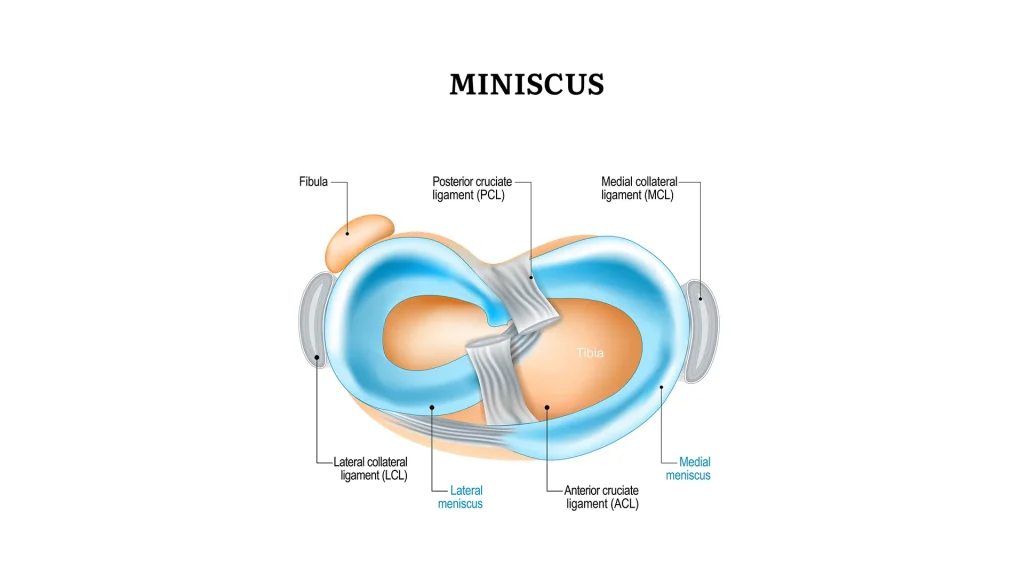
Yes, a torn meniscus can sometimes heal on its own, but it depends on the location and severity of the tear. For instance, if your tear is in the outer part of the knee meniscus (the “red zone”), it may heal with rest and proper care. However, tears in the inner region usually do not heal on their own due to limited blood flow.
Our surgeon, Dr. Michael K. Shindle at Total Orthopedics and Sports Medicine, conducts a detailed knee evaluation and uses imaging to confirm the exact location of your tear. Then, he may recommend conservative treatment for minor meniscus tears and arthroscopic surgery for severe meniscus tears. Call 855-321-6784 to book your appointment with Dr. Michael K. Shindle in Linden.
What Type of Meniscus Tear Can Heal Naturally?
A meniscus tear can heal naturally when it is small, stable, and located in the outer “red zone” of your knee meniscus. This outer area has a good blood supply, which supports the natural healing process. Since this area has better blood circulation, your body can deliver nutrients and healing factors more effectively, which helps repair the damaged tissue over time. Here are some other types of meniscus tears that have a higher chance of healing without surgery:
Vertical (Longitudinal) Tears
Vertical longitudinal tears occur between the circumferential collagen fibers of the meniscus, as reported in orthopedic literature and NCBI review. In such cases, the tissue remains in its original position, which helps the torn edges stay aligned. Because of this alignment, your body can gradually reconnect the fibers over time. Moreover, these tears often occur from twisting movements or sudden changes in direction during activity, such as:
- Pivoting quickly while playing sports like soccer or basketball
- Turning your knee while your foot is still on the ground
- Sudden stops or directional changes during running
- Rotating your knee while lifting or carrying weight
- Quick movements during activities like tennis or football
Small Peripheral Tears
Peripheral tears develop near the outer edge of the meniscus, where the blood flow is better compared to the inner region of the knee. These tears are usually small and stable, which means they do not shift or worsen during movement. Additionally, they often result from minor stress or early-stage knee wear and tear. Because of their location, your body can deliver nutrients and healing cells more effectively, which supports gradual tissue repair.
Stable Incomplete Tears
Stable incomplete tears only affect a portion of the meniscus or knee cartilage and do not extend to the soft tissues. Because the meniscal structure remains partially intact, the meniscus can still function and stay in position during movement. This stability reduces the risk of the tear worsening and helps preserve normal joint mechanics, including:
- Load distribution across the knee joint
- Cushion and shock absorber ability
- Joint stability during bending and squatting
- Smooth gliding of the knee surfaces during motion
Short Radial Tears (Near Outer Edge)
Unlike larger radial tears that disrupt the meniscus structure, short radial tears only affect a small, localized part of the cartilage. As a result, the overall shape and function of the meniscus remain intact. This means that the meniscus can still distribute load, absorb shock, and support smooth joint movement. In such cases, proper rest, ice therapy, and activity modifications can help manage pain and improve joint function over time.
Small Degenerative Meniscus Tears (Early Stage)
Small degenerative tears develop gradually due to age-related changes in the meniscus rather than a sudden injury. In the early stages, these tears are often small and do not significantly affect knee stability. In these cases, the tissue damage is limited, allowing your body to manage and repair the affected knee more quickly. Therefore, with proper activity control and exercise, early-stage degenerative tears can improve without surgical treatment.
In fact, according to PubMed, an 8–12 week exercise program can provide short-term improvements in pain if you have degenerative meniscus tears. One study reported that patients completing 36 supervised sessions over 3 months experienced reduced pain scores, improved quality of life, and lower anxiety levels.
How Can I Tell if I Have a Meniscus Tear?
If you experience pain in your knee while twisting, squatting, or turning, it may indicate a meniscus tear. You may also notice swelling around the knee joint, stiffness, and difficulty fully bending or straightening the leg. In some cases, your knee may feel unstable or “give way” during movement, making it difficult to walk or perform daily activities.
Moreover, according to NIH, you may experience locking, clicking, catching sensations, or intermittent (not constant) difficulty while fully extending the knee. Here are some additional meniscus tear symptoms that may indicate damage to your knee:
- Delayed Swelling: Unlike a ligament tear that swells instantly, meniscus inflammation often develops slowly over 24 hours.
- McMurray’s Click: A “pop” or “snap” sound if you rotate your knee while slowly extending it.
- Limited Range Of Motion: An inability to perform a full “butt-to-heel” squat due to pressure inside the joint capsule.
- Quadriceps Atrophy: You may notice visible thinning of your thigh muscle due to reduced knee motion.
- Uneven Walking Pattern: You may start limping slightly to avoid putting pressure on the knee.
If you are experiencing any of these symptoms, you should contact our knee surgeon, Dr. Michael K. Shindle, immediately. He will carefully review your symptoms and examine your knee function to identify the tear location and severity. After that, he will design a treatment plan which may include anti-inflammatory medication, PRP, corticosteroid injections, or partial meniscectomy to relieve pain. Call 855-321-6784 to explore your treatment options.
What Are the Common Causes of Meniscus Tears?
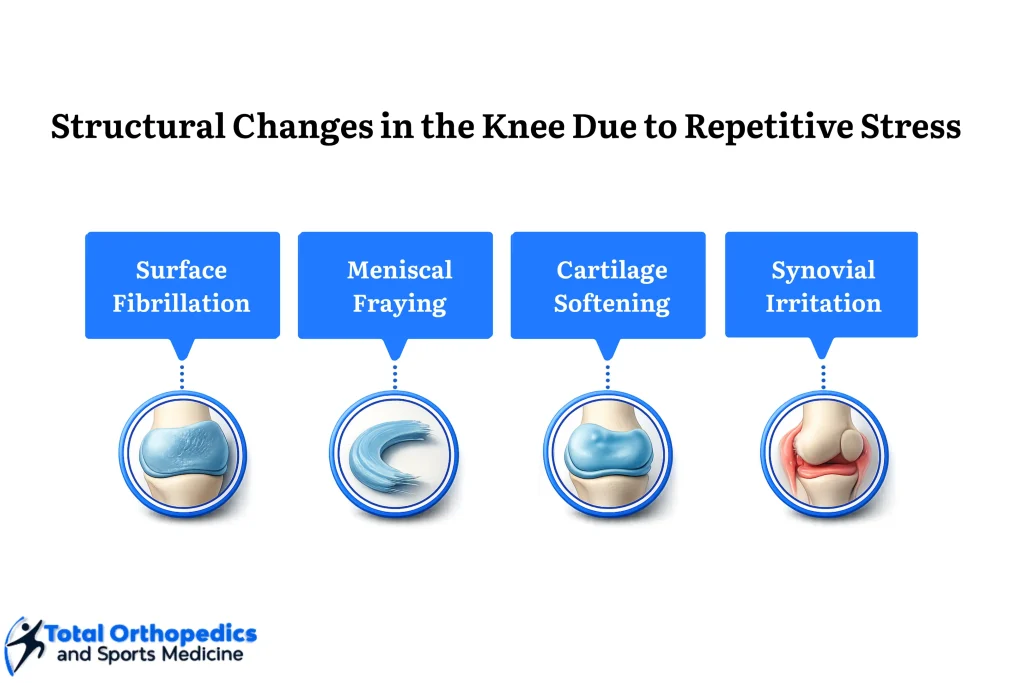
Meniscus tears often result from sudden turning movements, deep squatting, and heavy lifting. Repetitive stress from frequent bending or kneeling can also gradually weaken the meniscus, leading to tears. Another major cause of meniscus tears is age-related degeneration. In this condition, the meniscus gradually loses strength and elasticity, making it more prone to injury even during simple daily movements. Moreover, meniscus tears can occur during high-impact sports, including:
Basketball
Basketball puts repeated stress on your knee due to jumping, landing, and quick direction changes. In these cases, you may strain your meniscus when you pivot while your foot stays on the ground. Additionally, landing incorrectly after a jump can place uneven force on the knee cartilage, increasing the risk of traumatic tears and chronic pain. In some cases, these injuries are also associated with locked knee cause, especially when torn cartilage interferes with normal joint movement.
Rugby
In rugby, you may need to sprint, tackle, and quickly change direction under high physical contact. During these actions, your foot may stay on the ground while your body twists, placing strong rotational stress on the meniscus. This stress can increase the risk of a meniscus tear or strain. Direct collisions can also compress the knee joint and increase the force on the cartilage, leading to acute injury, joint irritation, or severe tears.
Tennis
Tennis requires constant side-to-side movement and quick changes in direction. During these quick movements, you may repeatedly twist your knee, which can put rotational stress on the meniscus. This stress can lead to minor tears and joint pain. Over time, repeated lunging and pivoting can also gradually wear down the cartilage, leading to structural damage.
What Happens If a Meniscus Tear Is Left Untreated?
If you leave a meniscus tear untreated, it can gradually worsen and lead to chronic knee pain, persistent swelling, stiffness, and decreased mobility. As the meniscus tear progresses, the damaged tissue may enlarge and become unstable, making normal knee movement more difficult. You may also experience locking, catching, or a popping sensation during movement. In some cases, you may develop osteoarthritis due to ongoing uneven pressure and increased wear on the knee cartilage.
Besides that, without treatment, meniscus tears may progress into severe and chronic conditions such as:
- Meniscal Displacement: The torn meniscal fragment shifts out of place, interfering with smooth joint movement.
- Bucket-Handle Tear Formation: A large tear in the meniscus where a torn fragment blocks normal knee movement.
- Patellofemoral Dysfunction: Abnormal knee mechanics affect kneecap movement, causing discomfort.
- Articular Cartilage Wear: Increased friction leads to gradual degradation of knee cartilage surfaces.
- Joint Space Narrowing: Loss of cushioning between bones due to progressive tissue wear and tear.
Additionally, according to NCBI, a study evaluated meniscus tears left untreated during primary ACL reconstruction with a minimum 6-year follow-up to assess reoperation rates. The study included 194 patients with 208 meniscus tears that were managed without surgical intervention at the time of ACL reconstruction. Results showed that 7.7% of untreated tears required surgery later.
How Is a Meniscus Tear Diagnosed?
To diagnose a meniscus tear, our orthopedic surgeon, Dr. Michael K. Shindle, may conduct a detailed physical examination of your knee. During this exam, he will assess pain and swelling, range of motion, and signs of locking or joint instability. He may also perform specific clinical tests, such as the McMurray test, to check for clicking, popping, or pain during knee movement, which may indicate a lateral or medial meniscus injury.
In many cases, Dr. Michael K. Shindle may order imaging tests (MRI or X-rays) to confirm the diagnosis. An MRI can provide detailed images of the soft tissues, medial/lateral meniscus, and cartilage, which helps identify the exact location of the tear. In fact, a research review co-authored by Dr. Michael K. Shindle shows that magnetic resonance imaging (MRI) of the knee is highly effective for evaluating articular cartilage injuries. Similarly, X-rays can help rule out other conditions, such as fractures or bone-related changes that may be causing knee pain. After that, he may ask the following questions to accurately diagnose your knee problem:
- When did your knee pain start?
- Did the pain begin after a specific injury or movement?
- Do you feel locking, clicking, or catching in the knee?
- Which movements make your pain worse (twisting, squatting, walking)?
- Have you noticed swelling or stiffness after activity?
Is Viscosupplementation Effective for Meniscus Tears?
Yes, viscosupplementation can be effective for managing symptoms of a meniscus tear, especially when you have knee joint irritation or early degenerative changes. Dr. Michael K. Shindle may recommend these injections if you continue to experience pain despite rest and conservative treatments, or if you want to delay surgical treatment. In this treatment, our surgeon may inject a hyaluronic acid solution into your knee joint to improve lubrication and reduce friction. This lubrication helps your knee move more smoothly and decreases stiffness during daily activities.
This treatment can also help reduce inflammation inside the knee joint, which may lower pain levels over time. However, viscosupplementation cannot repair or heal the meniscus tear itself. It mainly focuses on reducing symptoms rather than addressing the underlying structural damage. For this reason, Dr. Michael K. Shindle may combine this treatment with other non-surgical options or recommend meniscal repair to protect knee health and reduce swelling.
Do Regenerative Treatments Work for Knee Injuries?
Yes, regenerative treatments can be effective for minor to moderate knee injuries. At Total Orthopedics and Sports Medicine, our knee surgeon, Dr. Michael K. Shindle, provides these advanced regenerative therapies to support your recovery. These treatments include platelet-rich plasma (PRP) and stem cell injections, which help stimulate your body’s natural healing process. Here’s how these treatments can help improve your knee joint function and overall mobility:
Stem Cell Injections: Deliver regenerative cells to support tissue repair, improve joint environment, and speed up the recovery process.
Platelet-Rich Plasma (PRP): Uses concentrated growth factors from your blood to promote healing and reduce inflammation in knee structures
How Do Doctors Repair a Meniscus With Arthroscopy?
Knee surgeons repair a meniscus tear using a minimally invasive arthroscopic procedure. During this process, they make small incisions around your knee and insert a tiny camera called an arthroscope to clearly view the damaged area. This camera helps them accurately assess the type and location of the tear. Once the tear is identified, your surgeon may use the following specialized instruments to either repair or trim the torn meniscus:
- Arthroscope
- Probe
- Shaver
- Meniscal scissors
- Suture hook
- Meniscal repair device
If the tear is in a well-vascularized area (adequate blood supply), the surgeon may place sutures to help the tissue heal properly. However, if the tear is in a poorly vascularized region with limited blood supply, surgeons may trim and remove the damaged portion of the meniscus (partial meniscectomy) to improve knee function and mobility. For your convenience, we also offer diagnostics, imaging, pain management, and surgery under one roof. This approach helps you receive immediate meniscus tear treatment without any delays. Call us today at 855-321-6784 to schedule your consultation.
How Long Is Recovery After Knee Surgery?
After a knee surgery, full recovery can take 3–12 months, depending on the type of procedure, the severity of injury, and your overall health. For example, after an arthroscopic partial meniscectomy (where damaged tissue is trimmed from the meniscus), most patients return to daily activities in 2–4 weeks, and full recovery within 6–8 weeks. In contrast, a meniscus repair (where the tear is sutured) requires 4–6 months to heal. Additionally, if the surgery is more complex, such as combined ligament and meniscus repair, recovery may take up to 9–12 months.
What Activities Should You Avoid While Healing?
If you have had a meniscus repair, you should avoid deep squatting, running, jumping, and sudden twisting as these movements can strain the repaired area. Also, avoid high-impact sports such as basketball, tennis, and football until our surgeon, Dr. Michael K. Shindle, confirms that your knee has healed properly.
Other than that, do not lift heavy weights while bending the knee, sit in low chairs, and climb stairs repeatedly during the early healing stage. Here are some additional activities you should avoid to protect your knee joint:
- Kneeling on hard surfaces
- Cross-legged sitting
- Leg press with deep knee bend
- High-resistance cycling
- Treadmill incline walking
- Jumping rope
- Uneven-surface hiking
How Can You Prevent Future Knee Injuries?
To reduce the risk of future knee injuries, strengthen the muscles surrounding the knee (quadriceps, hamstrings, glutes), and maintain a healthy weight to reduce joint stress. You should also practice correct form during physical activity to protect the meniscus and avoid putting excess strain on the joint. In addition, wear the following footwear for good shock absorption:
- Cushioned running shoes with EVA or gel midsoles
- Cross-training shoes with multi-directional support
- Stability shoes for overpronation control
- Shock-absorbing insoles for added impact reduction
- Sport-specific shoes with proper grip and heel support
Visit Total Orthopedics & Sports Medicine for Meniscus Tear Treatment in Linden!
If you have a meniscus tear, you may experience ongoing knee pain that makes even simple movements uncomfortable. You may find it difficult to walk, bend your knee, or stand for long periods without stiffness or swelling. Over time, these symptoms can interfere with your routine and affect your sports performance.
At Total Orthopedics & Sports Medicine, our experienced knee surgeon, Dr. Michael K. Shindle, offers both surgical and non-surgical treatments to manage microscopic tears and knee pain. After the treatment, he also closely monitors your recovery to ensure proper healing and reduce the risk of further injury. Call us today at 855-321-6784 or visit us at 1444 E. Saint Georges Avenue, Linden, NJ 07036 to book your appointment.
FAQs
Is It Safe to Exercise With a Torn Meniscus?
Yes, it is generally safe to exercise with a torn meniscus, but only if the tear is mild, stable, and not causing significant pain or instability. In these cases, low-impact exercises can help maintain strength and support joint function without placing excessive stress on the knee.
Why Does My Knee Click or Pop After a Tear?
Your knee may click or pop after a meniscus tear because the damaged cartilage interferes with joint movement. When the meniscus is torn, its edges can become uneven, which may cause friction as your knee bends or straightens. This friction can create a clicking or popping sound during movement.
Can Sitting for Long Periods Worsen a Meniscus Tear?
Yes, prolonged sitting can worsen a meniscus tear by increasing stiffness and pressure in your knee joint. When you keep your knee bent for an extended period, it reduces joint movement and can lead to tightness and discomfort. This position may also limit blood flow, slowing the healing process.
Is Heat or Ice Better for a Torn Meniscus?
For most meniscus tears, ice is generally better in the first 2–3 days to reduce swelling and pain. It also helps control inflammation by narrowing blood vessels. After the initial swelling decreases, you may use heat to relieve stiffness and improve blood flow around the knee.
Can I Drive With a Torn Meniscus?
Yes, you may drive with a torn meniscus, but it depends on which knee is affected. If you have pain in your right knee (the pedal side), driving can be unsafe because it may slow your reaction time. But if your knee feels stable, you can drive short distances.


