
Thoracic Back Pain: What Causes Pain in Your Middle Back?
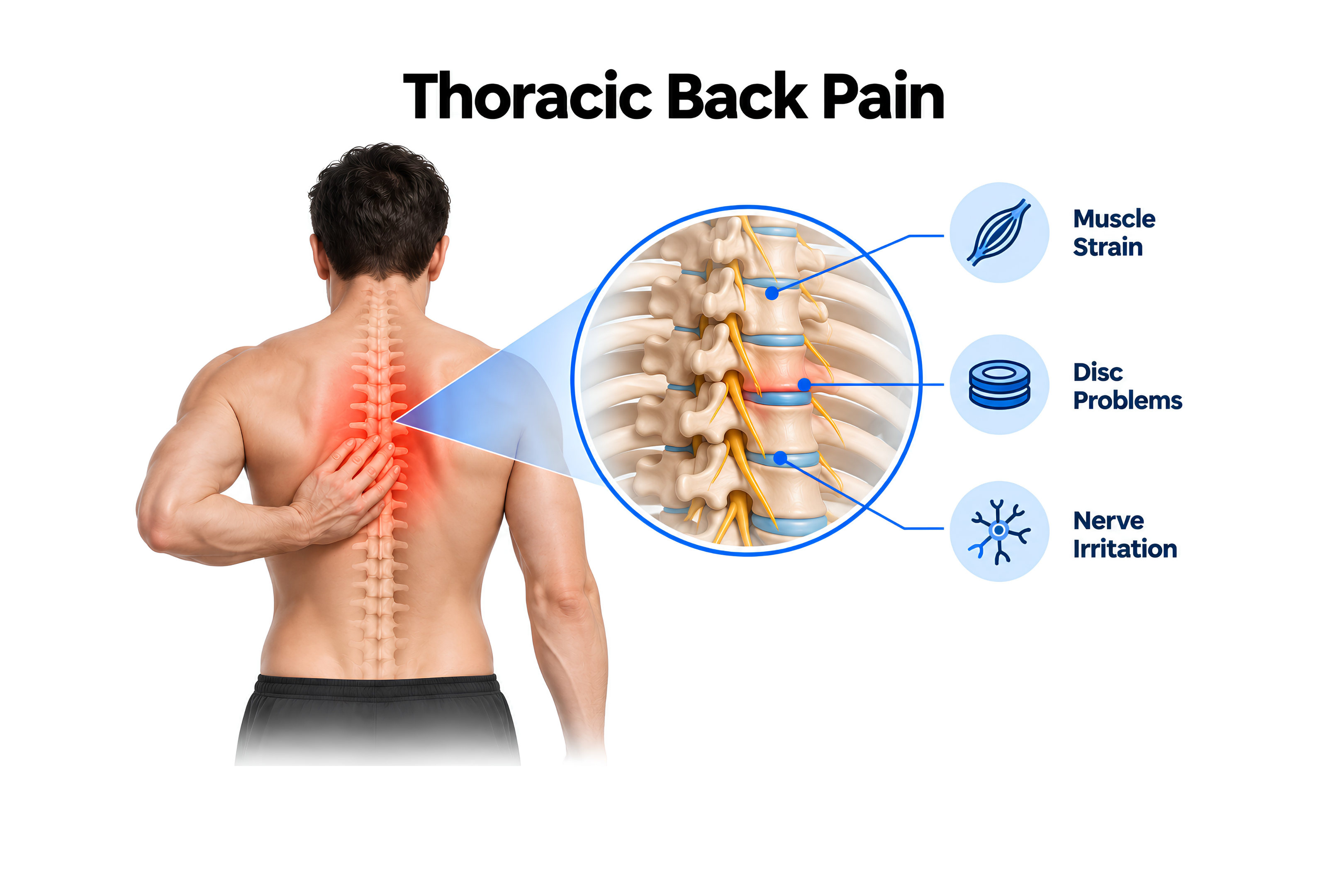
Thoracic back pain can result from muscle strain, poor posture, joint irritation, or conditions affecting the discs and nerves in your middle back. These problems can increase stress on the thoracic spine and surrounding structures. As irritation develops, you may experience localized aching, stiffness, or sharp pain between the shoulder blades.
At Total Orthopedics & Sports Medicine, our spine specialists assess whether your symptoms originate from the thoracic spine or the surrounding structures. We also evaluate pain patterns, movement restrictions, neurological changes, and relevant imaging. Based on these findings, we develop a personalized treatment plan that addresses the specific source of your symptoms. Call 855-321-6784 to schedule your visit.
What Are the Most Common Causes of Thoracic Back Pain?
Overuse injuries, compression fractures, spinal stenosis, or changes in the normal alignment of your spine commonly contribute to thoracic back pain. These conditions can affect the vertebrae, joints, and other structures that support your middle back. In some cases, herniated discs, inflammatory conditions, or rib problems can also cause pain in the thoracic region.
Here’s how these conditions can affect the various structures of your thoracic spine and contribute to middle back pain:
1. Muscle Injuries
Muscle injuries often occur when sudden or repetitive movements overload the middle back muscles. Although the thoracic spine has greater structural stability than the neck or lower back, sudden or excessive strain can still injure the muscles that support it. For example, improper lifting techniques can strain the muscle fibers and surrounding tissues. This strain can cause localized soreness, tightness, or muscle spasms that worsen with movement.
2. Compression Fractures
Compression fractures develop when weakened bone reduces a vertebra’s ability to support normal pressure. Osteoporosis commonly increases this risk by reducing bone strength. As a result, even a minor fall, lifting movement, or everyday activity may trigger sudden pain. Moreover, repeated thoracic compression fractures can reduce vertebral height and contribute to increased forward curvature of the thoracic spine.
3. Thoracic Spinal Stenosis
Thoracic spinal stenosis occurs when the spinal canal narrows and reduces the space available for the spinal cord. This narrowing may result from bone spurs, thickened ligaments, or other spine changes involving the discs and spinal joints. As the available space decreases, pressure on the spinal cord can affect nerve signals traveling through your spine. Then, you may develop numbness, weakness, balance problems, or difficulty walking, along with thoracic spine pain.
4. Herniated Discs
Herniated discs are less common in the thoracic spine than in the lumbar spine. When a thoracic slipped disc develops, displaced disc material can irritate nearby nerve roots or extend into the spinal canal. This irritation may cause localized back pain or pain that travels around the rib cage. If the thoracic herniated disc compresses the spinal cord, you may also develop numbness, weakness, or difficulty walking.
5. Inflammatory Conditions
Inflammatory arthritis can cause ongoing inflammation in the joints and supporting structures of your thoracic region. Conditions such as rheumatoid arthritis may contribute to this inflammation. As inflammation develops, you may experience persistent pain and stiffness that does not improve with rest. Moreover, stiffness may become more noticeable after periods of inactivity and gradually decrease with movement.
6. Rib Problems
Rib problems can cause middle back pain because the ribs connect directly with the thoracic vertebrae. When an injury or inflammation irritates these joints, pain may develop near the spine and extend toward the chest wall or shoulder blades. Because your ribs move as you breathe and rotate your upper body, deep breathing, coughing, or twisting may intensify the pain.
Can Arthritis Cause Pain in the Middle Back?
Yes, arthritis can cause pain in the middle back when inflammation or degeneration affects the joints of your thoracic spine. Osteoarthritis is a common cause of these degenerative joint changes and affects an estimated 32.5 million U.S. adults. Over time, these changes may reduce spinal mobility and make bending or rotating your back more difficult.
In many cases, this movement-related pain involves the facet joints, which connect neighboring vertebrae and help guide spinal motion. In fact, a study of patients with chronic spinal pain found that the thoracic facet joints were responsible for pain in 42% of patients with ongoing thoracic pain. This pain may remain localized near the affected joints or spread across the middle back and toward the ribs.
What Are the Signs of a Compression Fracture?
A compression fracture often causes sudden, localized pain in the middle back, especially when you stand, walk, bend, or change position. As the vertebra loses height, you may also notice reduced mobility or a more rounded upper back. This rounded appearance may gradually increase when multiple affected vertebrae begin to lose height.
Depending on the severity and location of the fracture, you may also experience other symptoms, including:
- Tenderness over the affected area of your spine
- Pain that worsens with bending or twisting
- Difficulty performing normal daily activities
- Muscle tightness or stiffness around the injured area
- Pain that improves when you lie down
- Difficulty maintaining an upright posture
Can You Have a Spinal Fracture Without a Major Fall?
Yes, a spinal fracture can occur even without a major fall, especially when osteoporosis or another condition has weakened your vertebrae. When the bones lose strength, they become more vulnerable to pressure. In some cases, a weakened vertebra may fracture during everyday movements such as bending, lifting, or coughing.
How Do Scoliosis and Kyphosis Cause Back Pain?
Scoliosis and kyphosis alter spinal curvature and place uneven pressure on the surrounding joints and muscles. In scoliosis, the spine curves sideways, while kyphosis causes an excessive forward curve of the upper spine. These changes can increase stress on specific areas of the spine, gradually leading to stiffness, muscle fatigue, and pain.
As kyphosis increases, changes in vertebral shape and spinal alignment can place additional strain on the thoracic region. For example, a study of 85 postmenopausal women with spinal osteoporosis found that 62% experienced persistent thoracic back pain. Severe thoracic pain was associated with increased forward curvature and a higher number of collapsed vertebrae.
Which Non-Spinal Conditions Can Cause Mid-Back Pain?
Kidney infections, gallbladder problems, lung conditions, and certain digestive disorders can cause mid-back pain. Because some vital organs share nerve pathways with the spine, pain originating from these organs may be felt in the middle back. This referred pain may be accompanied by other symptoms from the affected organ, which can help identify the actual source of discomfort.
The following medical conditions may also cause pain in the mid-back:
- Pancreatitis
- Stomach or peptic ulcers
- Gastroesophageal reflux disease (GERD)
- Pleurisy or other inflammation around the lungs
- Shingles, particularly before or during the appearance of a rash
- Aortic aneurysm or aortic dissection
- Certain heart conditions
At our clinic, we often evaluate patients whose persistent mid-back pain has not improved despite treatments targeting the muscles or spine. In some cases, the pain pattern and other symptoms may indicate that the pain originates from another body part. Without identifying the source of pain, treatment may not address the underlying condition or provide lasting symptom relief. Therefore, if your mid-back pain is not improving despite treatment, book an evaluation today for an accurate diagnosis.
Where Does Middle Back Pain Usually Occur?
Middle back pain usually occurs in the thoracic region, between the base of your neck and the bottom of your rib cage. Depending on the affected structure, the pain may feel localized or spread across your upper or middle back. In some cases, it can extend around the ribs toward the chest.
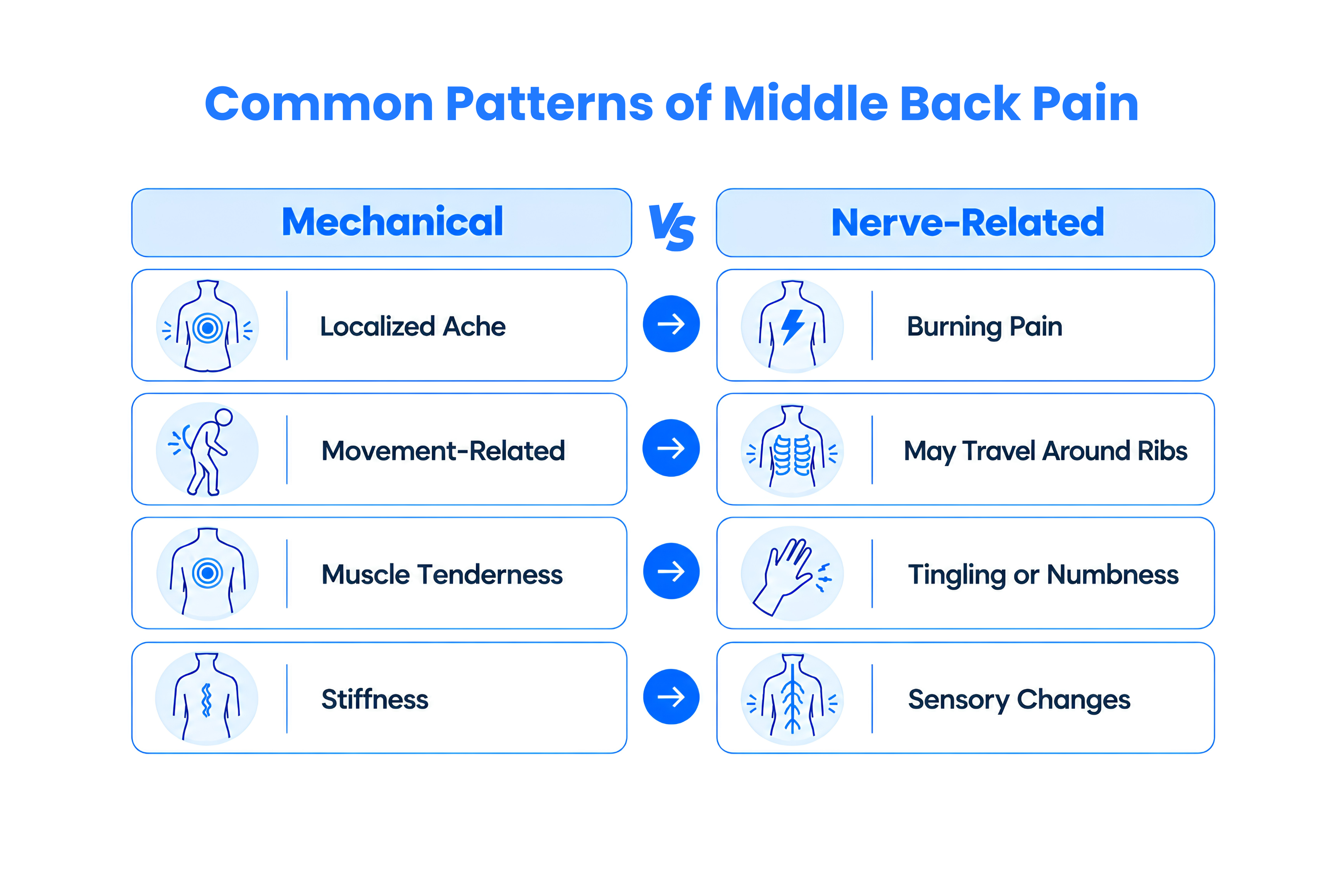
In addition, the location and pattern of your pain can help identify which structures may be contributing to your middle back pain. For example, pain near the spine may originate from the surrounding muscles or spinal joints. In contrast, pain that radiates around the rib cage may result from irritation of a thoracic nerve. Doctors assess these patterns alongside other symptoms to help determine the source of your pain.
What Symptoms Can Occur With Thoracic Back Pain?
Thoracic back pain can occur with stiffness, muscle tightness, tenderness, and reduced mobility. Symptoms may vary depending on whether a thoracic spine issue affects the muscles, joints, discs, or surrounding nerves. As symptoms progress, you may also experience increased discomfort during prolonged sitting, standing, or routine activities.
Here are some other symptoms you may experience with thoracic back pain:
- Burning or electric-like sensations
- Numbness or tingling around the torso
- Pain triggered by deep breathing or coughing
- Muscle spasms in the middle back
- Weakness in the legs
- Problems with balance or coordination
- Changes in walking
- A feeling of pressure or tightness around the chest or ribs
What Activities Can Worsen Thoracic Back Pain?
Heavy lifting, repeated twisting, prolonged sitting, and staying in one position for long periods can worsen thoracic back pain. These activities may increase strain on already irritated muscles, joints, or discs. Repeated strain on these structures may lead to pain flares during movement or afterward.
In addition, overhead work, repetitive reaching, carrying heavy objects, high-impact exercise, and sudden upper-body movements may worsen thoracic back pain. Activities that require frequent bending or rotation of your torso can place further strain on sensitive structures, particularly when performed with improper technique.
Why Does Back Pain Worsen at Night?
Back pain may worsen at night because remaining in one position for several hours can increase stiffness in the muscles and joints. This increased stiffness may place additional strain on already irritated thoracic areas. As a result, movements such as rolling over in bed or changing sleeping positions may increase your pain.
When Should You See a Spine Specialist?
You should see a spine specialist if your middle back pain continues despite rest and conservative treatment. Ongoing pain may indicate a problem involving the thoracic discs, joints, or vertebrae. If these conditions begin to affect the spinal cord or spinal nerves, persistent compression may increase the risk of nerve damage and neurological symptoms.
In addition, you should consult a spine specialist in the following situations:
- Pain continues to worsen over time
- Severe pain regularly disrupts your sleep
- Unexplained weight loss with persistent spinal pain
- You have a history of osteoporosis or spinal fractures
- Pain is accompanied by fever or chills
- You notice changes in bladder or bowel control
- Pain begins after a fall or other injury
- Symptoms begin to interfere with walking or daily activities
If you are experiencing these symptoms but are unsure of the cause, a medical evaluation can help identify the source of your pain. Similar symptoms can develop from problems involving the discs, joints, vertebrae, or nerves, so identifying the exact source is important before choosing treatment. Schedule an appointment today to get an accurate diagnosis.
How Do Doctors Diagnose Middle Back Pain?
Doctors first assess your medical history, the location and severity of your pain, and how your symptoms developed. Then, they perform a physical examination to evaluate spinal movement, muscle tension, tenderness, strength, sensation, and reflexes. These findings help identify a possible source of your symptoms and decide if further testing is necessary.
Based on your symptoms and examination findings, doctors may use the following tests to confirm the diagnosis:
- X-rays: Show fractures, alignment changes, and bone abnormalities.
- MRI scans: Evaluate discs, nerves, spinal cord, and soft tissues.
- CT scans: Provide detailed images of bones and vertebrae.
- Blood tests: Check for signs of infection or inflammation.
- Bone density tests: Measure bone strength and osteoporosis risk.
- EMG: Evaluates electrical activity in muscles.
- Nerve conduction studies: Assess how well nerves carry signals.
What Are the Treatment Options for Middle Back Pain?
Doctors may recommend over-the-counter pain medications, activity changes, spinal manipulation, epidural steroid injections, or surgery to relieve pain. They choose the thoracic back pain treatment according to your specific condition, the affected structures, and the severity of your pain.
In most cases, doctors typically begin with nonsurgical treatment because surgery is reserved for severe thoracic pain cases. In fact, a study of 107 patients with thoracic back pain found that 66.2% of patients experienced significant pain relief at follow-up after spinal manipulation. Moreover, 72.3% reported an overall improvement in their condition.
When Do Doctors Recommend Surgery?
Doctors may recommend surgery when severe symptoms from a thoracic spine problem do not improve with nonsurgical treatment. They may also advise surgery when a structural problem compresses the spinal cord or nerves. If this pressure causes progressive weakness, numbness, or difficulty walking, doctors may recommend surgery to relieve the compression.
Here are some common surgical procedures doctors may recommend for thoracic spine problems:
- Discectomy: Removes part of a herniated disc causing compression.
- Laminectomy: Removes part of a vertebra to create more space.
- Spinal Fusion: Stabilizes two or more vertebrae.
- Decompression Surgery: Relieves pressure on the spinal cord or nerves.
- Vertebral Augmentation: Stabilizes certain painful compression fractures.
- Spinal Deformity Surgery: Corrects severe scoliosis or kyphosis when appropriate.
Most patients feel nervous when they first hear the word surgery. They may worry about recovery time, movement limitations, or their return to normal activities. To address these concerns, our doctors first assess whether your condition can improve with nonsurgical treatment.
But if your condition requires surgery, we explain what the procedure will treat, why it is recommended, and how recovery may progress. We will also discuss temporary activity restrictions and answer your questions before moving forward with treatment. Schedule your visit today to discuss your treatment options.
What If Back Pain Continues Despite Treatment?
If your back pain continues despite treatment, your doctor may reassess the underlying cause of your symptoms and your response to treatment. This reassessment can help determine whether the affected structure has not improved as expected or another condition is contributing to your pain. Based on these findings, your doctor can adjust your treatment plan.
Here are the key factors doctors may evaluate if your back pain does not improve:
- Pain Pattern: Changes in the location, severity, duration, or frequency of your pain.
- Neurological Symptoms: New or worsening numbness, tingling, weakness, or difficulty with balance.
- Physical Function: Increasing difficulty with walking, movement, work, or everyday activities.
- Treatment Response: How your symptoms responded to the medical treatments you have already tried.
- Previous Imaging: Doctors compare earlier scans with your current symptoms to determine if updated imaging is needed.
- New Findings: Your examination may identify another condition or structure contributing to your ongoing pain.
How Can You Lower The Risk of Recurring Back Pain?
Regular physical activity, proper posture, and strong supporting muscles can help protect your back from repeated strain. Maintaining an active lifestyle can also help reduce stiffness and support comfortable movement during everyday activities. Using safe lifting techniques and avoiding repeated strain can further reduce stress on your spine.
The following precautions can help protect your back during work and everyday activities:
- Change Positions Regularly: Avoid sitting or standing in the same position for extended periods.
- Increase Activity Gradually: Start with gentle stretching or core-strengthening exercises over time rather than making sudden increases.
- Use Proper Body Mechanics: Bend, reach, carry, and perform routine tasks without unnecessary twisting or straining your back.
- Set Up Your Workspace Properly: Adjust your chair, desk, and screen to avoid repeatedly leaning or reaching.
- Maintain a Healthy Weight: Keeping your weight within a healthy range can help reduce unnecessary stress on your spine during daily activities.
Furthermore, regular exercise can help maintain the strength and flexibility your spine needs during everyday activities. You can use the AAOS Spine Conditioning Program as a general guide for gentle exercises to help strengthen and improve the flexibility of the muscles that support your spine. Since not every exercise is appropriate for every condition, consult our doctors before adding these exercises to your routine. They can recommend thoracic back pain exercises based on your symptoms, condition, and current mobility level.
What Is the Safest Way to Lift Heavy Objects?
To lift a heavy object safely, keep it close to your body, bend at your hips and knees, and push through your legs as you stand. Keep your back in a comfortable, stable position as you stand up. Besides that, avoid twisting while carrying the object, and turn your whole body when changing direction.
Before lifting, check the object’s weight and make sure your path is clear. If the load feels too heavy or difficult to control, use lifting equipment or ask another person for help. You should also avoid reaching above shoulder level or lifting from an awkward position.
Book Your Appointment to Identify the Source of Your Middle Back Pain!
Middle back pain that keeps returning should not be treated as a simple muscle strain. A compression fracture, herniated disc, arthritis, spinal narrowing, or another condition can cause pain in the same region. Treating recurring pain as a muscle strain may delay treatment for a problem that requires a different approach.
At Total Orthopedics & Sports Medicine, our doctors evaluate which movements trigger your symptoms and whether the pain spreads around your rib cage. We also assess your strength, sensation, and balance to identify possible nerve or spinal cord involvement. By reviewing these findings, we can identify the actual source of your pain and recommend appropriate treatment. Call 855-321-6784 or visit our Manhattan clinic today to schedule your appointment.
FAQs
What Are the Red Flags for Thoracic Middle Back Pain?
Common thoracic back pain red flags include new leg weakness, numbness, difficulty walking, or changes in bladder or bowel control that require prompt medical attention. Fever, unexplained weight loss, significant trauma, or a history of cancer with new back pain may also require prompt medical evaluation.
Can Stress and Anxiety Trigger Pain in the Middle Back?
Yes, stress and anxiety can trigger middle back pain by increasing tension in the muscles that support your upper and middle back. Prolonged muscle tension can gradually lead to soreness, tightness, and stiffness in your middle back. Stress can also increase your sensitivity to pain, making existing back discomfort more intense.
Is Middle Back Pain More Common Among Older Adults?
Yes, the risk of middle back pain may increase with age as the spine gradually undergoes changes in its bones, joints, and supporting structures. Older adults have a higher risk of osteoporosis and vertebral compression fractures. These conditions can cause thoracic pain, particularly after a fall or minor physical stress.
Why Do I Feel a Burning Sensation in My Middle Back?
A burning sensation in your middle back may develop when a nerve gets irritated or compressed, although muscle and soft-tissue problems can cause similar discomfort. Nerve-related burning may occur with tingling, numbness, or pain extending around the ribs. These symptoms can help doctors identify the source of pain.
Can My Middle Back Pain Be Caused by a Muscle Knot?
Yes, a muscle knot can contribute to middle back pain when tight muscle fibers develop sensitive areas commonly called trigger points. These areas may feel tender to the touch and may cause pain in the affected area. Repetitive activity, prolonged positions, or muscle overuse can further contribute to their development.


