
T12 L1 Injury: Why This Spinal Level Matters?
The T12-L1 level connects the thoracic and lumbar spine, forming a junction that experiences greater mechanical stress during trauma. An injury in this area can cause fractures, spinal instability, or damage to nearby nerves. Depending on the severity of injury, you may experience pain, numbness, weakness, or difficulty moving your legs.
At Total Orthopedics & Sports Medicine, we provide specialized care for T12-L1 injuries that can affect spinal stability and disrupt nerve function. We assess how much structural support the injured segment has lost and whether the damage could worsen without stabilization. Based on these findings, our spine specialists develop a treatment plan that protects the injured area while helping you regain function. Call 855-321-6784 to schedule your evaluation.
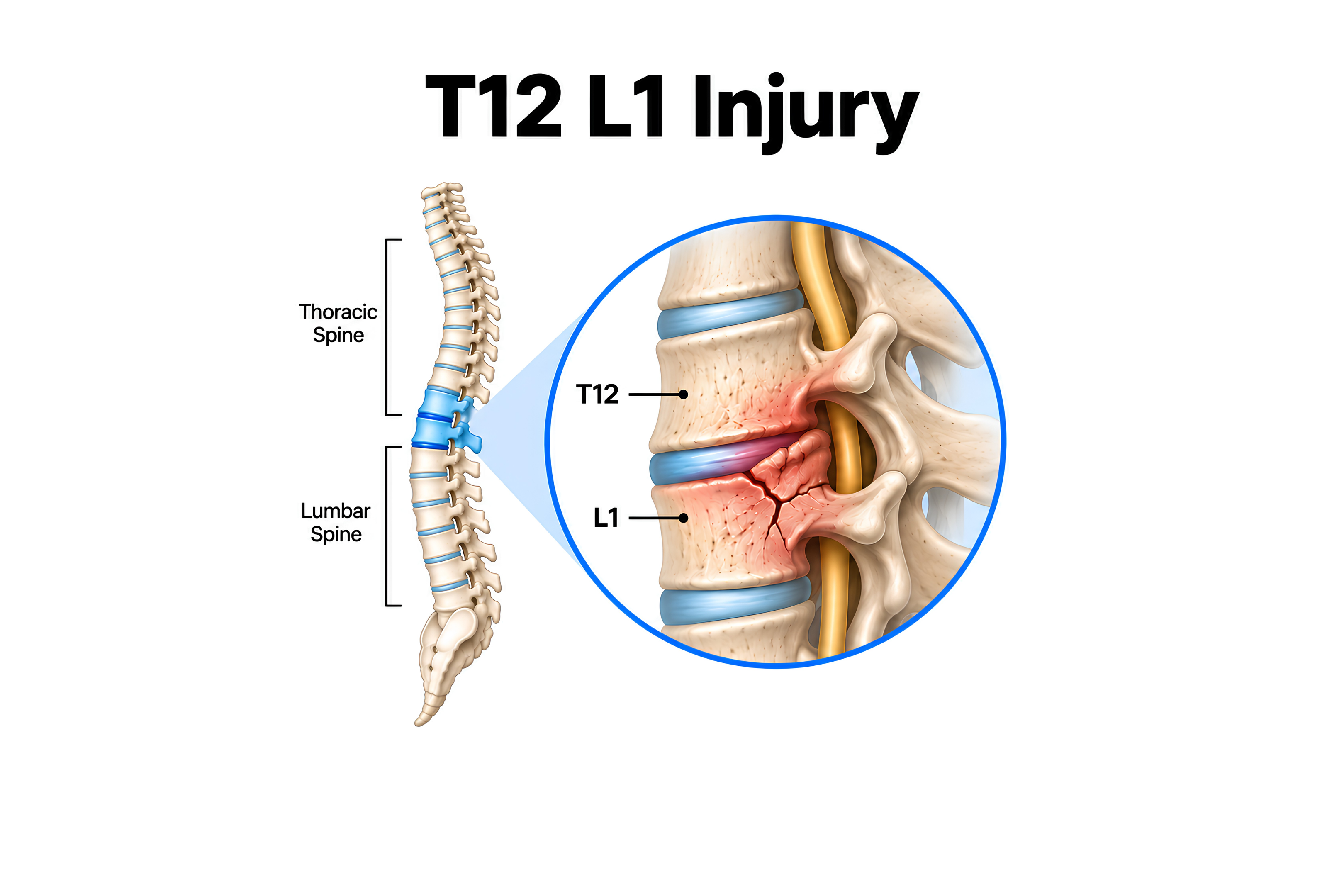
How Does a T12 L1 Injury Affect the Spine?
A T12-L1 injury can damage the vertebrae, discs, ligaments, or nearby nerves at the thoracolumbar junction. This damage can weaken spinal stability and alter normal movement at the injured spinal segment. If the damage extends into the spinal canal, it may also disrupt nerve signals that control movement and sensation below the level of injury.
Here is how an injury at T12-L1 can affect the main structures of your spine:
1. Vertebrae and Spinal Alignment
The T12 and L1 vertebrae experience significant force when trauma compresses or sharply bends the thoracolumbar junction. With a compression fracture, the anterior vertebral body may collapse and lose height, creating a wedge-shaped deformity. In contrast, a burst fracture can cause more extensive damage, including disruption of the posterior vertebral wall and displacement of bone toward the spinal canal. These changes can reduce vertebral height and disturb normal spinal alignment.
2. Disc and Endplate Damage
The disc between T12 and L1 contains a gel-like inner portion that helps cushion the vertebrae and distribute pressure as your spine bends and carries weight. Trauma can injure the disc along with the endplates that separate it from the vertebral bodies. Once these structures lose their normal support, pressure may become uneven across the injured segment. This can contribute to reduced stability and changes in alignment as the area heals.
3. Ligaments and Spinal Stability
The ligaments around T12-L1 help prevent excessive bending, rotation, and separation between adjacent vertebrae. A sudden traumatic force can stretch or tear these ligaments even without extensive damage to the surrounding vertebrae. As ligament damage increases, the T12-L1 segment may lose the support needed to control normal movement. A biomechanical study published in Medicine also reports that ligament damage at T12-L1 increased vertebral movement and gradually reduced segmental stability.
4. Facet Joints and Movement Control
Facet joints connect neighboring vertebrae and help guide controlled movement at each spinal level. At T12-L1, a strong bending or twisting force can fracture, separate, or shift these joints out of their normal position. Once damaged, the facet joints may no longer guide movement between T12 and L1. This loss of control can increase abnormal movement at the injured segment, particularly when nearby ligaments are also damaged.
5. Spinal Canal and Neural Structures
A severe T12-L1 fracture can push bone fragments into the spinal canal and reduce the space available for nearby neural structures. Depending on the exact level and extent of the injury, this narrowing may compress the lower spinal cord, conus medullaris, or nearby nerve roots. Damage to these structures can disrupt nerve signals traveling to the lower body. As a result, some people may develop weakness, numbness, sensory changes, or problems with bowel and bladder function.
Why Do Spine Injuries Commonly Affect T12-L1?
Spine injuries commonly affect the T12-L1 level because this region connects the stable thoracic spine to the more flexible lumbar spine. This change in mobility increases the mechanical load placed on T12-L1 during trauma. As a result, sudden force at this junction can increase the risk of structural damage and fractures. A prospective multicenter study of 733 patients also reported that 67% of acute thoracolumbar injuries occurred between T11 and L2.
In addition, the surrounding structures further contribute to the mechanical stress placed on T12-L1. For example, the rib cage helps stabilize the thoracic region, but this support gradually decreases toward the thoracolumbar junction. The facet joints also change position near the lumbar region, allowing the spine to move freely. Together, these structural changes increase the mechanical stress placed on T12-L1 during trauma.
What Are the Common Causes of T12-L1 Injury?
Motor vehicle accidents, falls from heights, sports injuries, and work-related accidents are the most common causes of T12-L1 injury. These incidents can place sudden mechanical stress on the thoracolumbar junction through compression, bending, or twisting. In people with weakened bones, even a lower-impact fall can cause significant injury at this level.
Here are some other factors that can contribute to a T12-L1 injury:
- Cancer affecting the spine: Tumors that spread to a vertebra can weaken its structure and increase the risk of collapse or a pathologic fracture.
- Spinal infections: Infection can damage a vertebra or nearby disc, gradually weakening the affected segment.
- Long-term degeneration: Age-related degeneration can gradually weaken the discs and supporting structures, reducing the stability of the T12-L1 junction.
- Repeated loading: Frequent heavy lifting or repeated stress can contribute to stress-related injury, particularly when the spinal structures are already weakened.
- Osteoporosis: Low bone mineral density can weaken the vertebrae and increase the risk of a compression injury at T12-L1.
In fact, a nationwide multicenter study of 403 patients with osteoporotic vertebral fractures found that the T12 and L1 levels had the highest number of osteoporotic vertebral fractures. The higher fracture rate at the T12-L1 level is due to the greater mechanical stress placed on thoracic vertebrae that have already lost bone strength.
Which Injuries Can Affect the Lower Thoracic Spine?
Compression fractures, burst fractures, fracture-dislocations, and damage to the discs or ligaments are common injuries of the lower thoracic spine. Some injuries affect only the vertebral body, while others disrupt several structures and reduce spinal stability. In severe injuries, displaced bone or unstable structures may also affect nearby thoracic spinal nerves and neurological function.
The extent of damage to fractured vertebrae differs with each type of injury. Here is how these injuries can affect the lower thoracic spine:
- Compression fracture: The front of a vertebral body collapses under pressure, reducing its height and sometimes creating a wedge-shaped appearance.
- Burst fracture: The vertebral body breaks in several directions, and fragments may move toward the spinal canal in severe cases.
- Fracture-dislocation: A fracture occurs along with abnormal movement between adjacent vertebrae, causing significant loss of spinal stability.
- Disc injury: A strong force can tear or damage a disc, reducing its ability to absorb pressure and support normal movement.
- Ligament injury: Supporting ligaments can stretch or tear during trauma, allowing excessive movement between adjacent vertebrae.
What Are the Types of Spinal Cord Injury?
Spinal cord injuries are classified as complete or incomplete injuries based on the extent of nerve function that remains below the injured level. A complete injury causes loss of motor and sensory function in the lowest sacral segments.
In contrast, an incomplete injury preserves some motor or sensory function below the injured segment, which can vary from person to person. Furthermore, incomplete spinal cord injuries have better recovery potential as compared to complete injuries.
What Symptoms Can Develop After a Thoracolumbar Injury?
You may develop severe middle back pain, difficulty standing or walking, numbness, tingling, or weakness in the legs after a thoracolumbar injury. When the injury affects nearby nerves, these symptoms may extend below the level of injury and reduce sensation or muscle control. More severe nerve damage can even affect bowel and bladder control.
Depending on the structures affected, you may also experience several other T12 L1 pain symptoms, including:
- Muscle spasms: Tight or painful contractions may develop around the injured area.
- Tenderness or swelling: You may notice tenderness around T12-L1, especially when pressure is applied to the injured area.
- Limited movement: Pain and stiffness may make it difficult to bend, twist, or change positions comfortably.
- Abdominal discomfort: Irritation in the lower thoracic region may cause pain that radiates to the abdomen.
- Spasticity: Damage to the spinal cord can cause muscles to become stiff, tight, or difficult to control.
- Neuropathic pain: Nerve damage may cause burning, shooting, tingling, or electric-like pain.
Can T12-L1 Injury Affect Your Legs?
Yes, a T12-L1 injury can affect your legs if the damage involves the spinal cord or nearby nerve roots. Disrupted nerve signals may cause weakness, numbness, tingling, or reduced muscle control below the level of injury. In severe cases, loss of strength and muscle control can limit your ability to stand, walk, or move independently.
Researchers studied 20 patients with T12 or L1 vertebral fractures to assess how spinal cord compression affected the lower half of the body. They found measurable changes in the nerve signals traveling to the leg muscles. The results show that damage at this level can disrupt the neural pathways connecting the spinal cord to the lower limbs.
When Should You See a Doctor After a Spine Injury?
You should see a doctor after a spine injury if you have persistent or worsening pain, numbness, weakness, or difficulty walking. These signs may indicate damage to the vertebrae or nearby nerves that requires medical evaluation. You should also seek urgent medical attention if you develop loss of bladder control, bowel changes, or rapidly increasing weakness.
After a spine injury, you may be unsure whether your symptoms are part of normal recovery or a sign of a more serious problem. This uncertainty can make it difficult to know when you can safely return to work, exercise, or other daily activities. For clear guidance on your recovery and return to activity, schedule an evaluation with our spine specialists. We evaluate your injury, identify any structural or neurological concerns, and develop a treatment plan focused on safe recovery and return to activity.
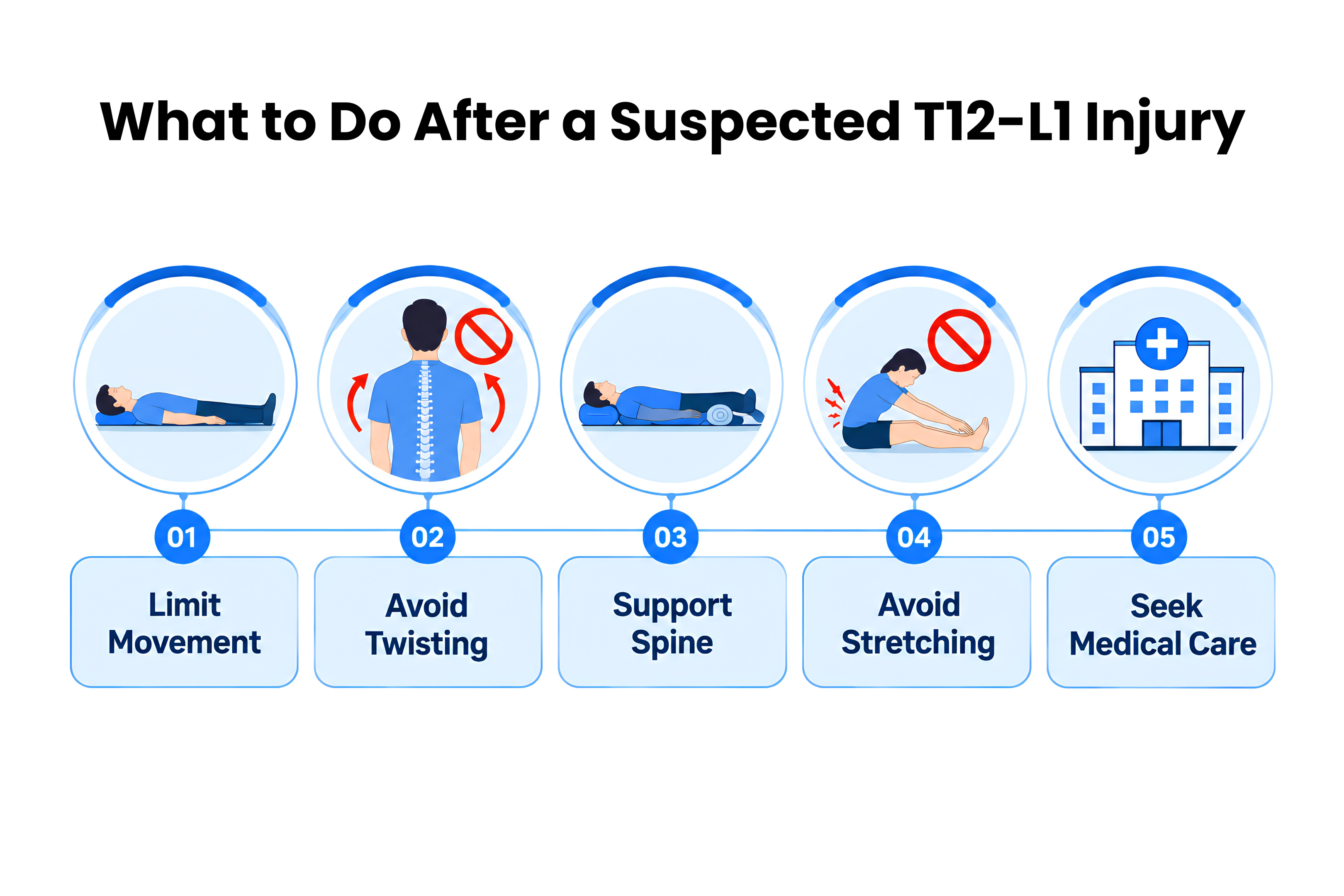
How Do Doctors Diagnose a T12-L1 Injury?
Doctors first assess the injured area and evaluate your strength, reflexes, sensation, and movement to identify signs of structural or nerve damage. Based on these findings, they may order X-rays, CT scans, or MRIs to identify fractures and soft-tissue damage. Imaging also helps determine whether the injury affects nearby neurological structures.
In some cases, doctors may order additional tests to identify an underlying cause of the injury, such as:
- Bone density testing: A DEXA scan can identify reduced bone density that may have increased the risk of a vertebral fracture.
- Laboratory testing: Blood tests may help identify infection, inflammation, or an underlying medical condition when the cause of the injury is unclear.
- Electrodiagnostic testing: Doctors may use EMG or nerve conduction studies to evaluate persistent symptoms linked to possible nerve damage.
- Targeted diagnostic testing: Doctors may order specific tests when they suspect an underlying illness contributed to the spinal injury.
How Do Doctors Check if a Spine Injury Is Stable?
Doctors assess the alignment and movement of the injured spinal segment to identify any abnormal shifting between the vertebrae. They also examine the fracture pattern, vertebral alignment, and supporting ligaments to determine how much structural support has been lost.
Moreover, doctors assess the degree of instability by examining vertebral height loss and abnormal widening between adjacent structures. CT scans provide detailed images of these structural changes, helping doctors assess the extent and pattern of the fracture. They may also order an MRI to determine whether the injury has damaged the ligaments that support spinal stability. Together, these findings help determine whether the injured segment can remain stable during healing or requires stabilization.
Can a T12-L1 Injury Heal Without Surgery?
Yes, a T12-L1 injury can heal without surgery when the injured vertebrae are properly aligned, and there is no significant neurological damage. In these cases, the injured bones can gradually heal with appropriate protection and controlled activity. However, doctors regularly monitor your healing to ensure the fracture remains stable and properly aligned.
Common nonsurgical treatments for a stable T12-L1 injury may include:
- Activity modification: Limiting lifting, bending, twisting, and other activities that place excessive stress on the injured area.
- Spinal bracing: A brace may provide additional support and limit movement while the fracture heals.
- Pain medication: Over-the-counter or prescribed medications may help control discomfort during the early stages of recovery.
- Heat or cold therapy: Cold therapy may help reduce pain and swelling early after the injury, while heat may help relieve muscle stiffness or spasms later in recovery.
- Gradual return to activity: Daily activities are resumed in stages as healing progresses and the injured area can safely tolerate more movement.
If your symptoms continue despite these treatments, doctors may consider more advanced nonsurgical options based on the source of your pain. For example, targeted spinal injections may help reduce pain and inflammation when nearby joints or nerves are irritated. Similarly, doctors may recommend medial branch blocks or radiofrequency ablation for persistent pain resulting from the facet joints.
Note: These procedures may help manage specific sources of persistent pain, but they do not heal or stabilize a T12-L1 fracture.
When Does a Thoracolumbar Injury Require Surgery?
A thoracolumbar injury may require surgery when it causes significant spinal instability, loss of alignment, or compression of neurological structures. Doctors may also recommend T12-L1 surgery when neurological symptoms worsen or the injured segment cannot remain stable during healing. The procedure helps restore alignment, stabilize the affected level, and protect neurological function.
However, the surgical approach depends on the type of fracture and the structures affected. According to the WFNS Spine Committee recommendations published in Neurospine, the following surgical techniques may be used for unstable thoracolumbar fractures:
- Short-segment pedicle screw fixation: Often used for burst fractures to stabilize the injured vertebra while preserving movement at nearby spinal levels.
- Long-segment fixation: May be recommended when the fractured vertebra cannot provide enough support for short-segment fixation.
- Minimally invasive fixation: In selected cases, doctors may use smaller incisions to stabilize the injured vertebrae while limiting disruption to the surrounding tissues.
In addition to these fixation techniques, doctors may perform spinal decompression to relieve pressure on the spinal cord or nerve roots. But if the injured segment needs additional support after decompression, spinal fusion may help maintain stability. Similarly, for severe vertebral collapse or damage to the front of the spine, doctors may use anterior reconstruction to restore structural support and alignment.
How Long Does a T12-L1 Injury Take to Heal?
A T12-L1 injury may take about 6 to 12 weeks to heal, although recovery time varies with the type and severity of the injury. More serious fractures or nerve damage may require several months of recovery. During this time, rehabilitation may help restore strength, movement, and function as healing progresses.
Recovery time can also vary depending on the treatment required. For example, a 2026 systematic review included 632 adults with thoracolumbar burst fractures who had no nerve-related problems. Patients who underwent surgery returned to work about 104 days earlier than those treated without surgery. However, both groups showed similar long-term outcomes for pain, disability, quality of life, and return to work.
When Can You Walk After a Spine Injury?
You may start walking after a spine injury once your doctor confirms that the injured spinal segment can safely tolerate weight-bearing and movement. People with less severe injuries may begin assisted walking within days, while severe injuries may delay walking for weeks or longer. Depending on the extent of weakness and balance difficulty, assistive devices such as walkers, crutches, or braces may help support walking during recovery.
What Factors Can Slow Down Your Recovery?
Severe fractures, spinal instability, nerve damage, poor bone health, smoking, and other medical conditions can slow your recovery after a T12-L1 injury. These factors can interfere with bone healing or make it difficult to regain movement and strength. Complications such as delayed bone healing, infection, blood clots, or worsening nerve problems can also extend your recovery.
Your recovery may also be affected by factors related to your overall health and activity during healing, such as:
- Poor nutrition: Not getting enough protein, calcium, vitamin D, and other nutrients can interfere with the body’s ability to repair damaged tissue.
- Returning to activity too early: Increasing activity before the spine has healed may place additional strain on the recovering segment.
- Prolonged inactivity: Too little movement can lead to muscle weakness and stiffness, making it difficult to regain normal mobility.
- Pressure ulcers: Limited mobility can increase pressure on certain parts of the body for long periods, increasing the risk of skin breakdown and pressure ulcers.
- Difficulty following the treatment plan: Missing follow-up appointments or not following activity restrictions can make it difficult for doctors to track your healing.
Following every recovery instruction but still struggling with pain or limited movement can make it difficult to understand what is delaying your healing. At Total Orthopedics & Sports Medicine, our spine specialists evaluate your recovery, identify factors slowing your progress, and adjust your treatment based on your current condition. With the right specialist guiding your recovery, you can address persistent problems before they lead to long-term movement limitations. Contact our spine specialists today for personalized guidance throughout your recovery.
Can You Fully Recover From a Thoracolumbar Injury?
Yes, you can fully recover from a thoracolumbar injury when the damage is mild, and healing progresses without significant complications. Neuroplasticity may also support recovery by helping the nervous system adapt to changes caused by the injury. However, your chances of recovery generally decrease when the injury site involves significant nerve or spinal cord damage. In these cases, neurological symptoms such as weakness, reduced sensation, or difficulty moving may persist despite structural healing.
Here are the key signs of a successful recovery:
- Pain control: You can complete normal activities without persistent or limiting pain.
- Strength and movement: Improved muscle strength and mobility support safe and controlled movement.
- Normal sensation: Numbness, tingling, or other sensory changes improve or resolve.
- Independent mobility: You can stand, walk, and change positions without significant assistance.
- Daily activities: You can return to work, exercise, and other daily living activities with minimal or no limitations.
How Can You Reduce the Risk of Another Spinal Injury?
To reduce the risk of another spine injury, rebuild your strength, use proper lifting techniques, and return to activity gradually. Maintaining good bone health and following recommended movement restrictions can provide additional protection during recovery. As your condition improves, regular physical activity can also help support spinal strength, balance, and mobility.
Additionally, the risk of another injury can depend on how safely you resume normal activity. According to the Too Fit To Fracture international consensus, resistance training, balance exercises, and safer movement techniques can support people with osteoporosis or vertebral fractures. These strategies can improve strength and balance while reducing the risk of falls and excessive spinal stress.
Visit Total Orthopedics & Sports Medicine for T12-L1 Injury Treatment!
Not every T12-L1 injury responds to the same treatment approach. Some injuries may respond well to nonsurgical treatment, while others may require stabilization to protect the spine. Without the right treatment plan, your injury may not receive the treatment it requires, or you may undergo a procedure your condition does not require.
At Total Orthopedics & Sports Medicine, our spine specialists evaluate the fracture pattern, spinal stability, and neurological involvement to determine the most appropriate treatment approach. Then, we review all available treatment options and explain how each approach may address the extent of your injury. If you need a detailed evaluation or a second opinion about your T12-L1 injury, call 855-321-6784 or visit our clinic.
FAQs
How Serious Is a T12 Injury?
A T12 injury can be serious when it causes significant damage to the vertebra or nearby neurological structures. A stable injury may heal without major long-term problems. In contrast, severe damage can cause persistent weakness, loss of sensation, mobility problems, or paralysis, depending on the structures involved.
What Does T12-L1 Control?
T12-L1 does not control one specific body function. This region is near the lower end of the spinal cord, where nerve connections help control movement and sensation in the lower body. Therefore, injury in this area can affect the legs, pelvis, bowel, and bladder function.
Can You Drive After a T12-L1 Injury?
Yes, you may drive after a T12-L1 injury once you can sit comfortably, move safely, and control the vehicle. You should also be able to react quickly and remain fully alert without medications that affect your concentration. After a serious fracture or surgery, consult your doctor to determine when you can safely resume driving.
Do You Need a Back Brace After a T12-L1 Injury?
No, not every T12-L1 injury requires a back brace. Doctors may recommend a back brace for certain stable fractures to limit movement and provide support during healing. Your doctor will also review the type of fracture, symptoms, and treatment needs before recommending a brace.
Can a T12-L1 Compression Fracture Cause Permanent Pain?
Yes, a T12-L1 compression fracture can cause long-term pain in some people. This may occur if the vertebra collapses or the fracture does not heal properly. Persistent pain may also develop from nearby joints, muscles, or nerves. However, persistent pain after healing may require further evaluation.
How Does T12-L1 Compare With Other Spinal Cord Injury Levels?
T12-L1 injuries typically affect the lower trunk and legs. In contrast, spinal cord or cervical spine injuries can affect both the arms and legs. Because the cervical vertebrae are located closer to the brain, damage at these levels can affect more parts of the body.


