
What Mistakes Cause Your Knee Pain To Keep Coming Back?
Repeated strain on the knee without proper recovery can contribute to recurring pain. For instance, frequent kneeling, running, or jumping puts repeated stress on the knee joint. Other than that, ignoring early warning signs such as swelling or stiffness, resuming physical activities, and failing to correct movement patterns can also cause persistent knee pain.
At Total Orthopedics & Sports Medicine, our doctors guide you to proper movement patterns, safe activity levels, and recovery strategies that protect the knee joint. To reduce the risk of chronic knee pain, our healthcare provider also prescribes targeted anti-inflammatory medications and provides a flexibility exercises program that prevents pain. Call 855-321-6784 to prevent knee pain.
Which Factors Increase the Risk of Recurring Knee Pain?
Age, prior trauma, knee malalignment, and obesity can cause recurring knee pain. These factors alter joint biomechanics and increase stress on cartilage, which slows healing and promotes inflammation. Besides that, genetic factors and physiological imbalances can also disrupt normal knee tissue repair after daily activity.
In addition, the following factors may also increase the risk of recurring knee pain:
- Excessive repetitive movements without recovery
- Weak supporting muscles reduce joint stability
- Poor movement patterns during physical activity
- Limited flexibility affecting normal joint motion
- Inadequate rest between workouts
How Does A Sedentary Lifestyle Contribute To Recurring Knee Pain?
A sedentary lifestyle can weaken your knee muscles and reduce the strength of your glutes and hips, potentially increasing knee strain during movement. Limited movement also decreases circulation around the knee. This reduced blood flow stiffens joint tissues and limits the delivery of nutrients. As a result, you may experience knee pain, which can lead to joint damage.
In fact, the study of frontiers explains that sedentary behavior increased the risk of knee osteoarthritis by 20% (OR 1.20). Over time, inactivity also lowers your body’s ability to absorb impact safely. It reduces overall shock-absorption capacity during walking, stairs, or exercise. Additionally, if you have weak muscles, they fail to protect the knee from joint stress.
Can Ignoring Early Knee Pain Symptoms Lead to Chronic Issues?
Yes, ignoring early knee pain symptoms can lead to chronic issues. Ongoing activity causes repeated microtrauma to build up within the joint tissues. This continued stress triggers inflammation that disrupts normal healing. As damage progresses, your surrounding leg muscles overwork to maintain joint stability, which increases repetitive strain and leads to chronic pain.
At Total Orthopedics & Sports Medicine, our fellowship-trained physician, Dr. Brett Spain, assesses your complex joint to prevent chronic issues from developing. He identifies the root cause of tissue stress, movement dysfunction, or joint irritation. Based on these findings, he creates a targeted treatment plan that may include pain relievers and a guided exercise routine to reduce knee pain. Contact us today to book your appointment.
How Do Sudden Direction Changes Stress the Knee Joint?
Sudden direction changes place excess weight on stabilizing structures, which can cause anterior cruciate ligament ACL tears. For example, complex plant-and-cut movement increases valgus load across the knee. This inward force strains ligaments and irritates joint tissues. Similarly, a shallow knee bend also increases shear forces within the joint. Poor trunk control also affects alignment and causes the knee to move inward during movement.
These mechanics affect the following structure of the knee joint:
- Meniscus: When the knee is compressed by body weight and then twisted, the meniscus can be caught between the bones and torn.
- Medial Collateral Ligament (MCL): Inward buckling during a turn places excessive strain on the inner knee ligament, which increases the risk of sprains or tears
- Patellar Alignment: Sudden twists can dislocate the kneecap (patella) or cause “patellar tracking” knee problems.
Can Delayed Muscle Activation Cause Knee Instability?
Yes, delayed muscle activation can cause knee instability during everyday movement and physical activity. According to PubMed research, delayed muscle firing creates neuromuscular control deficits that reduce joint stability. When the quadriceps activate late, dynamic knee control decreases during walking or landing. This delay allows for excessive joint motion and increases the risk of knee injury.
Additionally, delayed glute activation allows the knee to collapse inward during weight-bearing movements. This inward collapse increases stress across the knee joint and surrounding ligaments. In this situation, delayed hamstring activation fails to protect the anterior cruciate ligament, potentially leading to a tear in the muscle.
How Do Desensitization Techniques Help With Persistent Knee Pain?
Desensitization techniques retrain the nervous system and restore normal responses to harmless sensations. After an injury, your nervous system can remain overactive and continue sending pain signals even after healing. To reduce this sensitivity, doctors use controlled sensory exercises and gradually reintroduce movement to the patient. This process helps your brain recognize that movement and touch around the knee are safe and comfortable. Similarly, frequent light touch reduces pain sensitivity by calming irritated nerve endings.

Can Strengthening Supporting Muscles Reduce the Risk of Recurring Knee Pain?
Yes, strengthening supporting muscles can significantly reduce the risk of recurring knee pain. In fact, a BMJ study of 15,684 patients with knee osteoarthritis found that strength training exercises improved function at mid-term follow-up (Standardized Mean Difference 0.86). The study also reported greater functional gains with mixed exercise programs (SMD 1.07). Researchers further noted that aerobic exercise resulted in the most significant pain reductions, with short- and mid-term improvements reaching SMD −1.19.
How Does Radiofrequency Ablation Provide Knee Pain Relief?
Radiofrequency ablation provides relief from knee pain by interrupting pain signals that travel from the knee to the brain. During the procedure, your doctor uses radio waves to heat specific genicular nerves. This controlled heat creates a small damaged area that prevents the nerves from transmitting pain. As a result, knee joint pain decreases without affecting joint movement or strength.
Before treatment, doctors often perform a diagnostic nerve block injection to confirm the source of the arthritis pain. If you find relief after the injection, your doctor will perform radiofrequency ablation as a minimally invasive outpatient procedure, with benefits typically lasting six to twelve months.
If You’re Struggling With Recurrent Knee Pain, Visit Total Orthopedics & Sports Medicine for Immediate Relief!
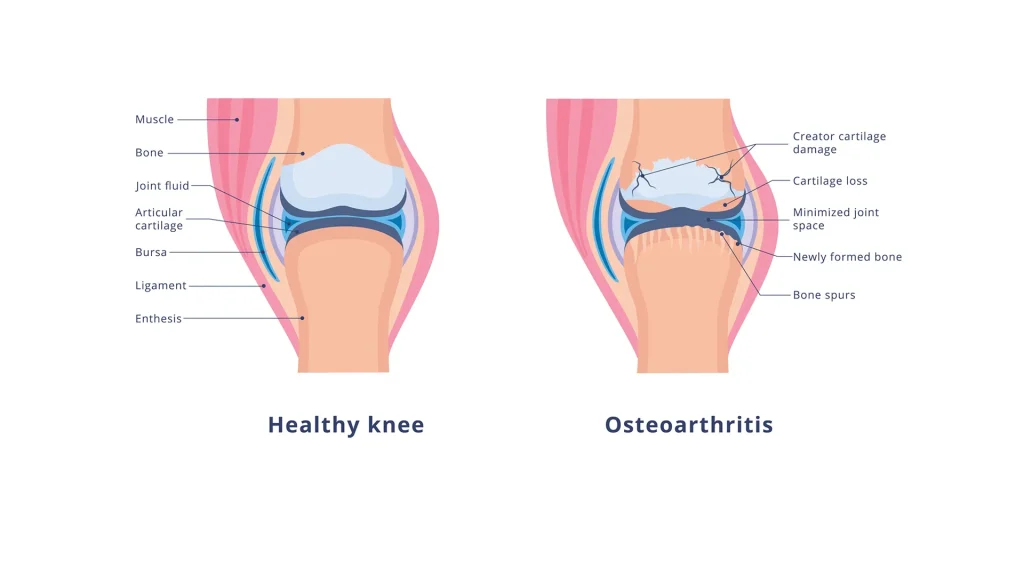
Recurrent knee pain can limit your ability to work, exercise, and maintain an active lifestyle. Over time, ongoing strain can cause knee arthritis and make daily movement difficult. This progression may also lead to joint instability and increase the chances of knee replacement surgery.
At Total Orthopedics & Sports Medicine, our orthopedic surgeons provide targeted joint injections, chiropractic care, knee braces, and knee surgery to reduce pain and restore mobility. For your convenience, we also provide a secure online portal where you can manage bills, coordinate referrals, access your medical records, and find clear procedural instructions. Call 855-321-6784 or visit 116 East 29th Street, Bayonne, NJ 07002, for chronic knee pain treatment.
FAQs
Why Does My Knee Pain Keep Getting Worse?
Your knee pain worsens primarily due to high-impact exercise and repeated joint overloading without adequate recovery. Running, kickboxing, squats, lunges, and poor form also add pressure on the joints, which can make knee pain worse. Additionally, untreated inflammation, biomechanical imbalance, and conditions like rheumatoid arthritis can also cause intense pain.
What Would Cause Intermittent Knee Pain?
Intermittent knee pain often occurs when a minor injury or cartilage irritation flares during activity. Torn protective cartilage, ligament strain, or overuse can cause unexpected pain in your knee. In some cases, inflammation from an infection or gout can also cause pain. These symptoms often improve with timely care and modification of activity.
What Are the Signs of Cartilage Damage in the Knee?
You may have cartilage damage if you experience persistent knee pain and swelling with movement. Additionally, you may feel clicking, catching, or a grinding sensation. Damage to the cartilage may also reduce knee mobility and increase stiffness, resulting in pain while walking or bending. In some cases, cartilage loss exposes the shin bone, which leads to sudden knee pain.
Can Ignoring Hip or Glute Weakness Cause Knee Pain to Return?
Yes, ignoring hip or glute weakness can cause knee pain to return. Weak hips fail to control the movement of the thigh bone during activities such as walking, running, or climbing stairs. This poor control increases inward knee stress and joint strain. Moreover, repeated overload disrupts knee alignment and affects long-term knee health, leading to recurrent knee pain.
Can Wearing the Wrong Shoes Contribute to Ongoing Knee Pain?
Yes, wearing the wrong shoes can contribute to ongoing knee pain. Flat shoes without arch support increase strain on your knee joints during walking. Similarly, high heels also shift body alignment forward and increase joint pressure. Over time, poor footwear can alter biomechanics, speed up joint wear, and lead to knee pain.
Does Uneven Leg Strength Cause Recurring Knee Pain?
Yes, uneven leg strength can cause recurring knee pain. When your one knee is affected, the other leg overworks and absorbs uneven forces during movement. This imbalance increases joint stress and disrupts normal alignment. Additionally, being overweight or obese further increases this load, which results in reduced leg strength and knee pain.
Is Overtraining a Common Reason for Knee Pain?
Yes, overtraining is a common reason for knee pain. Performing repeated activities without proper recovery can overload the knee joint and surrounding tissues. This continuous stress limits proper healing and increases inflammation. As a result, your muscles get fatigued and do not absorb impact. This reduced shock absorption transfers more force directly into the knee, which increases joint stress.


