
What Causes Sharp Inside Knee Pain After a Hard Ski Landing?
You often feel pain on the inner side of your knee after skiing, when the medial collateral ligament or the meniscus gets injured. These knee structures act like shock absorbers, but when you land with bent knees, they can tear or strain quickly. In some cases, improper technique or underlying joint conditions also put pressure, leading to lasting pain after skiing.
At Total Orthopedics and Sports Medicine, we treat knee injuries using specialized injections, patellar stabilizing braces, and minimally invasive procedures. When the kneecap needs better alignment, our doctors often use the McConnell taping technique to reduce stress on the joint. We also recommend lateral wedge insoles to reduce pressure on the inner knee, especially for skiers dealing with pain after repeated landings or sharp turns. In more advanced cases, our surgeons perform ligament reconstruction to repair damage and restore long-term knee stability. Contact us at 855-321-6784 to schedule an appointment.
Why Does Your Inner Knee Hurt After a Hard Ski Landing?
Inner knee pain after skiing often arises because the sport places unusual stress on the ligaments and cartilage that stabilize the joint. An awkward landing can strain the medial collateral ligament or irritate the meniscus that provides stability on the inner side of the knee. If you have a past knee injury or an existing condition like arthritis, skiing can make the discomfort more noticeable.
Other common causes of inner knee pain include:
- Weak Muscles and Imbalances: Insufficient strength or uneven muscle support prevent the knee from staying stable during turns, jumps, and landings.
- Poor Technique or Overexertion: Improper movement or skiing beyond your limits places unnecessary pressure on the joint.
- Skipping Warm-Ups: Starting without proper warm-up exercises leaves the joint less prepared for sudden stress.
- Improper Equipment: Incorrectly fitted boots or bindings increase strain on the inside of the knee.
Therefore, it is essential to strengthen muscles, wear properly fitted equipment, and practice safe skiing techniques to reduce pain and protect long-term knee health.
Is Inner Knee Pain After Skiing a Sign of Pes Anserine Bursitis?
Yes, inner knee pain after skiing is a major symptom of pes anserine bursitis. This condition develops when the bursa on the inner side of the knee, located between the shinbone and the tendons, becomes inflamed. Skiing movements like repeated bending, twisting, and side-to-side pressure can irritate this bursa and trigger pain. Over time, this irritation may lead to tenderness and discomfort in the quadriceps muscle.
According to NIH research, pes anserine bursitis is a common cause of medial knee pain and often develops from overuse, direct trauma, or muscle imbalance. The pain is usually felt 5 to 7 cm below the inner knee joint, where the pes anserine tendons attach to the tibia. Symptoms may also include swelling, warmth, or even a grating sensation in the area. When you notice these symptoms, getting a proper assessment is essential to avoid worsening irritation and prevent knee pain while skiing.

Do Women Face a Higher Risk of Knee Pain Due to Anatomy?
Yes, women face a higher risk of knee pain due to anatomical and structural differences. In fact, research published in the Scandinavian Journal of Medicine & Science in Sports found that females have 2.23 times greater risk of developing knee pain compared with males.
Here are the anatomical factors that explain this higher risk:
- Smaller Joints: Women generally have smaller and shallower knee joints, which makes the structures less stable during activity.
- Thinner ACLs: The anterior cruciate ligament (ACL) in women is often thinner and has a narrower femoral notch, which increases the risk of tear.
- Less Cartilage Volume: Women have less cartilage in the knee than men, which reduces natural cushioning and increases the chance of early osteoarthritis.
- Greater Q-Angle Stress: NIH research shows that the average Q-angle is 17° in women and 14° in men. This angle difference places stress on the kneecap and ligaments, increasing the risk of knee pain, instability, and ACL injuries.
How Can You Tell if Your Ski Injury Is a Sprain, Partial Tear, or Full Tear?
You can determine the extent of the injury based on the severity of symptoms, such as pain and swelling. A sprain usually heals faster, while partial and full tears often require longer recovery and closer management. When these injuries are not treated properly, the damage can progress and become more severe. According to a study in the Orthopedic Journal of Sports Medicine, 39% of young, active patients with a partial tear eventually developed a complete tear.
Here is how sprains, partial tears, and full tears vary in symptoms and recovery process:
Sprain (Mild Injury)
A sprain occurs when a ligament is stretched beyond its normal range. This stretching leads to pain, swelling, and stiffness in the knee joint. Even with these symptoms, the joint usually remains stable and can move. Because the injury is mild, recovery often ranges from a few days to several weeks.
Partial Tear (Moderate Injury)
A partial tear occurs when the ligament fibers are damaged but not completely broken. This leads to sharper pain and swelling compared to a sprain. As the injury progresses, the joint may feel unstable or slightly loose. With the right treatment, most patients recover well and return to sports and skiing within six months.
Full Tear (Severe Injury)
A full tear is a complete rupture of the ligament or tendon. This injury usually causes sudden, severe pain and a clear popping sound. Swelling and bruising appear quickly, and the joint feels unstable or like it could give way. At this point, weight-bearing is nearly impossible, and surgical repair is often needed for proper recovery.
When Do Knee Specialists Recommend Cortisone or PRP Injections?
At Total Orthopedics and Sports Medicine, our doctors recommend cortisone and PRP injections when knee pain limits function or athletic performance. We often use cortisone for common knee injuries such as arthritis, a meniscus tear, or an MCL injury. In these cases, medicines like triamcinolone or methylprednisolone are injected directly into the knee joint, targeting the inflamed tissue and surrounding knee ligaments. This approach can reduce pain, improve mobility, and restore joint function.
We also provide PRP injections as an advanced option to promote natural healing. Our board-certified sports medicine specialist, Dr. Michael K. Shindle, has extensive experience using PRP to treat ACL injuries, cartilage damage, and chronic tendon problems. He prepares PRP from a small sample of your blood and concentrates the platelets that help repair tissue. This treatment is especially effective for skiers and active patients, as it supports long-term knee health and reduces the risk of further injury. Contact us to schedule your appointment.
Can Custom Orthotics or Ski Boot Modifications Relieve Medial Knee Stress?
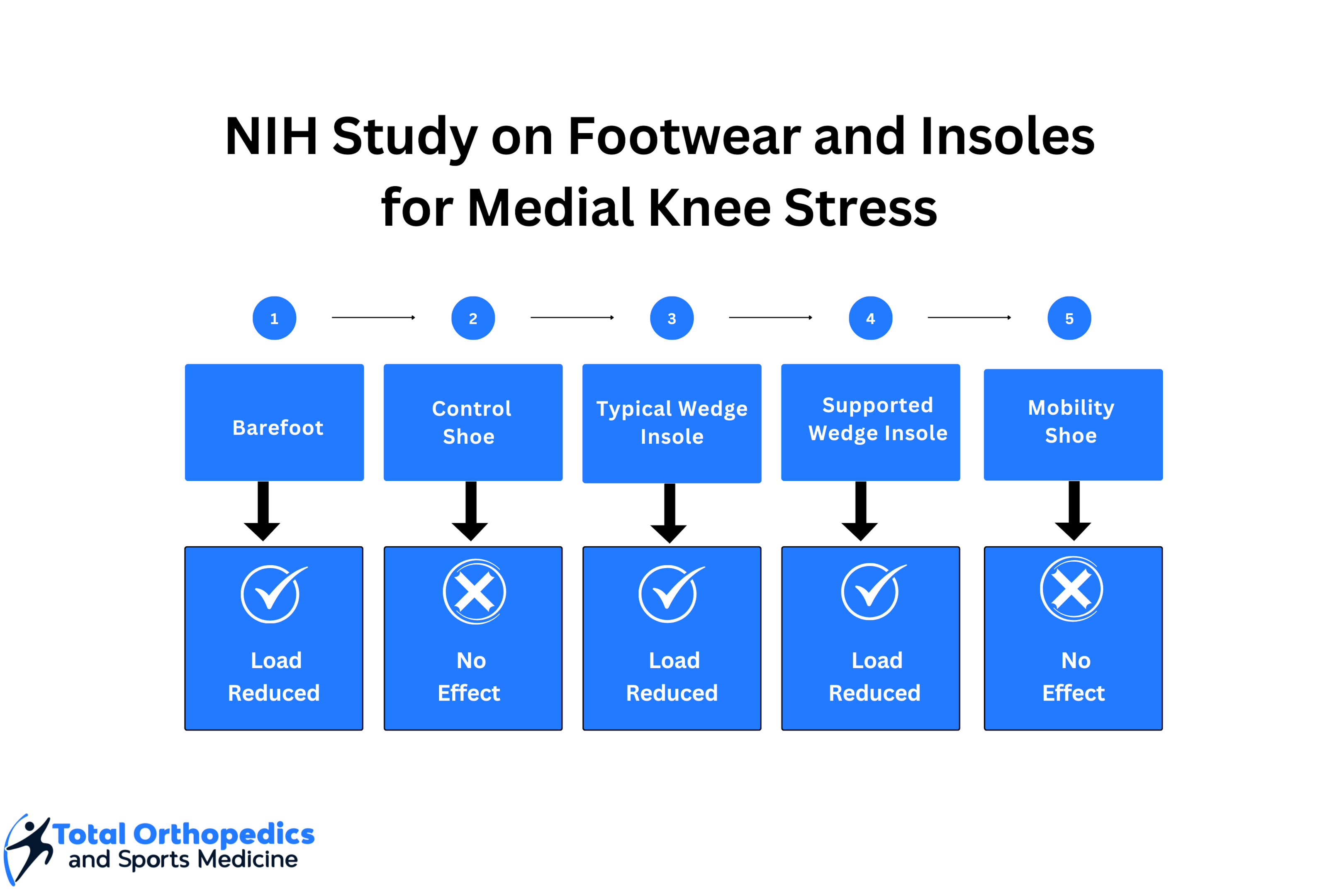
Yes, custom orthotics and ski boot modifications help reduce knee stress and protect from persistent knee pain during skiing. Custom Orthotics correct overpronation, which often leads to rotation in the lower leg and increases strain on the meniscus and medial collateral ligament (MCL). Supporting the arch and stabilizing the foot also reduces the risk of an ACL tear when the knees are bent under pressure. With better alignment, skiers maintain control, improve balance, and reduce the chances of further injury on the ski slopes.
In addition, ski boot modifications keep the inside of the knee safe during turns and landings. Cuff alignment allows both ski edges to share force evenly, preventing excess stress that often leads to common symptoms like swelling and stiffness. In more advanced cases, canting positions the ankles, knees, and hips in a neutral stance, which reduces uneven loading and helps prevent a meniscus tear. If you adjust the forward lean with the boot cuff, your knees stay in the proper flexed position, which reduces pressure on the anterior cruciate ligament (ACL).
What Rehabilitation Strategies Ensure Safe Return To Skiing?
You must focus on building strength, improving flexibility, and supporting your body with proper nutrition to make recovery effective. During the acute phase, it is essential to control swelling and protect the injured leg with gentle, pain-free movement. As recovery progresses (2–6 weeks), restore stability with controlled strengthening exercises that prepare the knee for greater physical demands. In the functional phase (6+ weeks), condition the joint to handle weight-bearing and respond safely to sudden twists that often occur on the slopes
Here are some recommended actions to ensure steady progress and a safe return to skiing:
| Strategy | Practical Approaches |
|---|---|
| Strengthening Exercises | Squats, lunges, bridges, step-ups |
| Flexibility & Balance | Yoga poses, hamstring stretches, side planks |
| Proper Form Training | Snow plow, inside edge |
| Nutrition Support | Protein, omega-3, vitamin D, calcium |
| Rest & Recovery | Sleep, hydration, and gentle mobility work |
| Mental Focus | Breathing, meditation |
However, if rehabilitation does not lead to recovery, severe cases with intense pain or following symptoms like swelling, instability, or limited mobility may develop. In such situations, seeking medical attention from a healthcare professional helps confirm the extent of injury. With proper guidance, the rehabilitation plan can be adjusted to support healing and achieve full recovery. At Total Orthopedics and Sports Medicine, our doctors create personalized rehabilitation plans that match your fitness level and support long-term joint health. Contact us today to schedule an appointment
How Proper Ski Technique And Landing Mechanics Protect The Knee?
Proper ski technique and safe landing mechanics protect the knee and reduce the risk of sudden twists. A balanced stance with knees bent allows the body to absorb impact rather than pushing excess pressure into the joint. Landing with weight forward also reduces strain on the ligaments and helps prevent common knee injuries, such as a torn ligament or MCL injury. Over time, these techniques protect the knee cartilage and joint, allowing it to remain stable and resilient for the ski season.
Here are some ski tips to improve your technique and protect your knees:
- Wearing the right gear for proper support
- Absorb force with a flexed stance
- Keep knees bent in every turn
- Warming up with dynamic stretches before skiing
- Taking regular breaks to prevent fatigue
- Supporting the shin bone and patellar tendon through balance drills
Knee Pain After Skiing Isn’t Normal — Let Total Orthopedics & Sports Medicine Find the Cause and Start Your Treatment!
If you feel pain on the inside of your knee after skiing, even simple movements such as squatting or turning during a run can become difficult. You may notice swelling, limited mobility, or discomfort that worsens when bending or bearing weight. These issues often lead to repeated clinic visits and create uncertainty about when you will return to the slopes.
At Total Orthopedics and Sports Medicine, we identify the exact source of your knee pain and design a clear treatment plan that supports recovery. Our doctors provide step-by-step guidance, explain treatment options, and use proven methods to promote healing. With 14 orthopedic clinics across Long Island, NYC, and New Jersey, advanced care is accessible at all our locations. Wherever you live, you receive consistent, personalized support that restores function and helps you return to skiing with strength. Contact us at 855-321-6784 or visit our clinic for advanced treatment.
FAQS
What Stretches or Exercises Can Prevent Knee Pain?
You can perform quadriceps, hamstrings, and calves stretches to improve flexibility and maintain strong knee support. Exercises such as squats and leg raises also reduce the chances of the most common knee injuries, such as a torn ACL, which often limit mobility. However, you must follow proper technique during these movements to ensure smoother motion.
Can Jumper’s or Runner’s Knee Cause Pain After Skiing?
Yes, jumper’s knee and runner’s knee can cause pain after skiing because both conditions place extra stress on the patellar tendon and surrounding muscles. The repetitive pressure from skiing movements, especially during downhill runs, often aggravates these issues and triggers discomfort. Therefore, early diagnosis is essential to prevent complications and maintain long-term knee function.
Should I Keep Skiing After a Sharp Medial Knee Pain on Landing?
No, you should not keep skiing if you feel sharp medial knee pain after landing. The sudden pain often signals a strain or injury that needs immediate attention. When you continue skiing with severe pain, the injured tissues face more pressure, and the damage increases. Moreover, untreated damage may lead to surgery and prolong your recovery.
Can Going Too Slow on the Slopes Make Knee Injuries Worse?
Yes, going too slowly on the slopes can make certain knee injuries worse, especially for beginners. Moving at a very low speed often leads to awkward falls that strain the knee. Those falls create twisting forces that the joint cannot handle effectively. As a result, even minor mistakes can cause significant pain or damage. Therefore, maintaining proper technique and a steady pace helps protect your knees while skiing.
Can Saphenous Nerve Irritation Mimic Inner Knee Pain After Skiing?
Yes, saphenous nerve irritation can trigger inner knee pain after skiing. The repetitive twisting and stress on the knees may cause compression or trauma to this sensory nerve. Because the saphenous nerve supplies sensation to the inner knee and lower leg, its irritation often feels similar to joint pain. This makes it easy to confuse with a common injury, such as an MCL strain or a medial meniscus tear.
What Landing Mistakes Often Cause Inner Knee Pain?
Twisting on impact, locking the knee straight, or uneven weight distribution often causes inner knee pain. Such movements overload ligaments and cartilage, leading to swelling and discomfort. When an injury occurs, it can quickly progress into more severe tears or instability. That is why it becomes important to diagnose the problem early through medical assessment for appropriate treatment.
Can Sharp Inner Knee Pain Happen Without Swelling?
Yes, sharp inner knee pain can occur without swelling. Conditions like medial meniscus tears, mild MCL sprains, or pes anserine bursitis often trigger discomfort without visible inflammation. In such cases, skiers may experience knee pain after skiing with no swelling, which makes it difficult to identify the cause.


