
Can an EMG Help Find the Exact Level of My Herniated Disc Pain?
Yes, an electromyogram (EMG) can help identify the exact spinal nerve root level affected by a herniated disc. It detects nerve-conduction abnormalities that indicate the affected spinal level. However, EMG tests do not provide an image of the disc itself, so they are typically used in combination with imaging tests and a physical exam for an accurate diagnosis.
At Total Orthopedics & Sports Medicine, our team provides same-day imaging results and compares them with your EMG findings to confirm the exact irritated nerve root. This coordinated review creates an accurate picture of your condition and helps us distinguish actual nerve-root compression from other causes of pain. Call 855-321-6784 to get an appointment.
How Can an EMG Help You Confirm the Exact Location of Your Nerve Damage?
To confirm the exact location of damage, doctors measure the electrical activity in muscles (controlled by the irritated nerve) and identify the point at which abnormal signals originate. If doctors notice slow or weak signals in a muscle, it means the nerve root (which controls that muscle) is irritated.
Additionally, your doctor reviews these signal patterns across multiple muscles to determine which nerve root shows the most consistent abnormalities. If the same pattern appears in all muscles connected to one spine segment, it confirms the exact location of the damaged nerve.
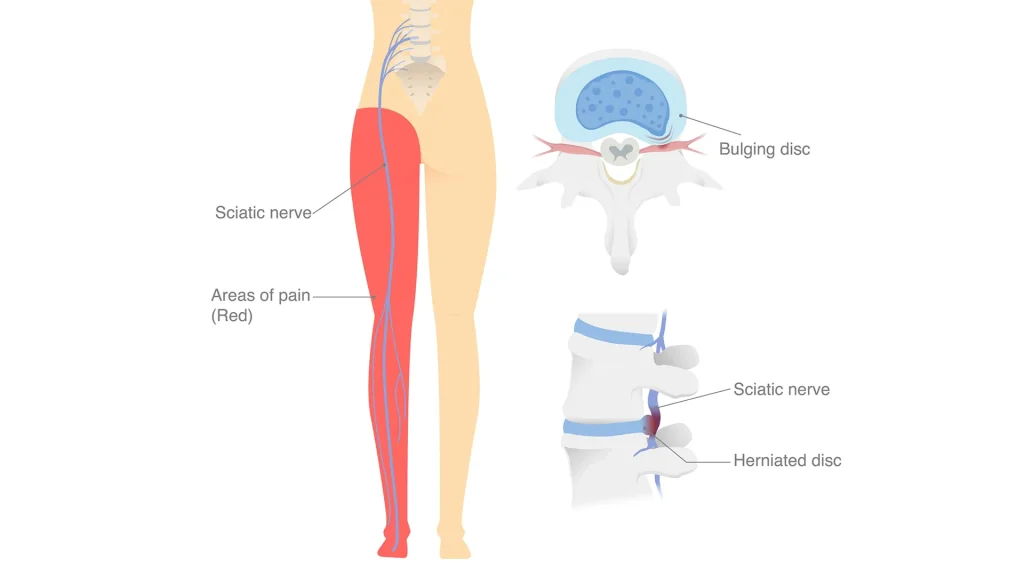
This process also confirms if your sharp pain originates from a disc issue by accurately identifying the compressed nerve root. According to Frontiers, researchers utilized surface electromyography to identify activation changes associated with specific nerve-root compression in lumbar disc herniation. The study showed 84% diagnostic accuracy with an AUC of 0.93.
When Should You Get an EMG for Herniated Disc Pain?
You should consider getting an EMG if you experience persistent leg and back pain, numbness, or weakness for several weeks, as it may indicate ongoing nerve irritation. Your healthcare provider may also order the EMG test when your symptoms do not align with your magnetic resonance imaging results or if your diagnosis remains unclear before surgery. These findings help your specialist confirm the involved nerve root and choose the most effective treatment plan.
Your doctor may also perform a needle electromyography in the following situations:
- To determine if peripheral neuropathy is contributing to your symptoms.
- You develop new lower-limb weakness after a lumbar disc injury.
- If your reflex or strength findings do not indicate a single nerve-root pattern.
How Is an EMG Performed for a Herniated Disc?
During the EMG, your doctor will place small surface electrodes on your skin to measure how quickly electrical signals travel through the pinched nerve. If the results show slowed or weakened responses, it indicates that a herniated disc is compressing the nerve root. After the surface testing, your doctor will then insert a thin EMG needle electrode into the muscles (controlled by the suspected irritated nerve root).
This needle captures electrical signals in your muscles during the following conditions:
- At rest: If abnormal spontaneous electrical impulses are detected, it suggests ongoing nerve-root irritation or early nerve damage.
- During contraction: If weakened or delayed activation appears during muscle contraction, it suggests reduced nerve-signal strength from the affected nerve root.
Moreover, according to MedlinePlus, the full EMG procedure typically takes 30 to 60 minutes, depending on the number of muscles tested. You may feel slight discomfort or muscle soreness during needle placement, but most patients tolerate the test well.
Why Do Specialists Use Both EMG and Trigger Point Testing to Assess Disc Pain?
Your doctor performs EMG and trigger-point testing to distinguish nerve-related disc pain from muscle-based pain. This distinction is important because disc irritation often creates symptoms that closely resemble myofascial trigger points, which makes the diagnosis more difficult.
After completing both tests, your doctor reviews the results together to confirm whether your symptoms match radiculopathy from a herniated disc or a local muscle disorder. This combined approach helps your specialist to identify the exact cause of your pain and develop an effective treatment plan.

How Does an EMG Compare to MRI for Diagnosing a Herniated Disc?
Doctors compare the disc structure (as seen on an MRI) with the damaged nerve function (as observed on an EMG) to accurately diagnose the extent of disease progression. MRI reveals the size and location of the herniated disc and shows how it presses on the nearby nerve root. However, these images cannot confirm if the compressed nerve is still functioning normally or showing early signs of signal loss.
EMG provides this missing detail by assessing the nerve’s ability to transmit signals to its corresponding muscles. These results help your specialist understand the extent of the nerve damage. Additionally, when both tests are reviewed together, your doctor can identify the exact structural problem and the functional impact of a herniated disc.
Can an EMG Differentiate Between a Herniated Disc and Peripheral Nerve Problems?
Yes, an EMG can differentiate between a herniated disc and peripheral nerve problems. A herniated disc affects a single nerve root in the spinal cord, and the EMG shows changes only in the muscles that are linked to that spinal level. However, peripheral nerve problems create a different pattern because the irritation occurs along the limb, which produces abnormalities outside the spinal region.
Additionally, problems in the peripheral nervous system produce abnormal signals throughout the nerve, rather than in a single spinal area. This distribution helps your doctor identify that the problem originates within the peripheral nerve pathway, rather than the spinal region.
Are There Risks of Getting an EMG for Herniated Discs?
Yes, the EMG diagnosis procedure carries slight risks, but these are rare. In fact, a Juniper Publishers study reviews 10,063 EMG procedures over twenty years and found that only 1.89% of patients experienced any complication. This study also found that most patients experienced mild presyncope episodes (lightheadedness), while some patients experienced brief syncope (fainting).
Here are the other possible EMG test side effects:
- Temporary bruising or tenderness at the needle-insertion sites.
- A brief tingling sensation after the nerve-conduction portion of the test.
- Minimal bleeding, especially if you take blood-thinning medication.
- A very small infection risk at needle-insertion areas.
If you ever feel severe pain after an EMG test, you should seek immediate medical care. At Total Orthopedics & Sports Medicine, our doctor will examine the area, check for bleeding or inflammation, and provide treatment to protect the nerve and surrounding tissues. We also guide you through proper care after the test to protect the affected nerve and support a safe recovery. Reach out today to diagnose the underlying mechanisms of your pain.
How Long Does It Take to Get EMG Results for a Herniated Disc?
You can receive the test results within 24 to 48 hours after testing is completed. During this duration, your physiatrist reviews both the nerve-conduction study and needle-EMG findings to confirm the exact nerve root involved. In most cases, you receive a brief overview of the initial findings immediately after the test; however, the final report requires a detailed analysis.
Tip: Prepare a clear summary of your symptoms before the test so your doctor can correlate your EMG results with the specific nerve root involved.
Find the Exact Cause of Your Symptoms With EMG Testing at Total Orthopedics & Sports Medicine — Visit Us Now!
An untreated herniated disc causes radiating pain that leads to muscle weakness in the lumbar spine, which affects balance, movement, and daily function. To avoid permanent nerve damage, you should get an accurate diagnosis without any delay.
At Total Orthopedics & Sports Medicine, our specialists begin your assessment with a complete medical history and a detailed physical examination to understand your symptoms. Our doctor then performs EMG testing to identify the exact nerve involved and create an accurate treatment plan. After treatment, our team provides follow-up appointments to monitor your progress and adjust your care as needed. Call us at 855-321-6784 or visit 2510 Westchester Ave, #100, Bronx, NY 10461 for effective treatment.
FAQs
Will an EMG Show Nerve Pain?
No, an EMG will not show nerve pain. However, the test shows reduced muscle function when the nerves connected to that muscle are not working properly. In some cases, the EMG can also identify early muscle weakness linked to neuromuscular disorders or conditions such as muscular dystrophy. These findings help your doctor understand the actual source of your symptoms.
Does EMG Help Doctors Plan Treatment or Surgery?
Yes, an EMG helps your doctor plan treatment or surgery. This diagnostic procedure allows your doctor to identify abnormalities that indicate whether the nerve can recover with conservative care or if surgical treatment is necessary. Additionally, electromyography EMG results also help rule out muscle and nerve disorders and conditions like carpal tunnel syndrome or spinal stenosis.
Is EMG Useful if I Have Numbness but No Pain?
Yes, an EMG is useful if you have numbness but no pain because numbness often appears before a nerve causes pain. A herniated disc can irritate the sensory nerve cells first, which disrupts normal sensation before you notice pain. Moreover, the EMG allows your doctor to assess how effectively the irritated nerve activates the surrounding motor units and detect nerve irritation.
What’s the Difference Between an EMG and a Nerve Conduction Study?
An EMG evaluates muscle activity, while a nerve conduction study measures the speed at which signals travel through the nerve. Additionally, the EMG helps assess muscle function and detect changes associated with nerve irritation or muscle disease. In contrast, the nerve conduction study identifies slowed or blocked signals caused by nerve injury.
How Long Does an EMG Test Usually Take?
An EMG test takes 30 to 60 minutes. During this procedure, your doctor begins with a nerve conduction study, which measures the speed at which signals travel along the nerve. Then, he performs the needle exam to assess electrical activity within the muscle. Moreover, the total time varies based on your symptoms and the extent of the irritated area that requires assessment.
Is an EMG Safe if I’m Pregnant or Diabetic?
Yes, an EMG is generally considered safe if you are pregnant or diabetic. This is because the EMG test uses tiny electrical impulses and thin needles that do not affect your bloodstream, uterus, or glucose levels. However, your doctor may take extra precautions, such as avoiding certain body areas or monitoring skin integrity, to ensure the procedure is performed safely.
What Conditions Can an EMG Help Diagnose?
An EMG can diagnose carpal tunnel syndrome, peripheral neuropathy, and radiculopathy. It can also identify sciatic nerve compression, ulnar nerve entrapment, and muscle disorders by checking nerve-to-muscle communication. Additionally, it further detects ALS, myopathy, and nerve injuries, which helps your doctor pinpoint the exact source of your symptoms.


