
Can Arthroscopy Help Me Keep Running?
Yes, arthroscopy supports joint stability by repairing knee injuries using a minimally invasive approach to keep you running. It targets structural problems such as a torn meniscus or damaged cartilage that cause pain and restrict movement. Treating these issues early helps reduce swelling, improve knee flexion, and restore smooth motion.
At Total Orthopedics & Sports Medicine, our orthopedic surgeons use advanced knee arthroscopy techniques to repair, treat, and restore your knee joint through a minimally invasive approach. We support you throughout the recovery process with targeted exercises and sports medicine care, helping you rebuild strength and protect joint health. Schedule your appointment today to protect your knees and support lasting joint health.
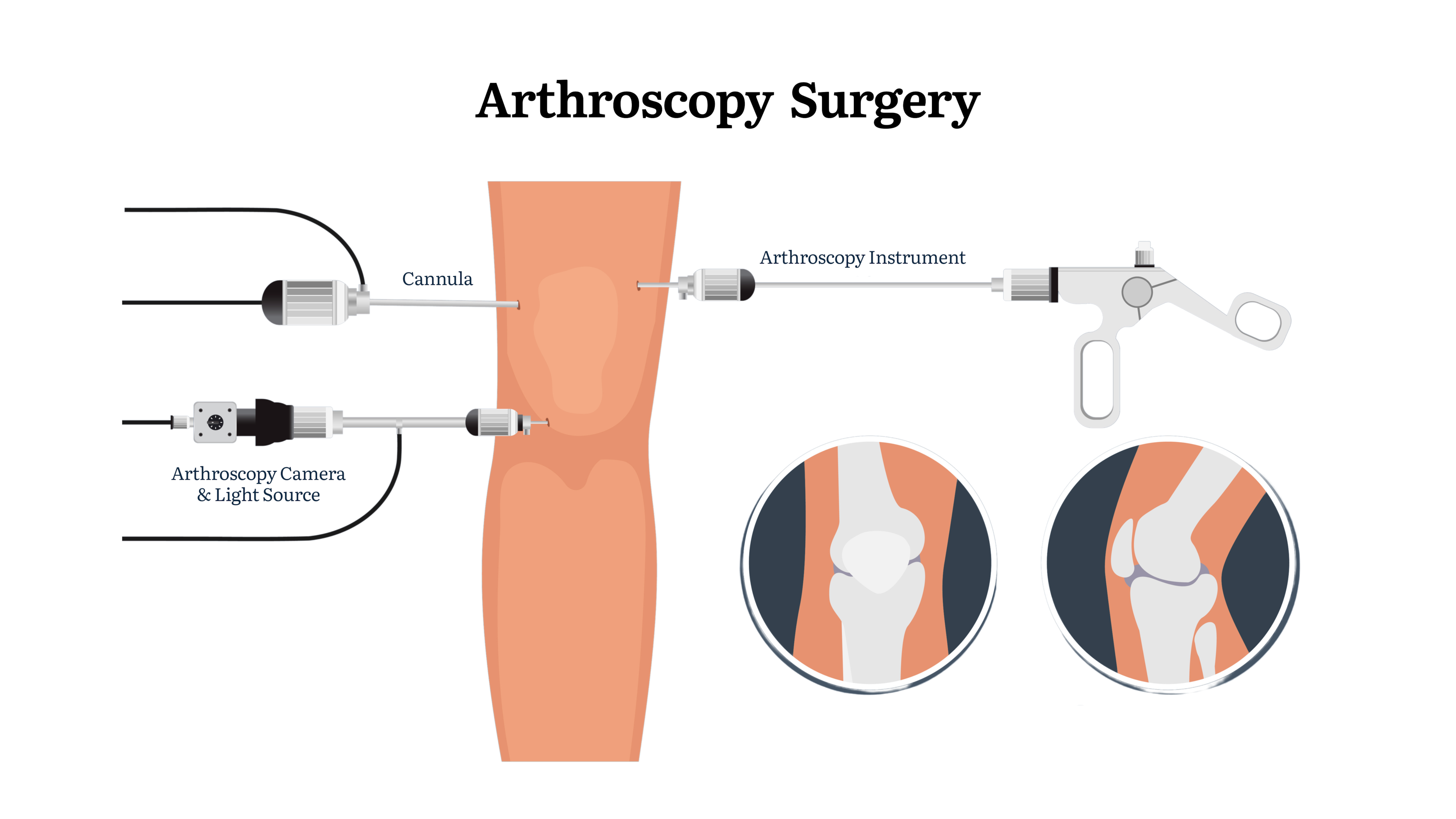
How Can Arthroscopy Help You Run Safely?
Knee arthroscopy supports safe running by addressing internal joint issues early, before they progress into more serious injuries. It removes loose bone or cartilage fragments, smooths damaged surfaces, and repairs small tears to improve stability. When combined with targeted exercises, it helps maintain motor control and joint alignment.
In addition to these benefits, knee arthroscopy can also:
- Promote even body weight distribution across the knee joint during movement
- Restore shock absorption capacity for better performance on both flat and uneven running surfaces
- Enhance joint lubrication, reducing friction during repetitive motion
- Improve running efficiency by reducing energy loss from unstable movement
- Allow an earlier and successful return to training routines with reduced discomfort
What Conditions Does Arthroscopic Knee Surgery Treat?
Arthroscopic knee surgery can help if you have a meniscal tear that causes locking or catching in the knee joint. It also removes loose fragments of bone or cartilage that block motion and repairs focal cartilage lesions through chondroplasty. Since this procedure is minimally invasive, your orthopedic surgeon can address these problems with precision, often resulting in a faster recovery and better joint function.
In addition, arthroscopy effectively treats synovial overgrowth, joint‑lining irritation, and scar tissue that restricts motion after past injuries or surgeries. In fact, a study published in Archives of Orthopaedic and Trauma Surgery reported that patients who underwent arthroscopic surgery after serious knee fractures improved their range of motion from an average of 73° to over 104° during follow-up, showing significant functional improvement.
Can Arthroscopy Help You Avoid a Knee Replacement?
Yes, arthroscopy can sometimes delay the need for a knee replacement if you have a small, repairable lesion or early cartilage damage. Treating these problems promptly may slow joint deterioration and help preserve mobility. However, arthroscopy is not effective for advanced osteoarthritis, where cartilage loss is severe and joint replacement often becomes the only reliable way to restore function and relieve pain.
The potential benefit of arthroscopy also depends on the size and location of the lesion. In some early-stage cases, targeted repairs may help you stay active for longer when paired with rehabilitation. Yet, a long-term study published in JAMA Network Open showed no significant difference in knee replacement rates between patients who underwent arthroscopy with nonoperative care and those who received only nonoperative treatment. This suggests that while arthroscopy may improve symptoms in the short term for certain patients, it does not delay the need for knee replacement in cases of degenerative disease.
What Imaging Tests Confirm if Arthroscopy is Needed?
Imaging tests such as X-rays, MRI, and ultrasound examine the knee’s internal structures and confirm whether arthroscopy is appropriate. In most cases, the process begins with X-rays, which show bone alignment, joint space narrowing, and bone spurs. Although X-rays cannot detect soft tissue injuries, they are essential for identifying signs of advanced arthritis, where arthroscopy is unlikely to provide lasting relief.
When more precision is needed, MRI and ultrasound provide a clearer view of the knee’s soft tissues. In fact, according to a review in Radiology, MRI demonstrates both high sensitivity and specificity for detecting meniscal tears, making it the most reliable noninvasive tool for confirming soft tissue injuries. Furthermore, ultrasound supports this by showing real-time joint motion, fluid buildup, or loose fragments. Together, these imaging tools create a comprehensive diagnosis and guide the most appropriate treatment plan.
How Soon Can You Return to Training After Arthroscopy?
You can return to training after arthroscopy in a few weeks to several months, depending on the procedure and your healing progress. For example, if you undergo a partial meniscectomy, light jogging is often possible within 2–4 weeks. Meanwhile, a meniscal repair takes longer, with most athletes returning in 3–4 months to protect the repaired tissue.
In addition, cartilage restoration procedures often require 4–6 months before higher-impact training can safely resume, and you can start running again. During this period, following your rehabilitation plan, progressing gradually, and monitoring your knee’s response are essential. This approach supports restoring strength, stability, and movement control while minimizing the risk of delays in recovery. To maintain safe progress, schedule regular check-ins with your surgeon to keep your recovery on track and ensure a safe, effective return to training.
Can Total Orthopedics & Sports Medicine Help in Knee Surgery Recovery?
Yes, doctors at Total Orthopedics & Sports Medicine can support your knee surgery recovery through structured, sport-specific protocols aligned with your training goals. Your recovery often begins with targeted rehabilitation exercises to restore knee strength, stability, and range of motion. As you progress, gait analysis helps ensure your running mechanics are correct and safe before advancing to higher-impact activities.
At the same time, your surgeon will track your healing process through follow-up visits and adjust your recovery plan when needed. This ongoing guidance supports steady improvement, reduces the risk of reinjury, and helps you return to training safely and effectively. To continue that progress at home, follow the steps mentioned in the Post-Op Knee Arthroscopy Guide created by our team of doctors, which outlines icing schedules, pain management strategies, strengthening exercises, and early mobility routines to promote optimal recovery.
How Post-Arthroscopy Scar Tissue Affects Running Mechanics?
Scar tissue after arthroscopy can limit knee flexion, which affects your running mechanics and overall performance. When your knee cannot bend fully, your stride often shortens, your push-off power decreases, and nearby joints take on extra strain. Over time, this added stress can lead to uneven weight distribution and compensatory movements, increasing your risk of injury.
To address these issues, include manual therapy, stretching, and mobility drills in your rehabilitation to improve the range of motion. At the same time, track your stride length and running form to confirm progress. If tightness persists, your surgeon may recommend targeted treatments to break down excess scar tissue. Managing these restrictions early helps maintain proper mechanics, reduce joint strain, and support a safe, efficient return to running.
What Are The Risks And Limitations Of Arthroscopy?
Arthroscopy is generally safe, but like any surgery, it carries certain risks, including infection, blood clots, and reactions to anesthesia. Recovery may also involve stiffness, swelling, or lingering pain, especially if healing is slower than expected. Moreover, arthroscopy is not effective for advanced arthritis because the cartilage damage cannot be reversed.
While these are the primary concerns, you should also be aware of other potential risks and limitations, such as:
- Nerve or blood vessel injury during the procedure
- Formation of scar tissue that limits joint mobility
- Need for additional surgery if symptoms persist
- Temporary loss of strength or range of motion
- Limited benefit for degenerative joint disease
- Possibility of delayed return to full activity
Additionally, recovery success depends on your knee’s condition, overall health, and commitment to rehabilitation. Understanding these factors helps you prepare for the process and make informed decisions about your treatment.
Total Orthopedics & Sports Medicine Can Help You Recover After Knee Arthroscopy — Book a Visit Now!
Ongoing knee pain, swelling, or stiffness can gradually make running more difficult and put your long-term joint health at risk. As these knee problems progress without treatment, they can disrupt your running mechanics, reduce efficiency, and increase stress on other joints. You might notice your stride becoming shorter, your stability decreasing, or discomfort reaching a level that limits your ability to train consistently.
At Total Orthopedics & Sports Medicine, our surgeons perform advanced arthroscopy to repair knee injuries, restore natural motion, and protect long-term performance. By addressing joint issues early, we help you return to running with better stability, reduced pain, and a lower risk of reinjury. Call 855-321-6784 to schedule your online consultation.
FAQs
Is Combining Arthroscopy with Treatments like PRP Effective?
Yes, combining arthroscopic surgery with PRP can enhance healing by helping tissues heal more effectively. In many cases, PRP helps minimize pain and speed recovery, particularly after meniscus surgery or ACL reconstruction. While it cannot replace surgery, it can improve leg strength and function during rehabilitation.
Do I Need Crutches or a Brace After Arthroscopy?
Yes, most patients use crutches for several weeks after arthroscopic surgery to protect the leg and prevent complications. In some cases, a brace is also recommended, especially if the repair limits walking or jumping. This decision depends on the specific procedure, such as meniscus surgery or ACL reconstruction. As swelling decreases, gradual weight-bearing helps ensure a safe, pain-free return to normal activities.
Is Arthroscopy an Alternative to Total Knee Replacement?
No, arthroscopic surgery is not a substitute for total knee replacement in advanced knee conditions. It is most effective when the damage is repairable, such as a meniscus tear or loose cartilage. In these cases, it can delay more invasive open surgery and help preserve the full range of motion. However, for severe arthritis, total replacement may be the only way to restore normal activities and fully relieve pain.
How Long Will the Results of Arthroscopy Last?
Results can vary depending on the condition and treatment, and last from one to five years. For minor repairs, such as partial meniscectomy, relief may continue for years with consistent low-impact activities. In cases requiring meniscus surgery, recovery takes longer, but combining rehabilitation with leg-strengthening exercises can help preserve function for over five years. However, for degenerative conditions, relief is often temporary, and symptoms may return, requiring additional treatment or surgery.
What Type of Anesthesia Is Used During Arthroscopy?
Arthroscopic surgery may involve local, regional, or general anesthesia, depending on the procedure and the patient’s needs. In some cases, local anesthesia is used to numb only the leg, while regional anesthesia blocks sensation from the waist down. For more complex procedures, general anesthesia may be chosen to put the patient fully asleep. This decision often depends on the injury type, such as meniscus surgery, and the patient’s overall health.
Can Arthroscopy Be Done for Shoulder or Hip Injuries as Well?
Yes, arthroscopic surgery can also be used for shoulder and hip injuries. In the hip, it can repair labral tears, remove loose fragments, and improve joint motion. Similarly, in the shoulder, it treats rotator cuff tears and addresses joint instability. Like knee arthroscopy, these procedures also use small incisions instead of open surgery, which helps reduce recovery time and complications.
Can I Drive After Arthroscopic Knee Surgery?
Yes, you can drive after arthroscopic knee surgery, but only when your leg can operate the pedals safely and without painful movement. After surgery, this recovery period often lasts 1–3 weeks. Driving too soon can increase complication risks and slow healing, so rest is essential. Before resuming driving, you should stop any pain medication that affects reaction time.
What Is the Best Exercise After Arthroscopic Knee Surgery?
The best early exercises include gentle walking and single-leg balance drills to restore stability. As healing improves, rehabilitation sessions may progress to jumping drills, bodyweight squats, and lower-impact sports. For meniscus surgery recovery, avoid deep knee bending until cleared by your provider. Gradually, these steps build leg muscles, improve the full range of motion, and prepare you for a safe return to running or other activities.
How Successful Is Arthroscopic Knee Surgery?
Success rates for arthroscopic surgery exceed 80% when paired with rehabilitation. Many patients regain a full range of motion and resume normal activities within several weeks. For athletes, returning to unrestricted running, lower-impact sports, or jumping depends on the specific injury, adherence to recovery exercises, and avoiding early heavy lifting or other strenuous activities.


