

Tethered Cord Syndrome: When the Spinal Cord Is Anchored?
Tethered cord syndrome is a neurological disorder that develops when your spinal cord attaches to surrounding tissue. As a result, it cannot move freely inside the spinal canal. This tension can stretch the spinal nerves as your spine grows. Therefore, you may develop pain, weakness, numbness, or bladder problems. Early diagnosis can help reduce lasting nerve damage.
At Total Orthopedics & Sports Medicine, our spine specialists assess symptoms linked to a tethered spinal cord. We carefully examine your strength, sensation, walking ability, and bladder function. Then, we may recommend imaging to identify abnormal spinal cord tethering. Your treatment will depend on your symptoms and neurological changes. Call 855-321-6784 to schedule your spine evaluation today.
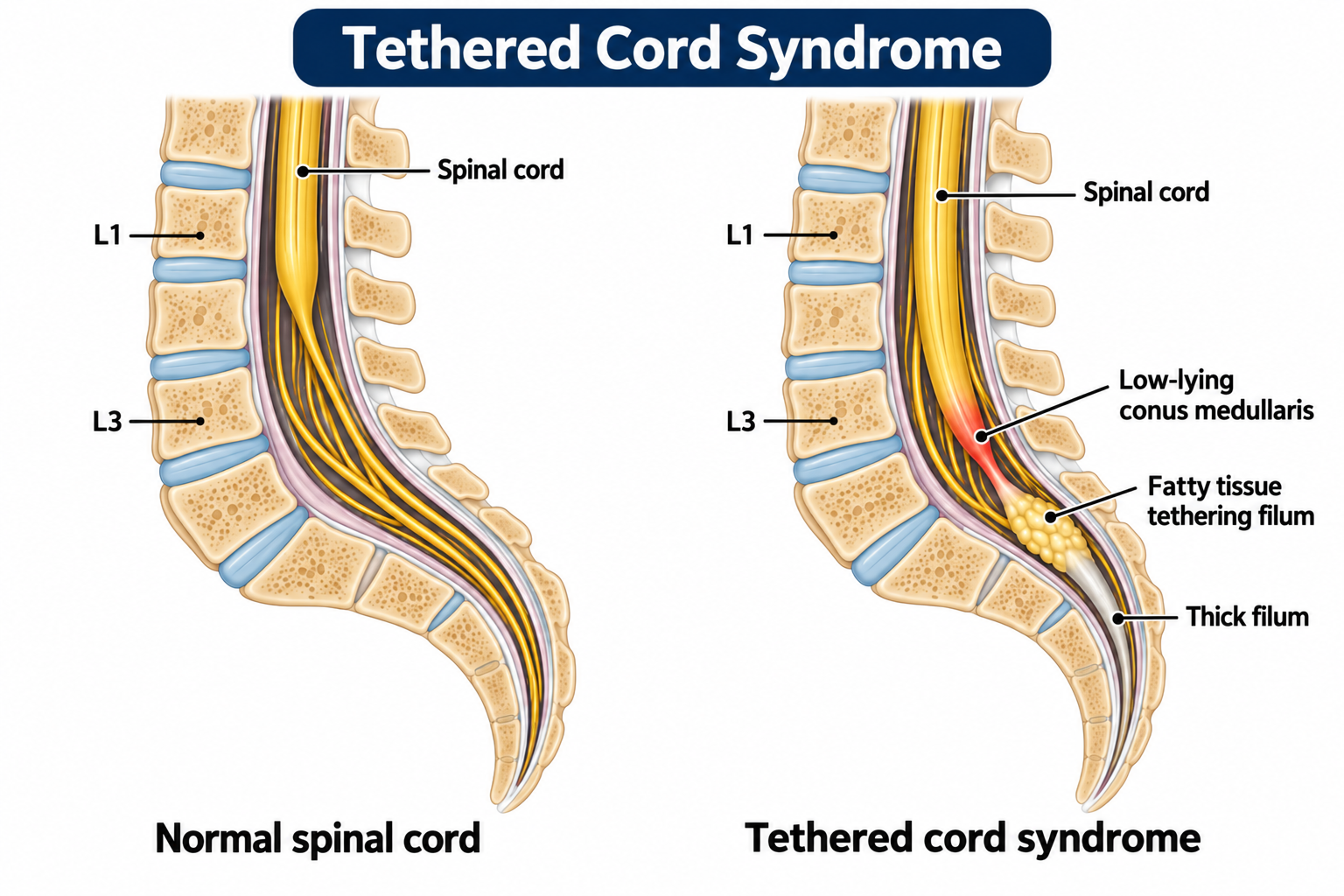
How Does Tethered Cord Syndrome Affect the Spinal Cord?
Tethered cord syndrome places abnormal tension on your spinal cord and nearby spinal nerves. Normally, your spinal cord moves freely within the spinal canal as your body moves. However, spinal cord tethering limits this natural movement by holding the cord against surrounding tissue. As a result, tension can affect nerve signals traveling between your brain and body.
Over time, this tension may cause pain, leg weakness, or difficulty walking. You may also develop changes in bladder control or bowel control. Symptoms can vary widely because tethering affects different nerve areas in each person. Therefore, early assessment matters when new neurological signs and symptoms begin to appear. If left untreated, ongoing nerve tension may sometimes lead to further damage.
What Can Cause the Spinal Cord to Become Tethered?
A tethered spinal cord develops when abnormal tissue attaches the cord to the spinal canal. These attachments restrict normal movement and place tension on nearby spinal nerves. Doctors generally divide the causes into congenital and acquired types. Congenital causes begin before birth, while acquired causes develop later.
Here are the main conditions that can cause spinal cord tethering:
- Thickened filum terminale: This tissue can become tight and restrict normal spinal cord movement.
- Fatty tissue: A fatty mass can attach to the cord and limit normal movement.
- Spina bifida: Children with spina bifida may develop abnormal attachments around the spinal cord.
- Scar tissue: Previous spinal surgery can create scar tissue that later tethers the cord.
- Other spinal abnormalities: Some birth-related changes can connect the cord to nearby tissues.
For example, a clinical review links tethered cord syndrome with several congenital spinal abnormalities. These include fatty tissue around the spinal cord, a fatty lump attached to the spinal cord, an opening in the spine present at birth, and a spinal cord divided into two sections.
Similarly, a study of 174 children examined filum terminale lipomas, a congenital abnormality linked with spinal cord tethering. The study also found that 79 children, or 45.4%, already had symptoms.
Can a Tethered Cord Be Present From Birth?
Yes, a tethered cord can be present from birth because of congenital spinal changes. These changes may develop while the spinal cord forms before birth. However, symptoms may not appear until later as growth increases tension on the cord.
Spina bifida, fatty tissue, and a thick filum terminale can cause early tethering. Some children may also have hairy patches or other skin changes over the lower spine. Children with myelomeningocele have a particularly high risk of later symptomatic tethering.
In fact, clinical guidance from the AANS estimates that 20% to 50% of children with spina bifida defects repaired shortly after birth may eventually require spinal cord untethering surgery. Therefore, long-term monitoring can help doctors identify new neurological changes.
What Are the Common Symptoms of a Tethered Spinal Cord?
Common tethered spinal cord syndrome symptoms include pain, weakness, numbness, walking problems, and bladder changes. You may also develop bowel problems or reduced control as nerve tension increases. However, symptoms can vary widely based on your age and affected nerve areas.
You may notice these common signs and symptoms:
- Back or leg pain: Ongoing nerve tension can cause pain in your lower back or legs.
- Leg weakness: You may lose strength or develop trouble walking as nerve function changes.
- Numbness or tingling: You may notice reduced feeling in your legs or feet.
- Bowel problems: Nerve changes may also affect bowel control in some people.
- Bladder problems: You may develop urgency, leakage, or difficulty maintaining normal bladder control.
- Muscle changes: Long-term nerve problems may contribute to weakness or muscle loss.
Why Do Symptoms Become More Noticeable During Growth?
Symptoms often become more noticeable because your spinal column lengthens while the tethered cord remains fixed. As your child grows, the cord cannot move upward normally with the developing spine. This increasing stretch can place more tension on the spinal cord and nearby nerves.
During periods of rapid growth, you may notice changes in walking, strength, or bladder function. In addition, pain or sensory problems may become easier to recognize over time. A review of adolescent tethered cord syndrome explains that faster skeletal growth can increase spinal cord tension. The review notes that this stress may worsen neurological symptoms during puberty.
Similarly, a literature review on tethered cord after myelomeningocele repair links worsening symptoms with childhood growth spurts. It reports increases in symptoms during periods when the spinal canal lengthens more rapidly. Therefore, regular follow-up care can help track new changes as your child grows.
Can Tethered Cord Symptoms First Appear in Adults?
Yes, tethered spinal cord symptoms can first appear during adulthood, even when tethering began much earlier. You may remain symptom-free for years before nerve tension begins to cause noticeable problems. In addition, prior spinal surgery, injury, or age-related changes may increase stress on the cord.
When symptoms appear later, you may develop back pain, leg weakness, or sensory changes. You may also notice bladder problems, changes in walking, or reduced control of movement. However, adult symptoms can overlap with other spinal conditions, so proper evaluation remains important.
If you develop these symptoms, our doctors can evaluate your nerve function and spinal health. We can also review imaging, identify possible tethering, and recommend the right next treatment step. Call us at 855-321-6784 to schedule your appointment.
How is a Tethered Spinal Cord Diagnosed?
Doctors evaluate spinal cord tethering by reviewing your symptoms and checking your nerve function. They also examine your strength, reflexes, sensation, balance, and walking pattern. In addition, they review your medical history for birth defects or prior spinal surgery. These findings help doctors decide which further tests you may need.
During your examination, doctors may look for several neurological and physical changes:
- Muscle strength: Doctors check your legs for weakness or reduced muscle control.
- Reflexes: Changes in reflexes can show possible problems with affected spinal nerves.
- Sensation: Doctors test whether you feel touch and pressure normally in your legs.
- Walking pattern: Changes in balance or gait may suggest worsening nerve function.
- Spinal changes: Doctors may check for scoliosis, foot changes, or unusual skin markings.
- Medical history: Prior surgery, trauma, or congenital conditions can support further testing.
A 2019 study of 67 infants also shows why physical examination matters. Researchers found abnormal spinal ultrasound results in 14 infants after doctors identified possible warning signs. Therefore, clinical findings can help doctors decide when imaging or specialist evaluation becomes necessary.
What Can an MRI Show About the Spinal Cord?
Magnetic resonance imaging (MRI) can show where your spinal cord ends and how nearby tissue may restrict movement. It can also reveal a low-lying cord, thecal sac, fatty tissue, a thickened filum terminale, or a spinal cord cyst. These detailed images help doctors identify structural changes and other problems linked to your symptoms. You can also upload recent scans through our secure imaging portal for review.
When Are Bladder Tests Used During Diagnosis?
Doctors use bladder tests when tethered cord symptoms include changes in urination or bladder control. These tests help show whether spinal nerve changes affect how your bladder stores and releases urine. For example, urodynamic testing measures bladder pressure, urine flow, and muscle function during filling and emptying.
Doctors may also recommend testing if you develop leakage, urgency, frequent infections, or trouble emptying your bladder. In addition, test results can help doctors track changes in nerve function over time.
What Are the Treatment Options for Spinal Cord Anchoring?
Treatment for spinal cord anchoring depends on your symptoms and changes in nerve function. Doctors may monitor mild cases and manage symptoms when your condition remains stable. However, worsening weakness, bladder problems, or walking changes may require tethered spinal cord surgery.
Here is how doctors may manage spinal cord anchoring:
- Regular monitoring: Doctors track your strength, sensation, walking, and bladder function over time.
- Pain management: Medications may help reduce pain associated with nerve tension or spinal discomfort.
- Movement support: Guided exercises may help maintain strength, balance, and safe movement in daily activities.
- Bladder management: Treatment may address urinary symptoms and changes in bladder control.
When Is Spinal Cord Release Surgery Considered?
Doctors consider spinal cord release surgery when tethering causes progressive nerve or bladder problems. As these problems worsen, you may develop weakness, difficulty walking, pain, or reduced bladder control. In addition, surgery may be considered when ongoing tension places your nerve function at greater risk.
At Total Orthopedics & Sports Medicine, our doctors carefully review your symptoms, nerve function, and imaging results. Then they explain whether continued monitoring or surgical evaluation is best for your condition. They also track changes in walking, strength, and bladder function before recommending the next step.
What Happens During Spinal Cord Release Surgery?
During spinal cord release surgery, surgeons free your spinal cord from the tissue holding it in place. First, they make a small incision in your lower back to reach the tethered area. Next, they carefully separate scar tissue or other restrictive attachments from the spinal cord.
During the procedure, surgeons may monitor nearby nerves to protect their function. After releasing the tethered tissue, they close the surgical area and monitor your recovery. This process aims to reduce tension on the spinal cord and nearby nerves.
The procedure may take about 20 to 30 minutes in simple cases. However, more complex surgery can take two to five hours. The exact time depends on the location and amount of tethered tissue.
Can Nerve Function Improve After Spinal Cord Surgery?
Yes, nerve function can improve after tethered cord release, especially when doctors treat symptoms early. Releasing the cord reduces tension on nearby nerves and may improve their function. You may notice better strength, walking, pain levels, or bladder control after surgery.
Recovery depends on the severity and duration of nerve problems before treatment. Long-standing nerve damage may not fully improve after the spinal cord is released. Many children still experience improvement or stabilization and can remain active after treatment.
A research study of 52 children found that 56% of tethered-cord symptoms improved after surgical release. Improvement reached 82% among children younger than five in that study. These findings also show why long-term outcomes can differ between children.
Can the Spinal Cord Become Anchored Again After Surgery?
Yes, the spinal cord can become tethered again if new scar tissue forms after surgery. This scar tissue can attach to the cord and restrict its normal movement. You may then notice returning pain, weakness, walking changes, or bladder problems.
Retethering does not always require another operation, especially when symptoms remain mild. Doctors usually watch for new neurological changes before considering repeat surgery. For example, in a study of 146 children who underwent sectioning of the filum terminale, 11 developed symptomatic retethering that required another operation. Because this result comes from a single patient group, it should not be used as a general retethering rate for all patients.
How Does Spinal Cord Anchoring Differ From Lower Back Problems?
Spinal cord anchoring affects the spinal cord directly, while most lower back problems affect nearby structures. Tethering may cause weakness, changes in walking, or bladder problems. In contrast, disc problems often cause pain that follows a single nerve path, such as sciatic nerve pain.
Here is how spinal cord anchoring differs from common lower back problems:
| Spinal Cord Anchoring | Common Lower Back Problems |
|---|---|
| Pulls on the spinal cord itself | Often compresses or irritates nerve roots |
| May affect walking and leg strength | Often causes back or leg pain |
| Can change bladder or bowel function | Usually does not affect bladder control |
| May cause symptoms in several nerve areas | Often follows one specific nerve pathway |
| MRI may show a tethered or low-lying cord | MRI may show disc or joint changes |
| Symptoms may worsen as tethering progresses | Symptoms may change with posture or activity |
Is Tethered Cord Syndrome the Same as Spina Bifida?
No, tethered cord syndrome and spina bifida are different conditions, although they can occur together. Spina bifida develops when the spine does not close properly before birth. In contrast, tethered cord syndrome develops when tissue restricts normal spinal cord movement.
Children with spina bifida have a higher risk of developing spinal cord tethering later. However, you can also develop tethered cord syndrome without having spina bifida. Doctors use your symptoms and imaging findings to distinguish between these related disorders.
How Is Tethered Cord Monitored Over Time?
Doctors monitor tethered cord by tracking changes in your strength, sensation, walking, and bladder function. Regular follow-up helps them notice new symptoms before they cause more serious nerve problems. They may also compare your current exam with earlier findings to measure any change.
Doctors may repeat imaging when your symptoms change or neurological findings become more concerning. They may also order bladder testing if urinary problems develop or worsen. In children, doctors often watch growth closely because symptoms can change as the spine develops.
Long-term monitoring matters even when your symptoms remain mild or stable. Regular checks can help doctors decide when observation remains appropriate or further treatment becomes necessary.
Get Help for Spinal Cord Tethering at Total Orthopedics & Sports Medicine!
Spinal cord tethering can cause pain, weakness, numbness, walking problems, and bladder changes. As symptoms progress, you may struggle with movement, balance, or daily activities. Without proper evaluation, ongoing nerve tension may increase the risk of lasting damage over time. Early care can help you understand these changes and protect your spinal health over time.
At Total Orthopedics & Sports Medicine, our spine specialists evaluate your symptoms and nerve function. We also review imaging and bladder changes to identify signs of spinal cord tethering. Then, we build a treatment plan based on your specific neurological needs. Call 855-321-6784 or schedule care at one of our New York or New Jersey locations.
FAQs
How Long Does Recovery Take After Tethered Cord Surgery?
Recovery after tethered cord surgery often takes a few weeks, although healing time can vary. Most patients slowly return to normal activities as pain and swelling improve. Recovery may take longer if symptoms were severe before surgery or if nerve problems need more time to improve.
At What Ages Do Tethered Cord Symptoms Often Become Noticeable?
Tethered cord symptoms often become noticeable around ages 5 to 6 and 12 to 14. These periods often match major childhood growth spurts. As your child’s spine grows, added tension on the spinal cord can trigger pain, weakness, walking changes, or bladder problems.
What Type of Doctor Treats a Tethered Spinal Cord?
A neurosurgeon usually treats a tethered spinal cord when surgery is being considered. Your care team may also include neurologists, orthopedic specialists, or rehabilitation providers. These doctors review your symptoms, imaging results, and nerve function before deciding which treatment approach best fits your condition.
What Is Occult Tethered Cord Syndrome?
Occult tethered cord syndrome causes symptoms of cord tethering even when standard imaging does not show obvious tethering. You may develop pain, weakness, bladder changes, or sensory symptoms. Because diagnosis can be difficult, doctors usually compare your symptoms, neurological findings, and imaging before discussing treatment.
Can Children With Myelomeningocele Develop Tethered Cord Syndrome?
Yes, children with myelomeningocele can develop tethered cord syndrome as they grow. Scar tissue after spinal repair may restrict normal spinal cord movement. As a result, new weakness, pain, walking changes, or bladder problems may appear. Doctors usually monitor these symptoms and recommend treatment when nerve function starts to worsen.
Should You Avoid Certain Exercises With a Tethered Cord?
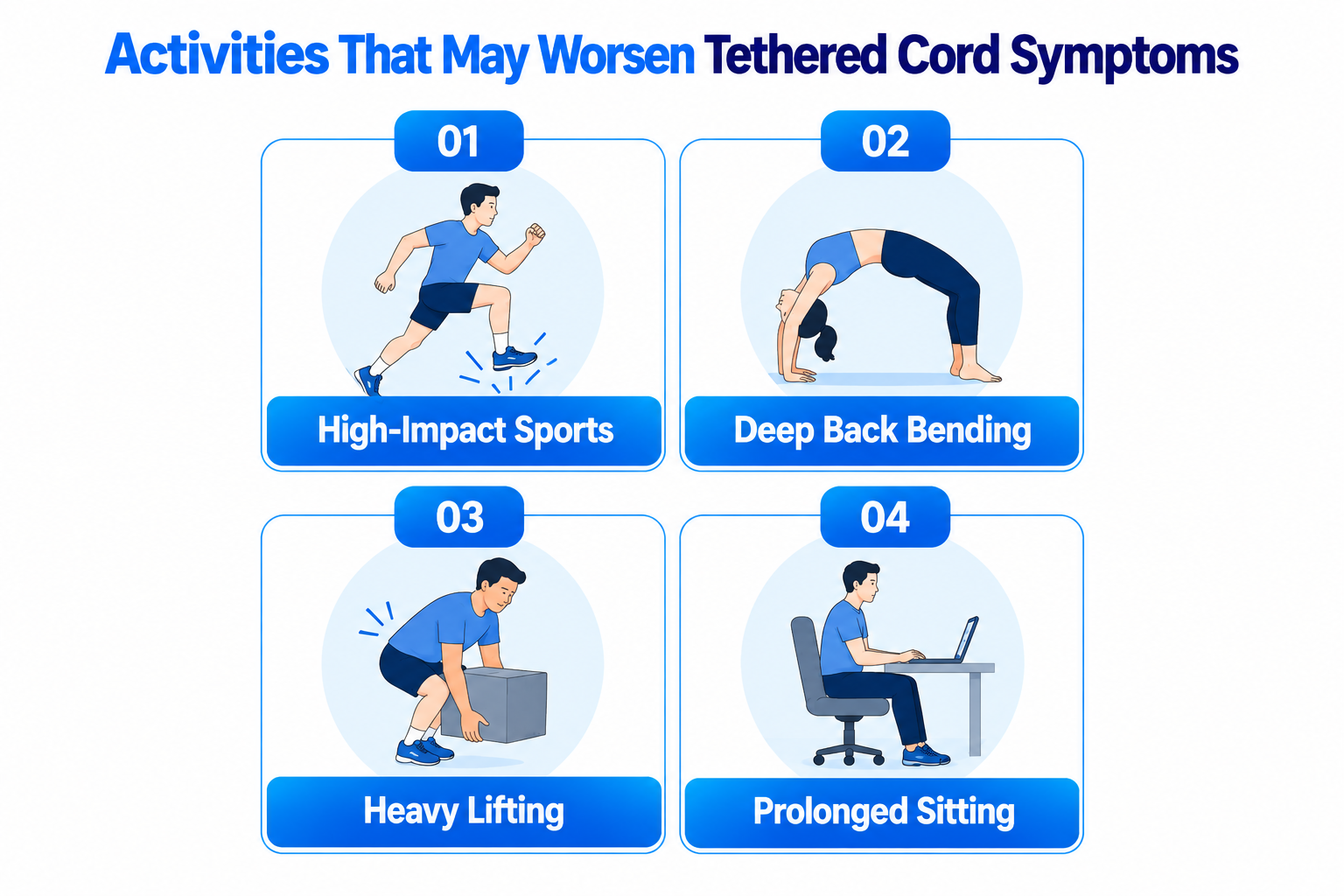
Yes, you may need to avoid exercises that increase pain, weakness, numbness, or other neurological symptoms. High-impact movements and repeated spinal stretching may place more tension on a tethered cord. Your specialist can guide you toward safer exercises based on your symptoms, strength, and treatment plan.

