

How to Sit With a Fractured Vertebrae?
To sit safely with a fractured vertebra, keep your back supported and your spine in a neutral position. Choose a firm chair with lumbar support, keep your feet flat on the floor, and avoid bending or twisting. Also change your sitting position regularly to reduce discomfort and prevent unnecessary pressure on your spine.
If you’re struggling to sit comfortably due to a compressed or fractured vertebra, our orthopedic specialists can help. At Total Orthopedics & Sports Medicine, our expert team can provide you with guidance on the best treatment options to help you sit comfortably and safely. You can also use our online patient portal to conveniently access your medical information and manage your care. Call 855-321-6784 to explore personalized treatments, including back braces and lumbar support.
Key Takeaways
- To sit safely with a fractured vertebra, maintain a neutral spine, use a supportive chair, and avoid bending, slouching, or twisting.
- There is no fixed sitting time limit after a vertebral fracture. Start with brief sitting sessions and gradually increase the duration as your condition improves.
- Lying down may provide better pain relief during early recovery, but prolonged bed rest can cause muscle weakness and stiffness.
- Most stable vertebral compression fractures heal within 6–12 weeks, although returning to normal sitting activities depends on pain levels, fracture stability, and healing progress.
- Life expectancy after a compression fracture depends on age, bone health, and underlying conditions. Older adults with osteoporosis-related fractures may face higher long-term health risks.

What’s the Best Way to Sit With a Fractured Vertebrae?
The best way to sit with a fractured vertebra is to maintain a straight back with relaxed shoulders. This helps align your lumbar spine and reduces pressure on the injured area. Use a supportive chair with a backrest and armrests to ensure comfort and proper support.
Adjust the chair so that your knees are at a 90-degree angle and your feet rest flat on the floor. This setup helps you avoid slouching and supports your spine in the right position. While recovering, avoid sitting for long periods to prevent added strain on your spine. In addition to limiting sitting time, when rising from a seated position, use your arms for support and keep your back straight to avoid sudden pressure or pain.
Moreover, WebMD, a leading American corporation, states that vertebral compression fractures can take two to three months to heal with appropriate treatment and care. This treatment consists of wearing a back brace and modifying normal daily activities to promote healing.
How Long Can You Sit With a Fractured Vertebra?
There is no fixed sitting limit for someone with a fractured vertebra. The appropriate duration depends on the fracture’s stability, severity, and healing progress. Your orthopedic specialist may recommend beginning with brief sitting sessions, such as 10–15 minutes, depending on your condition.
As your fracture heals, you may gradually tolerate longer periods of sitting without increased discomfort. However, pain that worsens or persists after sitting may indicate that you need to adjust your activity level.
Is Sitting or Lying Down Better for a Compression Fracture?
Lying down is generally more comfortable than sitting during the early stages of a vertebral compression fracture because it reduces the load on the injured spine. However, staying in bed for extended periods can cause muscle weakness and stiffness. Therefore, doctors usually recommend balancing short periods of rest with gentle movement, depending on fracture stability.
If sitting causes significant discomfort, lying on your back with your knees supported may provide temporary relief. However, as your symptoms improve, gradually returning to upright activities can help maintain muscle strength and prevent complications associated with prolonged bed rest.
What Sitting Positions Should You Avoid With a Vertebral Fracture?
If you have a vertebral fracture, you should strictly avoid slouching, bending forward, and positions that put excessive vertical or twisting pressure on your spine. These positions can increase pressure on the injured vertebra or shoulder blades and may cause permanent spinal deformities.
Additionally, you should avoid crossing legs, leaning sideways, and sitting on soft or low chairs, as these positions often lead to a rounded back and do not provide adequate support to maintain a neutral spine alignment. In fact, a PMC study found that slumped sitting or sitting on the floor reduces the natural lumbar curvature (lordosis) and increases stress on intervertebral discs.
Even though continuous sitting with proper posture may also put more pressure on the spine than standing or lying down. Therefore, it’s essential to take frequent breaks (e.g., stand for 8 minutes and move for 2 minutes after every 20 minutes of sitting).
Is It Safe to Sit Without a Back Brace if You Have a Spine Fracture?
Yes, depending on the severity of the spinal fracture, it may be safe to sit without a back brace after a spine fracture. According to Hull University Teaching Hospital, most spinal fractures heal naturally over time with proper treatment and care. However, it’s crucial to always follow your doctor’s instructions regarding bracing and activity limitations to avoid further complications.
Your healthcare provider will assess your condition to determine whether a back brace is necessary. While a back brace can help stabilize the spine and reduce pain during healing, especially for vertebral compression fractures, not everyone with a spinal fracture requires a brace.
Regardless of whether you’re wearing a brace, maintaining good posture and keeping your spine neutral are essential for healing. Do not remove your brace without your doctor’s permission to ensure proper treatment and prevent further injury.
Which Pillows Can Help You Sit Comfortably With a Vertebral Fracture?
To sit comfortably with a vertebral fracture, use lumbar support pillows, orthopedic pillows, and coccyx cushions. These pillows help maintain proper spinal alignment, reduce pressure on the tailbone, and ensure comfort during extended sitting.
Lumbar support pillows help maintain the natural curve of your lower back, which is essential for reducing severe pain while sitting. If sitting causes pain in your tailbone or coccyx, coccyx cushions provide targeted relief by reducing pressure on those areas.
Moreover, the orthopedic pillows align your head, neck, and back to improve posture and prevent misalignment. For additional comfort, memory foam pillows conform to the body’s shape, evenly distributing pressure and providing support during prolonged sitting.
At Total Orthopedics & Sports Medicine, we provide tailored care for vertebral compression fractures at all our convenient locations, including Linden, Bayonne, Clifton West, Clifton East, and West Orange. Call 855-321-6784 to schedule your appointment and get the support you need.
How Can You Maintain a Neutral Spine Posture While Sitting?
To maintain a neutral spine while sitting, keep your back straight and align your ears, shoulders, and hips vertically. Make sure your feet are flat on the surface, with your knees bent to 90 degrees and your thighs parallel to the ground. Also, gently engage your core muscles to support your spine.
Keep your shoulders relaxed and aligned with your head. This position balances your weight and reduces lumbar strain. Additionally, avoid prolonged sitting by taking frequent breaks to stretch and reposition yourself to help prevent complications.
How to Choose the Right Chair After a Spine Fracture?
To support your lower back after a spinal fracture, start by selecting a chair with adjustable lumbar support, an appropriate seat height, and a supportive backrest. Make sure the lumbar support maintains the natural curve of your spine.
Next, adjust the seat height so that your feet rest on a flat surface, or use a footrest for additional comfort, ensuring your hips are slightly elevated above your knees. The backrest should adequately support your upper back and encourage a straight, comfortable sitting position. Additionally, select a chair with a firm base and armrests to enhance stability and reduce strain on your spine.
Which Exercises Improve Your Comfort While Sitting If You Have Fractured Vertebrae?
Gentle core strengthening, pelvic tilts, seated marches, spinal twists, and supported back stretches can significantly reduce discomfort while sitting with a fractured vertebra. These exercises improve spinal alignment and reduce pressure on injured areas. Low-impact exercises such as walking and tai chi may be beneficial even with a fractured vertebra.
Additionally, you can also improve muscle weakness and strengthen your core while sitting with the following exercises:
- Edge-of-Chair Stretch: Sit on the edge of a chair with a straight spine, legs relaxed outward. Turn your arms out with palms forward and squeeze your shoulder blades down and back. Hold this position for a few seconds while breathing deeply to stretch your chest and activate your back muscles.
- Shoulder Blade Squeeze: Sit or stand with a straight back and gently pull your shoulder blades together. Hold it for a few seconds, then relax to relieve upper back tension.
- Diaphragmatic Breathing: Place a hand on your stomach and inhale deeply through your nose. This will allow your abdomen to expand; then exhale slowly. It relaxes muscles and activates deep core support.
- Gentle Arm Lifts (Sitting): Sit upright, lift both arms comfortably in front of you, then slowly lower them. This safely mobilizes the shoulders and upper back.
Quick Tip: Avoid forward bending or deep twisting, as these motions can worsen your fracture.
How Can a Stability Ball Support Your Spine Recovery?
A stability ball can support spinal recovery by strengthening core muscles, encouraging proper alignment, and relieving spinal pain through controlled movements. Gentle movements on the ball improve balance and proprioception, helping to improve spinal health and reduce strain on spinal discs. This not only contributes to better posture but may also help nourish spinal discs and increase bone density, particularly in conditions such as severe osteoporosis.
According to the University of Waterloo, stability balls are often used in rehabilitation settings to improve whole-body balance and spinal recovery. However, it is essential to gradually introduce the stability ball into your treatment to ensure comfort. Always consult your healthcare provider to tailor exercises to your specific needs, optimizing your recovery while minimizing the risk of further injury.
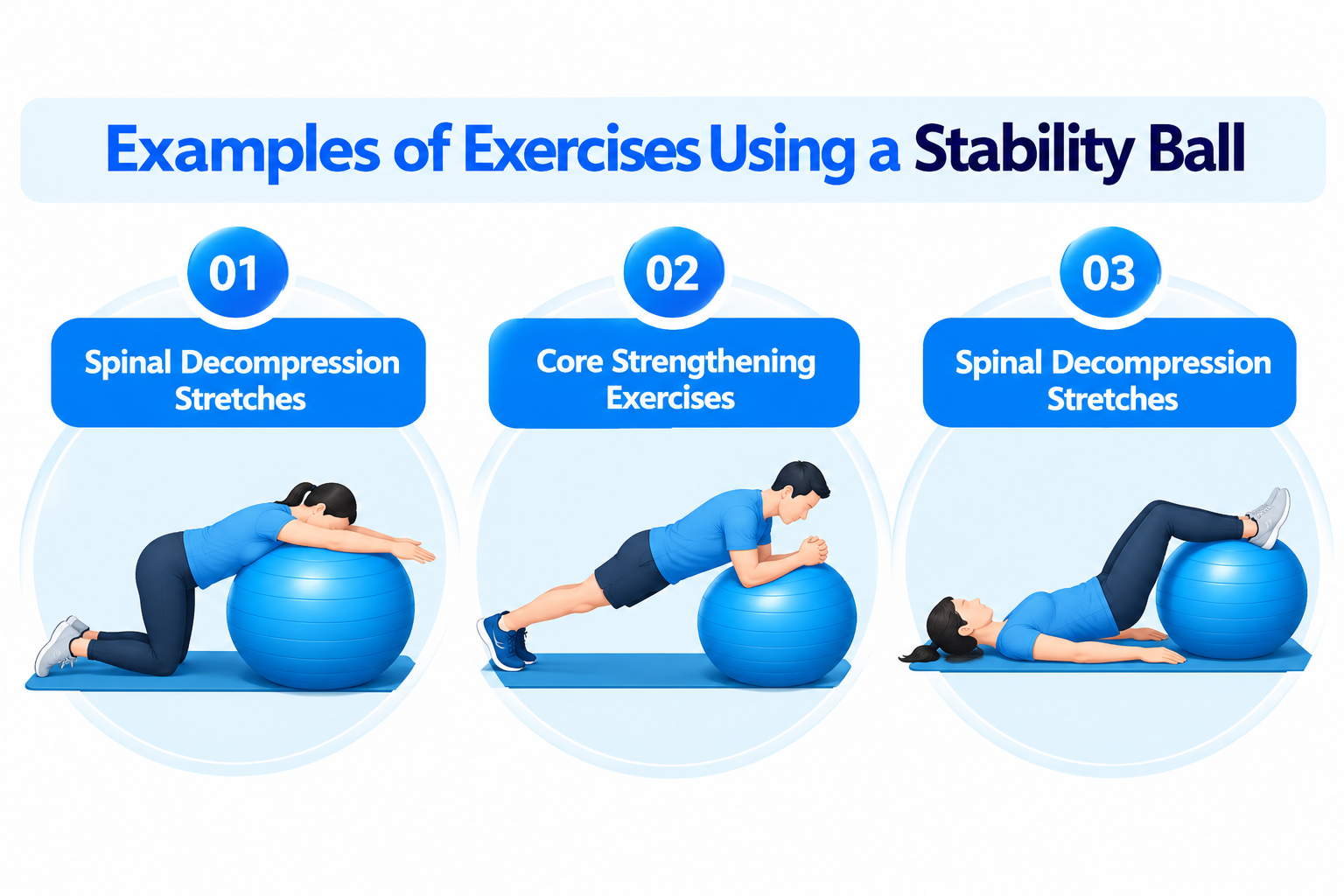
At Total Orthopedics & Sports Medicine, we specialize in integrating stability ball exercises into your personalized pain medication treatment, ensuring you regain mobility and ease spinal strain. Call 855-321-6784 to schedule your consultation and move a step toward a pain-free journey with expert guidance.
What’s the Ideal Sitting-To-Standing Ratio During Recovery?
A 1:1 or 1:3 sitting-to-standing ratio is recommended during recovery to promote optimal circulation and reduce the risks of prolonged sitting.
Here are a few proven ratios that help reduce pressure on your spine and speed up recovery:
- 1:1 Ratio: Alternate 30 minutes of sitting with 30 minutes of standing.
- 1:3 Ratio: Sit for 15 minutes, stand up for 45 minutes.
- 20-8-2 Rule: Sit for 20 minutes, stand for 8 minutes, and move for 2 minutes.
Gradually increase standing time based on your comfort level and endurance. Additionally, using anti-fatigue mats while standing can help alleviate foot strain and keep you comfortable during more extended standing periods.
How Should You Sleep With a Fractured Vertebra?
The best sleep posture for patients with spinal or vertebral fractures is lying on their back with a pillow under their knees. This helps keep the spine tall and reduces pressure on the fracture site. Side sleeping is also safe if you keep one or both knees bent and place a pillow between them.
Using a firm mattress is essential for people with severe spine trauma, as it supports bone alignment and helps manage pain during the healing process. According to the University of Rochester Medical Center, placing a pillow under your knees when lying on your back helps maintain the spine’s natural curve, which is helpful for healing and easing symptoms such as numbness or stiffness.
Can Occupational Therapy Improve Your Sitting Posture During Recovery?
Yes, occupational therapy can help improve your sitting posture through targeted exercises, ergonomic adjustments, assistive devices, and behavior-based strategies. These approaches help restore normal function, improve strength, and reduce the risk of future fractures. Besides this, OTs design specific exercises to strengthen the muscles essential for maintaining proper alignment, such as:
- Core Strengthening: Planks, bridges, and trunk rotations to build foundational stability.
- Balance Activities: Tasks such as sitting on a therapy ball or weight-shifting while seated to improve both static and dynamic balance.
- Functional Movements: Exercises integrated into daily tasks, such as specific techniques for standing up from a chair or lifting objects safely.
How Do You Treat a Fractured Vertebra?
Most stable vertebral fractures heal naturally with rest, bracing, and rehabilitation exercises. However, treatment depends on the fracture’s type, location, and severity. Your doctor may also recommend over-the-counter pain medication to reduce discomfort during recovery.
As your spine heals, gradually returning to daily activities can reduce stiffness and improve mobility. However, you should avoid heavy lifting, excessive bending, and twisting until your doctor confirms these movements are safe. Following a personalized recovery plan can support proper healing and help you regain normal movement.
When Can You Return to Normal Sitting After a Vertebral Fracture?
Most patients with a stable vertebral compression fracture can gradually return to their normal sitting routine within 6–12 weeks. However, recovery varies depending on the fracture’s severity, bone health, and response to treatment. Some patients may resume everyday sitting activities sooner, while others need additional time.
Your orthopedic specialist may recommend returning to your usual sitting routine when:
- Pain has significantly improved: You can sit comfortably without worsening back pain during or afterward.
- The fracture shows adequate healing: Your specialist confirms sufficient recovery through clinical assessment and imaging when necessary.
- You can perform daily activities: Sitting for meals, desk work, or short journeys no longer causes significant discomfort.
- You no longer need strict restrictions: Your doctor confirms that you can safely resume your usual activities without additional spinal precautions.
What Is Life Expectancy After a Compression Fracture?
Life expectancy after a compression fracture varies depending on age, bone health, fracture severity, and underlying medical conditions. A stable vertebral compression fracture does not necessarily shorten your lifespan. However, older adults with osteoporosis-related fractures may face a higher risk of health complications and mortality compared to people without fractures.
According to a 2026 study published in Brain and Spine, researchers examined 37,948 patients with osteoporotic vertebral compression fractures. After three years, the mortality rate was 26.9% among fracture patients, compared with 19.5% among individuals without fractures. However, these findings show an association, not that the fractures directly caused the deaths.
Get Back to Comfort With Specialized Spine Care at Total Orthopedics and Sports Medicine – Book Your Appointment Today!
Sitting with compression fractured vertebrae requires maintaining a neutral spine and avoiding slouching. Supportive cushions, lumbar pillows, and a back brace can help reduce pain and promote healing. Choose a firm chair, take frequent breaks, and engage in gentle exercises to strengthen your spine. Following proper sitting techniques and adjusting your routine will minimize discomfort and prevent further strain on your spine.
At Total Orthopedics & Sports Medicine, our expert team offers personalized treatment plans, back braces, and lumbar support options to reduce significant pain and promote healing. With a committed team of spine specialists across Brooklyn, Massapequa, the Bronx, and East Meadow, you can access expert care close to home, no matter where you are in the region. Call 855-321-6784 or visit one of our New York or New Jersey clinics to start your treatment journey!
FAQs
How Can I Safely Get Out of Bed With a Spine Fracture?
To safely get out of bed with a spine fracture, roll onto your side first, keeping your spine straight. Then, use your arms to push yourself up, keeping your core muscles engaged for support. Swing your legs over the side of the bed and slowly sit up, avoiding any twisting movements to prevent further strain on your spinal injury.
What Should I Do if Sitting Increases My Spinal Pain?
If sitting increases your spinal pain, try adjusting your position by sitting with a neutral spine and adding lumbar support. Make sure to sit up straight and take regular breaks to stand up and stretch. If pain persists, consult our doctors at Total Orthopedics & Sports Medicine to explore other treatments, such as a back brace or modifications to your sitting routine.
Is It Safe to Drive With a Fractured Vertebra?
No, it is not safe to drive with a fractured vertebra, as this can increase spinal pain and strain. Driving involves sudden movements and pressure on your spine, which can not only delay healing but also increase the risk of further injury or even a car accident. Always consult your doctor before driving to ensure your injury does not affect your ability to react quickly or safely control the vehicle.
Can I Use a Heating Pad for Pain Relief While Sitting?
Yes, you can use a heating pad for pain relief while sitting, as heat therapy helps relax muscles and reduce spinal trauma. Apply the heating pad to the affected area for 15-20 minutes at a time. Avoid direct contact with the skin and check the temperature to prevent burns. Always consult Total Orthopedics & Sports Medicine if you’re unsure about using heat during your treatment.
How Long Does a Spinal Fracture Typically Take to Heal?
A spinal fracture typically takes 6 to 12 weeks to heal, depending on the type and severity of the fracture. During this period, it’s crucial to follow your doctor’s instructions for rest, pain management, and possibly wearing a back brace. Healing times may vary, so consult your healthcare provider for personalized guidance.
How Can I Relieve Pressure on My Back While Sitting?
To relieve pressure on your back while sitting, adjust your seating position by using a lumbar support pillow to maintain the natural curve of your spine. It ensures your feet are flat on the floor and your knees are at a right angle to your abdomen. Periodically stand up or stretch to prevent stiffness and reduce pressure.
Can I Sit On the Floor With a Fractured Vertebra?
No, sitting on the floor with a fractured vertebra isn’t recommended. It can put extra strain on your spine and worsen the pain. Instead, sit in a chair with proper lumbar support to keep your spine in a neutral position. Always follow your doctor’s advice on sitting positions to avoid further injury during your recovery.
How Do I Support My Back While Sitting for Meals?
To support your back while eating, sit on a firm chair with a backrest and keep your feet flat on the floor. Align your ears, arms, chest, and hips to maintain an upright position. Additionally, use a lumbar pillow for lower back support and avoid leaning forward. Sit close to the table to prevent slouching and reduce spinal strain.

